
Dubai free zones council advances readiness with focus on virtual assets, halal industry and FATF compliance
Dubai free zones council outlines steps to boost business resilience, regulate virtual assets, support halal SMEs and secure FATF readiness in free zones.
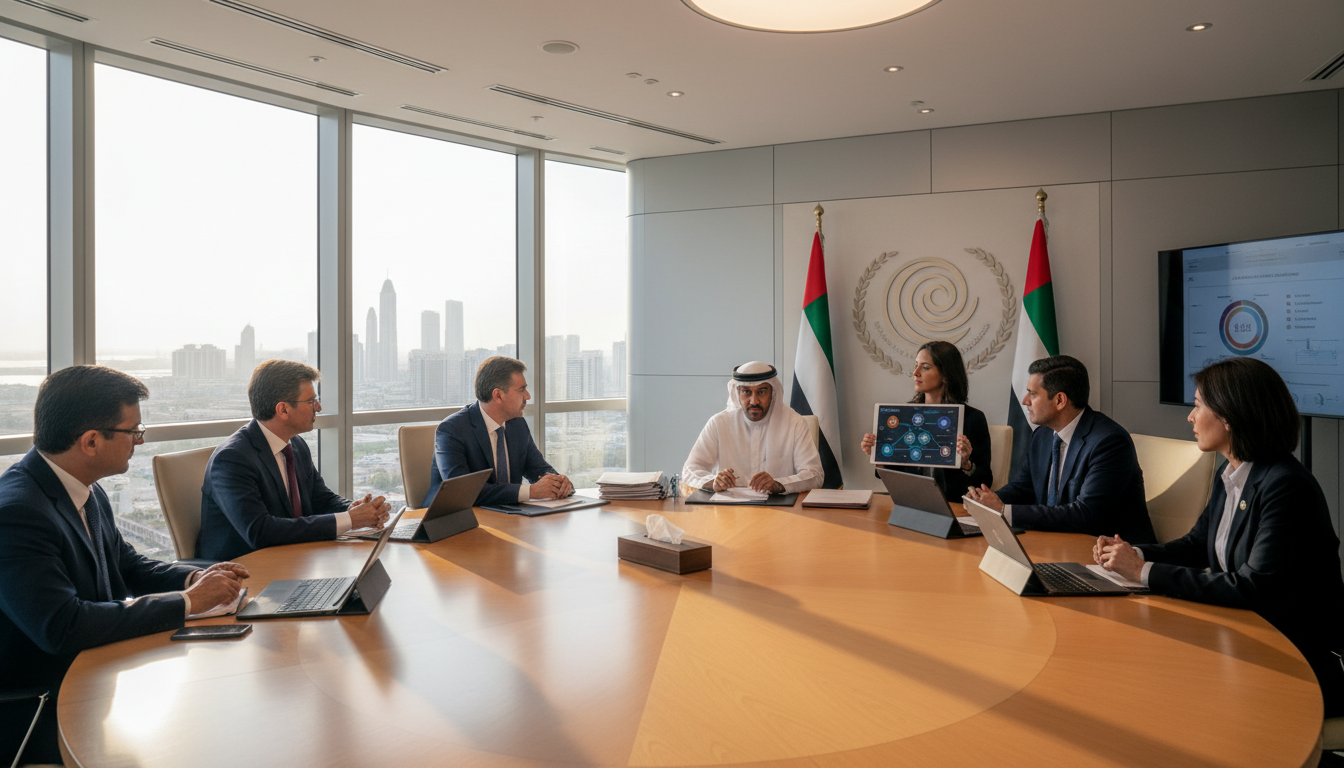
The Dubai free zones council convened its 34th meeting under the chairmanship of His Highness Sheikh Ahmed bin Saeed Al Maktoum to review strategic measures aimed at enhancing the readiness of Dubai free zones. Delegates examined initiatives to strengthen business sustainability, align regulatory frameworks with evolving economic needs and maintain the emirate’s attractiveness to investors. The meeting placed particular emphasis on virtual assets regulation, support for the halal industry and preparations for an upcoming FATF assessment.
Council reviews economic facilitation packages
The meeting opened with a briefing from the economic team on the latest facilitation packages and initiatives launched by the Dubai Executive Council. Officials assessed measures designed to reduce operational and financial burdens on companies and to expedite business activity across free zones. The council welcomed advances that aim to boost investor confidence and streamline licensing and compliance processes.
Members discussed how the new measures integrate with wider emirate level policies and the D33 economic agenda. The council emphasized coordination across authorities to ensure consistent implementation and measurable outcomes for business resilience.
Commitment to business sustainability and new sectors
Council members reiterated their commitment to developing targeted projects that promote continuity and growth for businesses operating in free zones. Plans under review include programs to increase regulatory readiness and to support emerging sectors that promise high value and job creation. The council stressed the need to adapt free zone services to shifting market dynamics while preserving each zone’s institutional identity.
Officials noted that these efforts form part of a broader strategy to preserve the competitiveness of Dubai free zones and to increase their contribution to national GDP. The council called for continued monitoring and rapid adjustment of initiatives as conditions evolve.
Regulating virtual assets to enable innovation
A focal agenda item was the responsible regulation of virtual assets and the role of the Virtual Assets Regulatory Authority. The council received an update on rulemaking, oversight standards and supervisory mechanisms for virtual asset service providers. Delegates highlighted the importance of robust frameworks that enable innovation while safeguarding financial stability and investor protection.
Discussions also covered measures to promote interoperability and international standards that support cross border transactions. The council linked virtual assets regulation to Dubai’s ambition to strengthen its regional and global position in digital finance under its economic strategy.
Measures to support halal industry and Islamic finance technology
The council examined proposals to expand support for local small and medium enterprises and startups focused on Islamic finance and the halal sector. Officials referenced initiatives led by the Dubai International Financial Centre that align with the National Strategy for Islamic Finance and the Halal Industry 2031. The aim is to build an integrated ecosystem that enhances local production of high value halal products and services.
Deliberations included programs to accelerate food tech, agricultural tech and pharmaceutical innovations that address halal compliance and traceability. The council explored systems to certify and track halal products through supply chains, thereby improving transparency and export readiness.
Institutional coordination for compliance and inspections
Strengthening institutional coordination was identified as critical to maintaining regulatory integrity across free zones. The council reviewed proposals to harmonize inspection procedures, complaint handling and public awareness activities. Officials proposed the creation of a compliance task force drawing members from multiple free zones to standardize policies and close potential gaps.
Anti money laundering and counter terrorism financing cooperation was discussed as a priority area. The council agreed on enhanced collaboration between free zone authorities and national agencies to improve preventive controls and investigative capabilities.
FATF readiness and unified digital employment contract
Preparing for the forthcoming Financial Action Task Force on site visit shaped several action items at the meeting. Council members discussed proposals to address any weaknesses ahead of the evaluation and to prevent classification risks for the country. A series of steps were proposed including a dedicated free zone compliance team, unified policies and accelerated electronic linkages relevant to reporting and case management.
Separately, the council reviewed progress on a unified employment contract for free zones being developed in coordination with the General Directorate of Residency and Foreigners Dubai. The initiative includes harmonizing contract models while preserving each zone’s institutional identity and completing electronic integration and data flow testing prior to a full digital rollout.
The council concluded with directives to fast track key deliverables and to maintain close oversight of implementation timelines. Authorities were asked to deliver periodic updates and to coordinate communications with the business community to ensure clarity and operational continuity.
The council’s decisions aim to reinforce Dubai free zones as adaptive, well governed and investment friendly environments that can respond quickly to regulatory and market changes. Continued coordination across regulatory, economic and industry stakeholders will be vital as Dubai positions its free zones to capture growth in virtual assets, halal production and other strategic sectors.
