
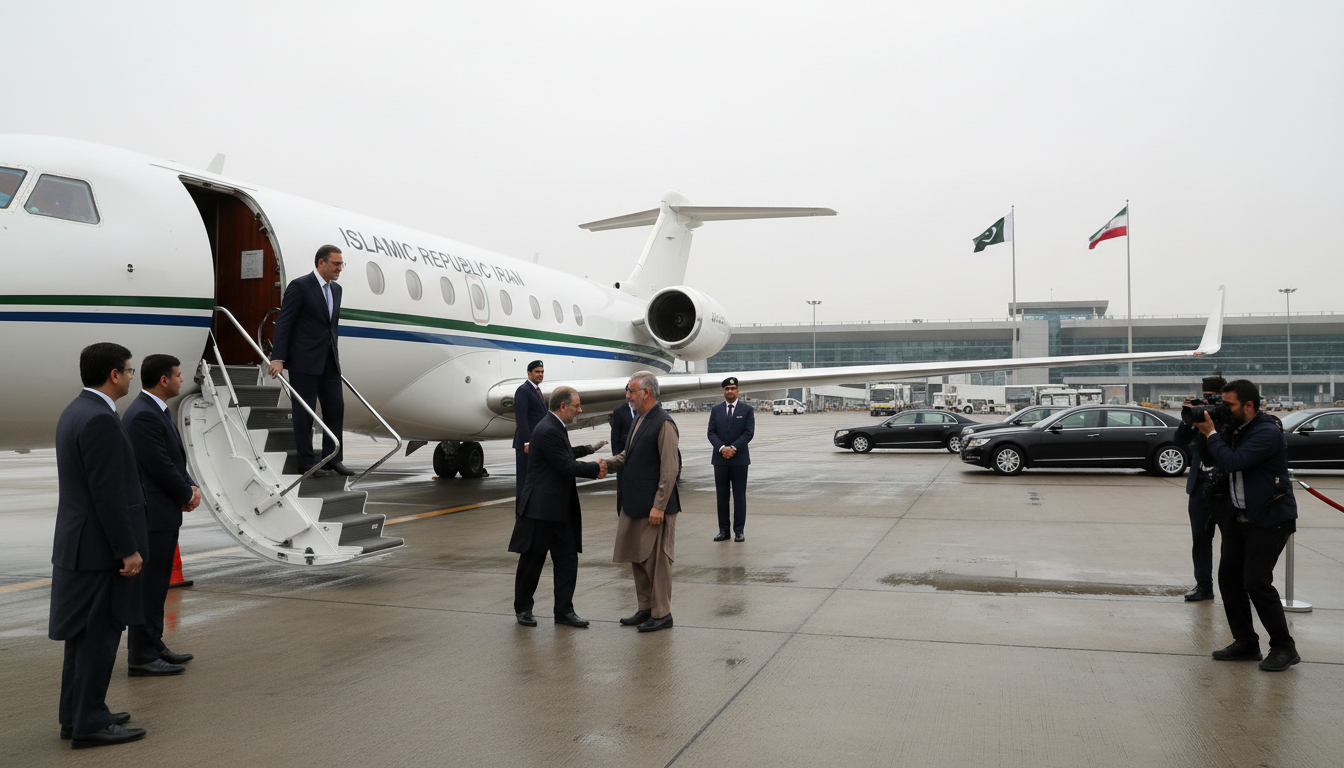
Iranian Deputy FM Abbas Araghchi Returns to Islamabad After Muscat Visit
Iranian deputy foreign minister Abbas Araghchi returned to Islamabad after visiting Muscat, making a second weekend trip as Pakistan mediates between Washington and Tehran.
Abbas Araghchi’s visit to Islamabad was confirmed by Iran’s official news agency and marks a swift diplomatic shuttle between Oman and Pakistan amid ongoing mediation efforts. The trip, described as a second visit to Pakistan over the weekend, underscores Islamabad’s active role in facilitating dialogue between the United States and Iran. Tehran’s delegation carried messages and engaged with Pakistani interlocutors in a series of discreet consultations.
Araghchi’s Return to Islamabad After Oman Visit
Iran’s state news agency reported that Araghchi arrived in Islamabad following meetings in Muscat, where he held talks with Sultan Haitham bin Tarik. The Muscat discussions were framed as part of routine diplomatic engagement, while the subsequent arrival in Pakistan highlighted the regionally coordinated approach to de-escalation. Officials did not release full transcripts of the conversations, leaving some details of the exchanges confidential.
Pakistani officials have declined to provide a detailed public schedule, but the pace and sequencing of Araghchi’s travel suggest coordination among Tehran, Islamabad and Muscat. Diplomatic sources indicate the delegation’s movements were focused on messaging and assessing pathways for further talks involving Washington. Observers say the back-to-back visits reflect both urgency and discretion in handling sensitive negotiations.
Pakistan’s Mediating Role in US-Iran Talks
Pakistan has been reported as a facilitator in renewed contacts between Washington and Tehran, leveraging long-standing diplomatic channels and relationships with both capitals. Islamabad’s mediation is seen as an attempt to offer a neutral venue and broker confidence-building measures without direct public fanfare. Pakistani officials typically emphasize regional stability and the need for calm as core objectives of such efforts.
Islamabad’s involvement carries strategic weight given its geopolitical ties across the region and its capacity to communicate messages between parties that have limited direct contact. Analysts note that Pakistan’s neutrality, combined with its diplomatic reach, positions it to host or shuttle messages that might otherwise be difficult to transmit. The role also allows Islamabad to demonstrate constructive engagement on a high-stakes international issue.
Meetings in Muscat with Sultan Haitham
In Muscat, Araghchi’s meeting with Sultan Haitham bin Tarik was portrayed as part of customary high-level diplomacy between Iran and Oman. Oman has historically acted as a discreet interlocutor for Tehran, often facilitating communications with Western capitals. The Muscat stop reportedly covered bilateral matters alongside broader regional questions tied to the mediation process.
Omani officials typically keep such sessions low profile, emphasizing confidentiality to preserve trust among participants. Sultan Haitham’s administration has previously hosted and conveyed messages in other sensitive dialogues, a practice that continues to be valued by all parties seeking indirect channels. The cadence of the visits suggests Oman remains an important regional partner in enabling tentative progress.
Diplomatic Implications for the Gulf and Beyond
The series of visits by Iran’s deputy foreign minister underscores wider regional stakes, where Gulf states and neighbouring countries are closely watching shifts in Tehran’s engagement. Any progress achieved through Pakistan-led mediation could alter calculations on sanctions, maritime security, and diplomatic posturing across the Gulf. Regional capitals are likely to monitor outcomes carefully while maintaining contingency planning for diplomatic and security scenarios.
Experts caution that shuttle diplomacy alone does not guarantee breakthrough outcomes, but it can create openings for tactical agreements or exchanges that reduce immediate tensions. Even narrow operational agreements—such as humanitarian arrangements, prisoner exchanges or limited maritime understandings—would be treated as meaningful steps. The broader strategic issues between Tehran and Washington, however, remain complex and rooted in long-standing disagreements.
Unresolved Timelines and What Comes Next
While Araghchi’s rapid return to Islamabad signals an active diplomatic rhythm, there is no public timetable for follow-up sessions or formal negotiations. Both regional mediators and the principals involved are likely to continue quiet consultations before any formal announcements are made. Observers expect incremental moves rather than immediate, sweeping resolutions to emerge from this phase of engagement.
Future developments will depend on whether the parties convert these shuttle contacts into concrete commitments or confidence-building measures. Islamabad and Muscat are positioned to continue facilitating dialogue, but durable progress will require reciprocal concessions and verification arrangements that neither side has yet publicly detailed. Until then, cautious diplomacy will remain the dominant mode of interaction.
The swift sequence of visits by Iran’s deputy foreign minister reflects a deliberate, low-profile approach to sensitive diplomacy, with Pakistan and Oman serving as key conduits for communication that could help de-escalate tensions between Tehran and Washington.
