
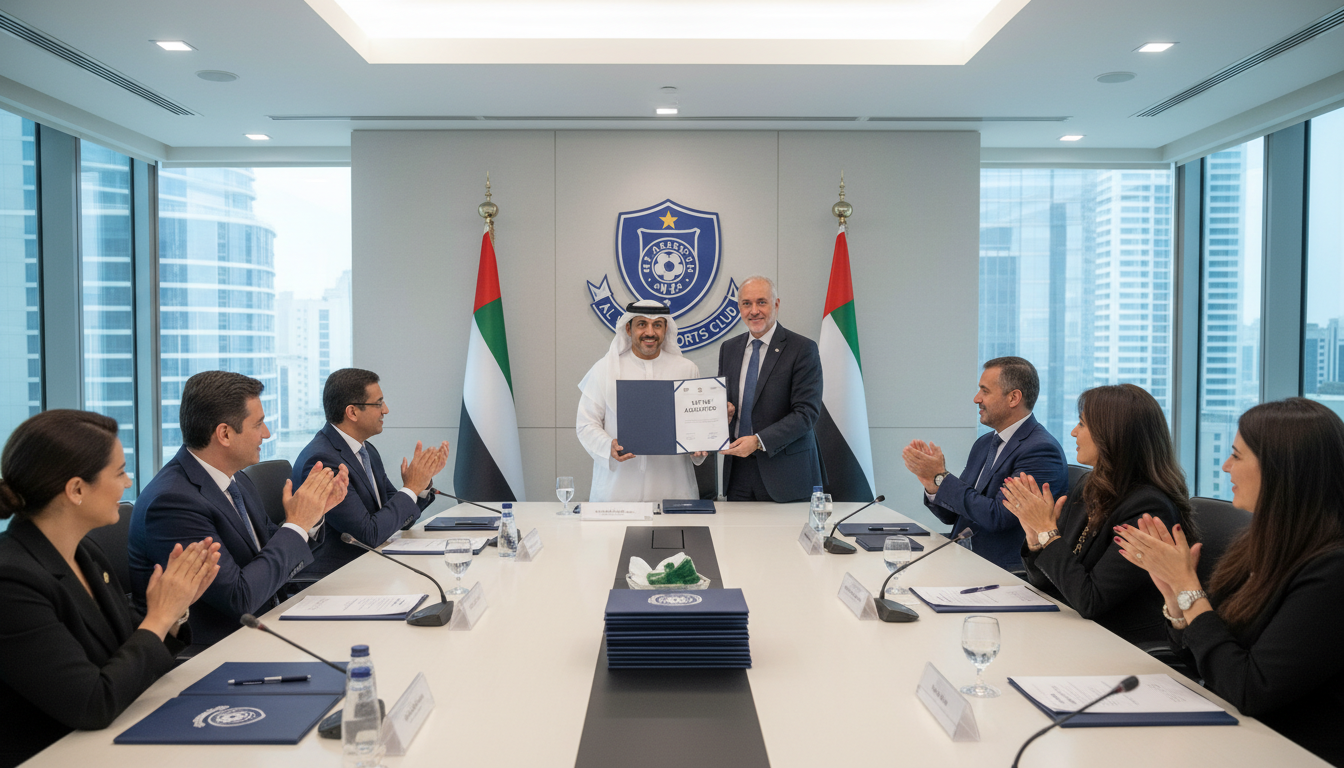
Al Nasr approves new statute and organisational structure; Dr. Hamad Rahma Al Falasi named CEO
Al Nasr approves a new club statute and organisational structure, and appoints Dr. Hamad Rahma Al Falasi as CEO, who will begin duties on May 1, 2026, ahead of the 2026–2027 season.
Club issues new statute and management blueprint
The Al Nasr board, chaired by Sheikh Rashid bin Hamdan bin Rashid Al Maktoum, issued Decision No. 1 for 2026 to adopt a new club statute replacing the 2017 framework. The move is presented as part of a wider effort to align governance and administrative procedures with the club’s strategic needs. Officials say the updated statute is designed to support institutional efficiency and clarity of roles across the organisation.
Board approves a revised organisational chart
In a companion action, the board enacted Decision No. 2 for 2026 to adopt a new general organisational structure for Al Nasr. The structure will take effect from the 2026–2027 sporting season and is intended to modernise reporting lines and operational units. Club officials indicated the redesign aims to streamline decision-making and strengthen oversight across sporting and administrative functions.
Executive appointment and start date confirmed
The club’s governing body also appointed Dr. Hamad Rahma Al Falasi as the new chief executive under Decision No. 2 for the 2025–2026 season. The board emphasised that the appointment reflects a policy of engaging experienced national competence to advance the club’s administrative and sporting programmes. Dr. Al Falasi is scheduled to assume his responsibilities on May 1, 2026, when he will begin overseeing the implementation of the new statute and organisational framework.
Dr. Al Falasi’s remit will include supervising administrative policies and leading institutional development efforts at Al Nasr. The executive post is positioned as the operational focal point for translating board directives into day-to-day management. The club framed the hire as part of a transition to reinforce professional management throughout the organisation.
Governance objectives and institutional modernisation
Club leadership described the package of measures as an effort to enhance governance and professionalise internal controls. The statute and organisational changes are intended to introduce clearer accountability, more robust administrative practices, and better alignment with regulatory expectations. Sources within the club say these changes are also aimed at providing a firmer platform for sporting performance and commercial growth.
Observers note that many professional clubs are updating governance arrangements to meet evolving competitive and regulatory demands. Al Nasr’s decisions mirror a broader regional trend toward strengthening institutional frameworks and clarifying the responsibilities of executives, technical staff, and board members. The club has signalled that governance improvements will be monitored and adjusted as necessary during implementation.
Practical rollout tied to the 2026–2027 season
The new organisational chart will be activated with the start of the 2026–2027 season, giving the club time to transition staff and revise internal procedures. The timing is intended to align structural changes with a natural operational cycle that includes player planning, commercial contracts, and competition schedules. Club administrators will use the intervening period to update policies, reassign duties, and brief stakeholders on the practical implications.
Implementation is expected to follow an internal timetable overseen by the executive office, with milestones for policy adoption, staffing changes, and governance training. The club has not released a detailed public timetable but has indicated that implementation steps will be communicated to members and partners. This staged approach aims to minimise disruption to sporting preparations while ensuring the new systems are embedded.
Stakeholder engagement and performance expectations
Al Nasr’s board emphasised the importance of engaging fans, sponsors, and staff as the changes take effect. The club described the move as reinforcing its role as one of the UAE’s established teams and as a signal to commercial and sporting partners that institutional foundations are being strengthened. Expectations were set that improved governance will support both on-field competitiveness and off-field sustainability.
Sponsors and partners are likely to watch early implementation closely for signs of improved operational clarity and commercial readiness. Supporters will be keen to see how the changes translate into competitive results and organisational stability. The board said it will report on progress internally and maintain dialogue with stakeholders during the transition.
The approval of a new statute, a revised organisational structure and the appointment of Dr. Hamad Rahma Al Falasi represent a concerted effort by Al Nasr to modernise its governance and executive management ahead of the 2026–2027 season. The board’s decisions, anchored by specific implementation dates and decision numbers, set clear expectations for a period of administrative renewal and closer alignment between strategic objectives and day-to-day operations.
