
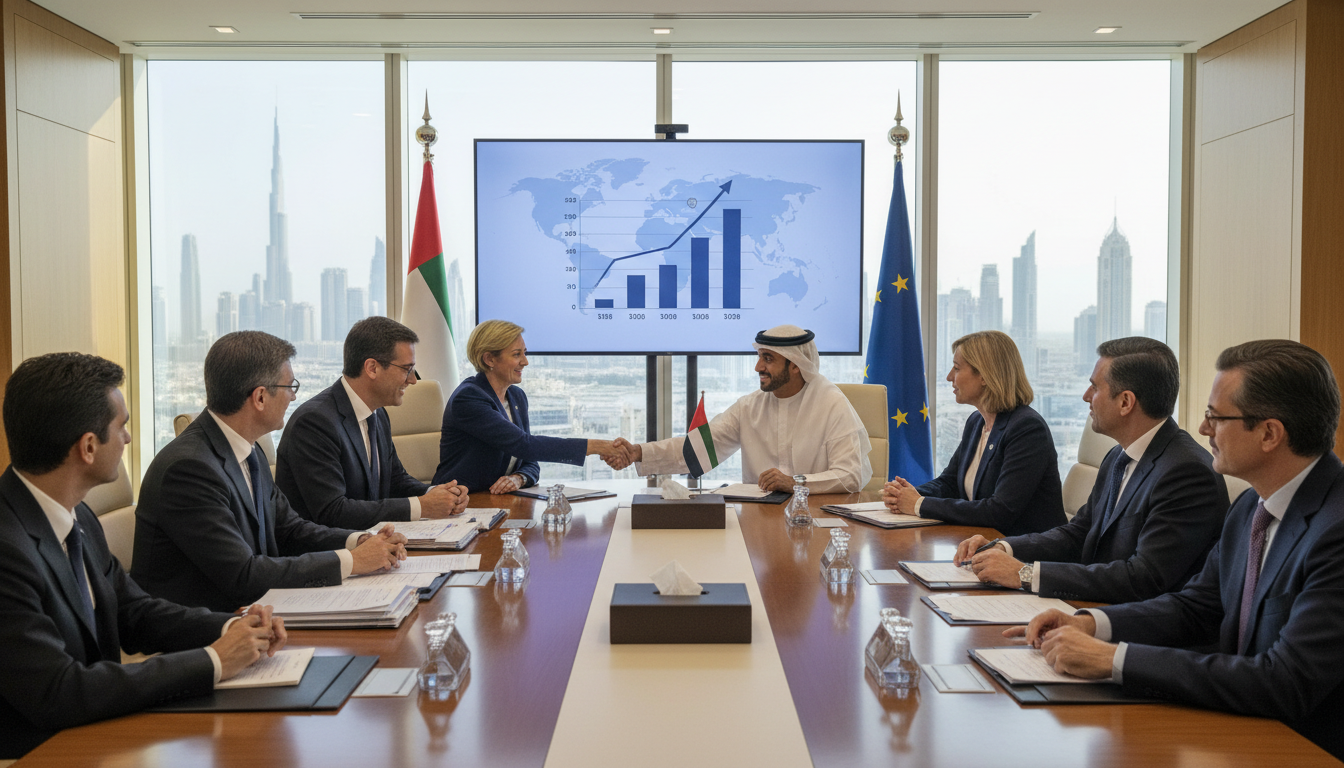
Dubai investment confidence holds as multibillion deals from US and Europe progress
Dubai investment confidence holds as multibillion deals from US and Europe progress; government measures and stable operations underpin growth in 2026–2027.
Dubai’s investment outlook remains strong as multibillion-dirham deals from the United States and Europe move through negotiation and signing stages, underlining sustained investor confidence in investment in Dubai, officials say. Hadi Badri, chief executive of the Dubai Development Authority, told local media that ongoing talks and queued agreements highlight the emirate’s appeal as a reliable destination for growth. He said these transactions span tourism, entertainment, banking and real estate and will be announced progressively in the coming months.
Investors’ confidence remains steady
Dubai’s standing as a dependable market has held firm despite regional uncertainties, industry sources indicate. Badri noted that investors continue to see the emirate as a long-term opportunity, with many decisions now spread over different timelines rather than abandoned. That view is reflected in continued inbound interest from multinational corporations based in North America and Europe, reinforcing the perception of durable investor commitment.
Ongoing multibillion-dirham deals from US and Europe
Several large-scale transactions are reportedly in advanced stages, including agreements due to be signed within the current quarter with U.S. entities. These deals, cumulatively worth billions of dirhams, are expected to touch multiple sectors and reinforce cross-border corporate investment flows. Market participants said the pipeline demonstrates both the scale and diversity of capital targeting Dubai’s economy.
Continuity of services and business operations
Officials emphasized that maintaining uninterrupted core services was central to preserving market confidence and daily economic activity. Electricity, water, telecoms and banking systems continued to operate stably, while government services were delivered with minimal disruption, according to Badri. This operational continuity helped sustain consumer spending and business operations close to pre-event levels, limiting any structural shock to the economy.
Aviation and logistics bolstered supply chains
Dubai’s airports and logistics networks played a pivotal role in keeping supply chains fluid and trade moving, industry insiders said. The emirate’s aviation hub sustained passenger and cargo movements, while “green corridors” and expedited clearance procedures kept essential goods flowing into local markets. The robustness of aviation and logistics infrastructure supported retail, hospitality and industrial sectors during the period of heightened regional volatility.
Economic measures supported liquidity and demand
Authorities introduced targeted economic measures to shore up liquidity and ease operational burdens across affected sectors, including a Dhs1 billion facilitation package. Badri credited such measures with cushioning companies in tourism, hospitality and commerce and helping consumer activity remain near typical levels. He added that the package not only provided immediate relief but also signalled responsive policymaking that encouraged investors to hold to their strategic plans.
Strategic priorities and growth outlook for 2026–2027
Dubai’s medium-term growth strategy remains anchored in the D33 agenda, which aims to double the emirate’s economic size by 2033 and accelerate high-value sectors. The emirate’s strong tourist performance in 2025 and continued inward investment flows provide a demand base that supports expansion through 2026 and 2027. Officials highlight opportunities in digital transformation, advanced manufacturing, AI and fintech as priority areas for diversifying and upgrading the economic mix.
Dubai’s authorities are also easing administrative frictions to speed market entry for foreign investors, including streamlined licensing and simplified bank-account onboarding. These reforms, combined with active investor engagement and a policy environment that favors rapid decision-making, are intended to convert short-term resilience into longer-term investment gains.
The current phase is viewed by officials as both a test and an accelerator for reforms that will strengthen the emirate’s economic fabric. As multibillion deals progress to completion, Dubai’s message to global capital remains clear: a stable operational platform, responsive economic policy and a diversified growth plan make the emirate an attractive place for sustained investment in Dubai’s future.
