
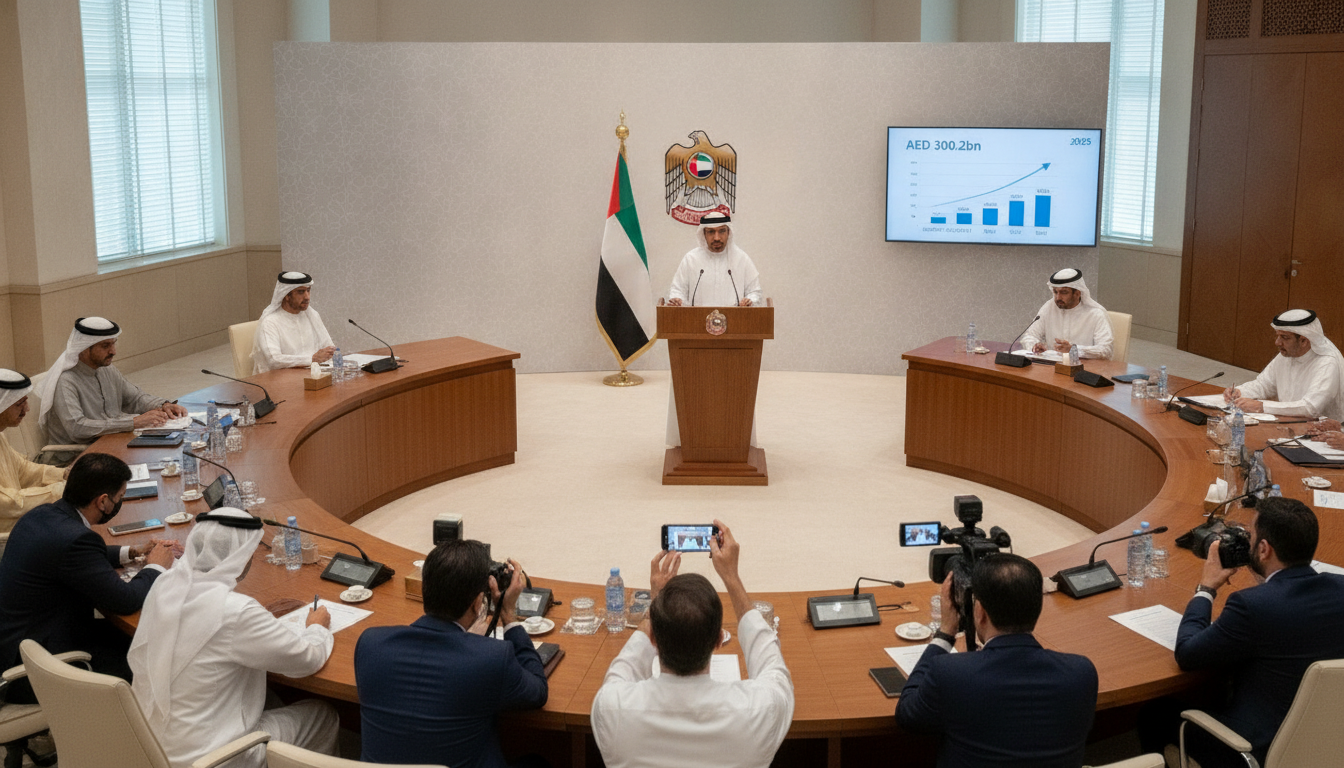
UAE current account surplus hits AED 300.2bn in 2025, bolstered by export surge
UAE current account surplus reached AED 300.2bn (13.3% of GDP) in 2025, driven by record goods exports, robust services, strong investment income and rising foreign reserves.
The UAE current account surplus reached AED 300.2 billion in 2025, equivalent to 13.3% of GDP, according to the Central Bank’s annual balance of payments report. The headline surplus reflects a marked acceleration in goods exports alongside sustained strength in services receipts and investment income, offsetting growing personal transfers abroad.
Central Bank report underlines external sector strength
The Central Bank attributed the large current account surplus to a combination of rising trade activity, robust services performance and higher returns on foreign investments. The report highlights that the surplus position demonstrates the economy’s ability to balance strong domestic demand with an externally resilient profile.
Analysts noted that maintaining a double-digit share of GDP in current account surplus is rare for an advanced, open economy and underlines the UAE’s role as a global trade and investment hub. The Central Bank framed the results as evidence of both cyclical momentum and structural depth in the external sector.
Goods exports surge to AED 2.06 trillion
Goods exports recorded a substantial increase in 2025, rising to AED 2.06 trillion from AED 1.71 trillion in 2024. This jump raised exports to more than 91% of GDP and was the primary driver of the sizeable merchandise trade surplus.
Imports also expanded to AED 1.84 trillion, reflecting vigorous domestic activity and higher investment and consumer spending, but the net effect left a goods trade surplus of AED 213.5 billion. The pattern points to diversified export growth across energy, re-exports and manufactured goods supporting the external accounts.
Services sector and tourism lift travel surplus
The services sector continued to perform strongly, contributing a services surplus of AED 238.4 billion in 2025. Tourism led the gains in the travel item, which posted a surplus of AED 156.1 billion, while transport services benefited from expansions in aviation and logistics, lifting transport surplus to AED 75.6 billion.
Growth in services receipts reflects both higher visitor numbers and expanded cross-border commercial services, including professional, financial and digital services. The resilience of services revenues helped insulate the current account from increased outward personal transfers.
Primary and secondary income trends
Primary income flows strengthened, with a primary income surplus rising to AED 126.6 billion as residents’ foreign asset returns increased. That uptick points to widening international investment positions held by UAE residents and stronger income generated from those holdings.
By contrast, secondary income showed a larger deficit of AED 278.3 billion, driven by higher personal remittances and transfers abroad. Despite that widening of secondary income outflows, the overall current account remained comfortably in surplus due to robust trade and investment income.
Net financial outflows reflect outward investment
On the financial account, net outflows amounted to AED 362.6 billion, indicating that residents continued to channel surplus liquidity into overseas investments. The data show increased activity in direct investment abroad, as well as portfolio allocations and other financial instruments.
At the same time, foreign investment into the UAE persisted, maintaining two-way capital flows that support domestic financing and growth. The pattern underscores a maturing financial relationship between resident investors seeking overseas diversification and non-residents investing into the UAE’s expanding markets.
Foreign reserves up, enhancing economic resilience
Foreign exchange reserves rose by AED 166.6 billion during 2025, according to the Central Bank, strengthening the country’s buffers against external shocks. The increase in reserves enhances monetary and financial stability and gives policymakers more room to manage volatility in global markets.
Higher reserves, combined with sustained current account surpluses, position the UAE to absorb external pressures while continuing to attract trade, tourism and capital. Observers say this reserve accumulation complements ongoing efforts to broaden the economic base and reinforce the country’s role as a regional financial center.
The Central Bank’s balance of payments statistics for 2025 depict an economy that generated sizable external surpluses amid strong internal demand and active cross-border investment. Those results are likely to shape policy discussions as authorities balance domestic growth priorities with measures to sustain external resilience going forward.
