
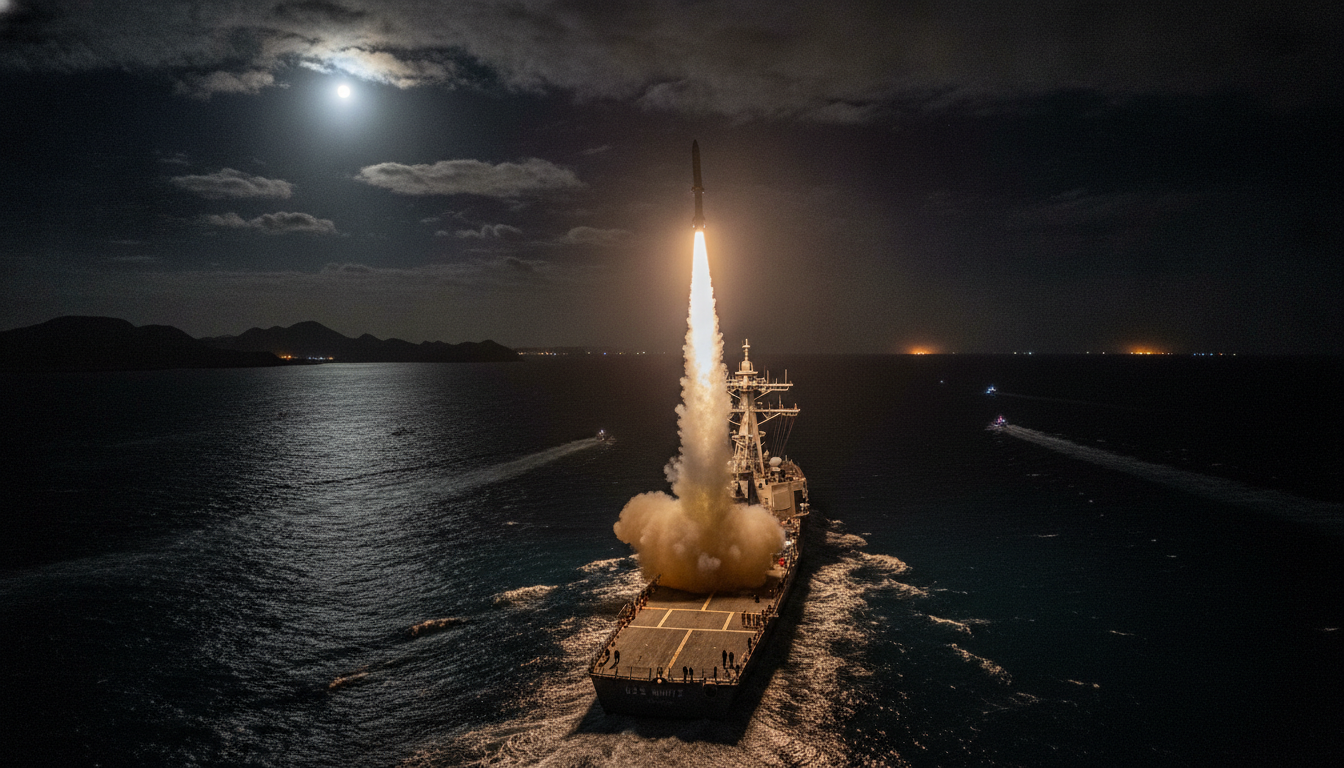
US airstrikes against Iran strike southern ports after attacks on commercial vessels
US airstrikes against Iran struck sites near Sirik, Qeshm and Bandar Abbas on July 7, 2026, after attacks on commercial vessels transiting the Strait of Hormuz.
The United States launched airstrikes against targets inside southern Iran on July 7, 2026, in what CENTCOM described as a direct response to recent attacks on commercial vessels transiting the Strait of Hormuz. The strikes were reported as occurring near the strategic port city of Sirik, Qeshm Island and Bandar Abbas, where explosions were heard and state media reported damage. US Central Command said the operations were intended to address Iranian actions that endangered international shipping lanes. Officials in Tehran and Washington exchanged sharp public statements as diplomatic channels signalled heightened tension.
CENTCOM statement and US rationale
CENTCOM said the strikes began on Tuesday and framed them as a measured response to assaults on three commercial vessels in the Strait of Hormuz. The military spokesman characterised the operations as necessary to protect freedom of navigation and to hold accountable those responsible for attacks on civilian shipping. Washington asserted the strikes targeted infrastructure and capabilities used to threaten commercial traffic rather than broader civilian sites. The US emphasised it sought to deter further attacks while avoiding escalation.
Explosions reported in Sirik, Qeshm and Bandar Abbas
State broadcasters in Iran reported multiple explosions in southern locations, noting at least six blasts on Qeshm Island and several more near Sirik port. Local reporters and residents described blasts that shook coastal communities, prompting emergency responses and raised alarm among maritime operators. Qeshm, the largest island near the strait, and Bandar Abbas, a key naval and commercial hub, were singled out by Iranian outlets for their strategic significance. Authorities did not immediately provide full casualty or damage assessments.
Sequence of maritime incidents preceding strikes
The strikes followed a series of maritime attacks in recent days that targeted tankers in and around the Strait of Hormuz. The United Kingdom Maritime Trade Operations reported a Qatari-flagged tanker was hit and caught fire off the coast of Oman after an apparent projectile strike, while other sources described damage to a Saudi-flagged crude oil tanker. Tehran publicly denied direct responsibility in some instances and suggested warnings had been ignored, but official Iranian bodies did not claim the assaults outright. US officials described the attacks on tankers as “wholly unacceptable” and said they would be met with consequences.
US Treasury revokes temporary oil sanctions waiver
In a development that preceded the military action, the US Treasury moved to revoke a temporary waiver that had allowed Iranian oil exports under a memorandum of understanding signed in June. The waiver had briefly permitted Iran to produce, sell and deliver crude oil and related products until August 21, but the Treasury announced the licence cancellation earlier in July. Washington’s decision to withdraw the sanction relief came amid the tanker attacks, a move Tehran described as a breach of the Islamabad memorandum of understanding. The revocation adds an economic dimension to the unfolding security crisis.
Tehran rejects US actions, cites MoU violations
Iranian officials condemned the strikes and blamed the US for violating the June memorandum of understanding that had sought to de-escalate hostilities and lift a naval blockade in return for reopening the strait. Deputy Foreign Minister Kazem Gharibabadi said Washington’s revocation of the oil waiver and subsequent military operations breached multiple articles of the accord and warranted a firm response. Tehran warned it would take any measures it deems necessary to protect national interests and security, signalling potential retaliatory steps. The exchange underscores the fragility of the MoU and the broader regional arrangements meant to stabilise maritime flows.
Regional and commercial implications for the Strait of Hormuz
The strikes and preceding attacks threaten to further disrupt one of the world’s most critical chokepoints for oil and gas shipments, raising immediate concerns among regional governments and shipping companies. Insurers and ship operators routinely reassess risk and routeing after such incidents, and prolonged instability could push up freight rates and insurance premiums for tankers and commercial vessels. Gulf states and international partners face urgent pressure to coordinate security measures while pursuing diplomatic avenues to prevent wider confrontation. The situation also poses risks to civilian populations in coastal areas near reported strike sites.
The events of July 7, 2026, mark a significant escalation in a dispute that has combined military, economic and diplomatic dimensions, centred on control and safety in the Strait of Hormuz. As both sides exchange accusations, international actors are likely to intensify efforts to monitor shipping, urge restraint and seek emergency consultations aimed at preventing further damage to regional stability.
