
U.S. Says Ceasefire in the Strait of Hormuz Still Holding Despite Iranian Strikes
U.S. Defense Secretary Pete Hegseth says the ceasefire in the Strait of Hormuz remains in effect as American forces escort hundreds of commercial ships amid Iranian strikes. (155 characters)
The U.S. Defense Secretary on Tuesday insisted the ceasefire in the Strait of Hormuz is still in effect despite recent Iranian strikes and a continuing American blockade. Pete Hegseth reiterated the assessment first voiced by Gen. Dan Kin that the truce has not collapsed, saying plainly, “No, the ceasefire has not ended.” The statement came as U.S. forces guided commercial traffic through the strategic waterway.
U.S. leadership’s public assurance
Hegseth’s comments were delivered in a brief statement confirming earlier remarks by Gen. Dan Kin, chairman of the Joint Chiefs of Staff, that the ceasefire remains operative. He framed the U.S. posture as cautious but clear: the de‑escalation holds for now, even as isolated Iranian strikes have occurred. The declaration was intended to reassure regional partners and commercial operators reliant on uninterrupted passage.
Commercial ships escorted safely through the waterway
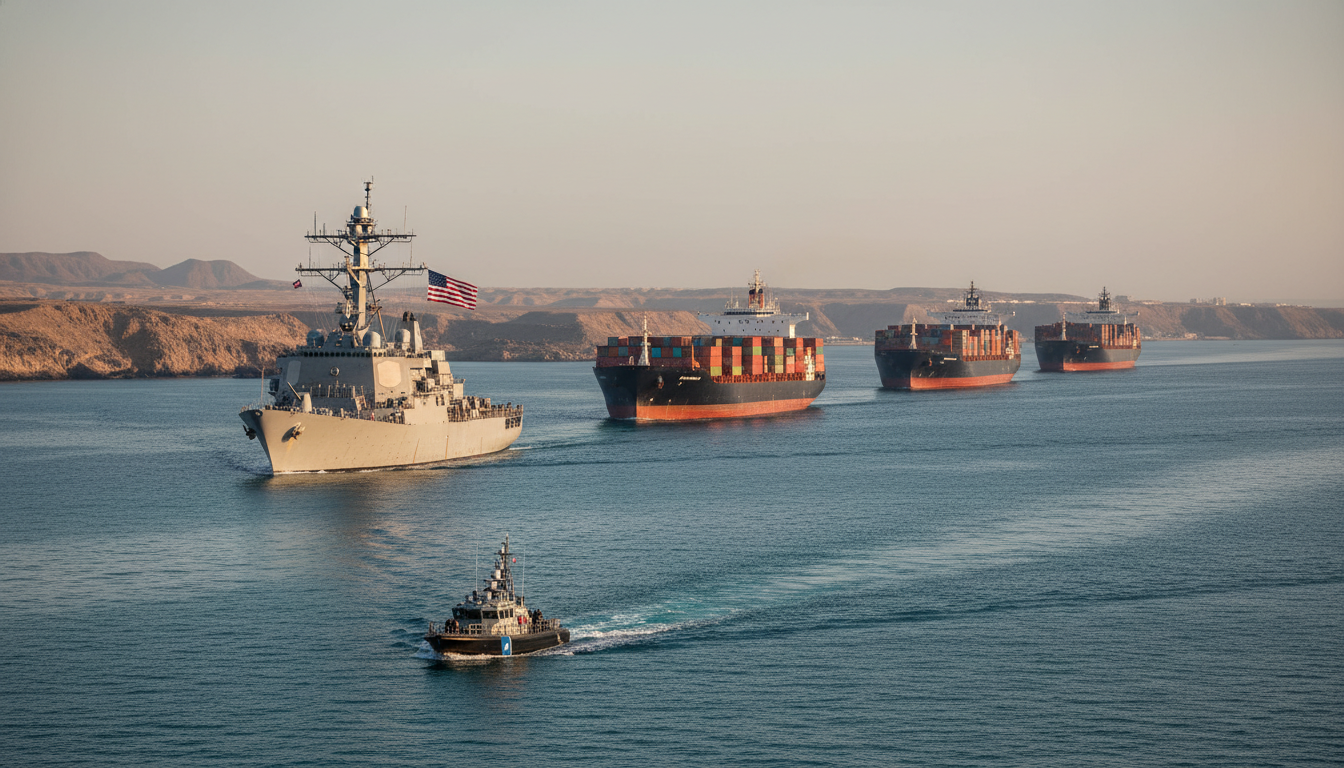
U.S. naval units directed merchant vessels through the Strait of Hormuz on Tuesday, and two U.S.-flag commercial ships completed transit without damage. Officials said the guidance operation aimed to ensure the safe passage of commerce through one of the world’s busiest oil and gas transit routes. The escorted transits were presented as proof of U.S. capability to keep traffic moving under the current ceasefire.
Scale of merchant traffic and seafarer assistance
U.S. forces are overseeing navigation for a large volume of international shipping, with officials citing roughly 1,550 vessels carrying about 22,500 seafarers in the area. The effort to shepherd ships out of the Gulf involves routing and communications support rather than broad interdiction, according to the U.S. account. Officials emphasized the humanitarian and safety aspects of the operation while noting the logistical challenge of coordinating so many commercial movements.
Naval and air assets positioned in the corridor
Senior U.S. commanders reported that destroyers armed with guided missiles are positioned within the designated safe corridor of the Strait of Hormuz. The deployed force package also includes more than 100 fighter aircraft and approximately 15,000 personnel assigned to the operation. Gen. Dan Kin described the disposition as defensive in nature, tasked with deterring further attacks and preserving freedom of navigation.
U.S. preference for peaceful guidance, readiness to adjust
Hegseth stressed that U.S. forces prefer a peaceful, guidance‑focused approach to the situation, describing the operation as temporary while expecting broader international engagement. “It is a temporary mission for us,” he said, adding that Washington expects other countries and institutions to contribute to de‑escalation and maritime security. At the same time, U.S. commanders declared they remain prepared to modify their posture if conditions deteriorate.
Iranian strikes and the wider security context
Officials acknowledged recent Iranian strikes in the region that have complicated the security picture but maintained those incidents have not nullified the ceasefire. The continued U.S. blockade of certain approaches to the strait was cited as part of broader pressure measures, even as escorts proceed for commercial vessels. U.S. leaders framed the current posture as a balance between deterrence and enabling safe maritime commerce.
The U.S. public statements aim to stabilize a volatile maritime situation by assuring seafarers and markets that the ceasefire remains intact while U.S. forces manage transits through the Strait of Hormuz. International reactions and any additional diplomatic steps will be watched closely in the coming days as officials weigh how to translate the temporary guidance mission into a longer‑term security arrangement.
