
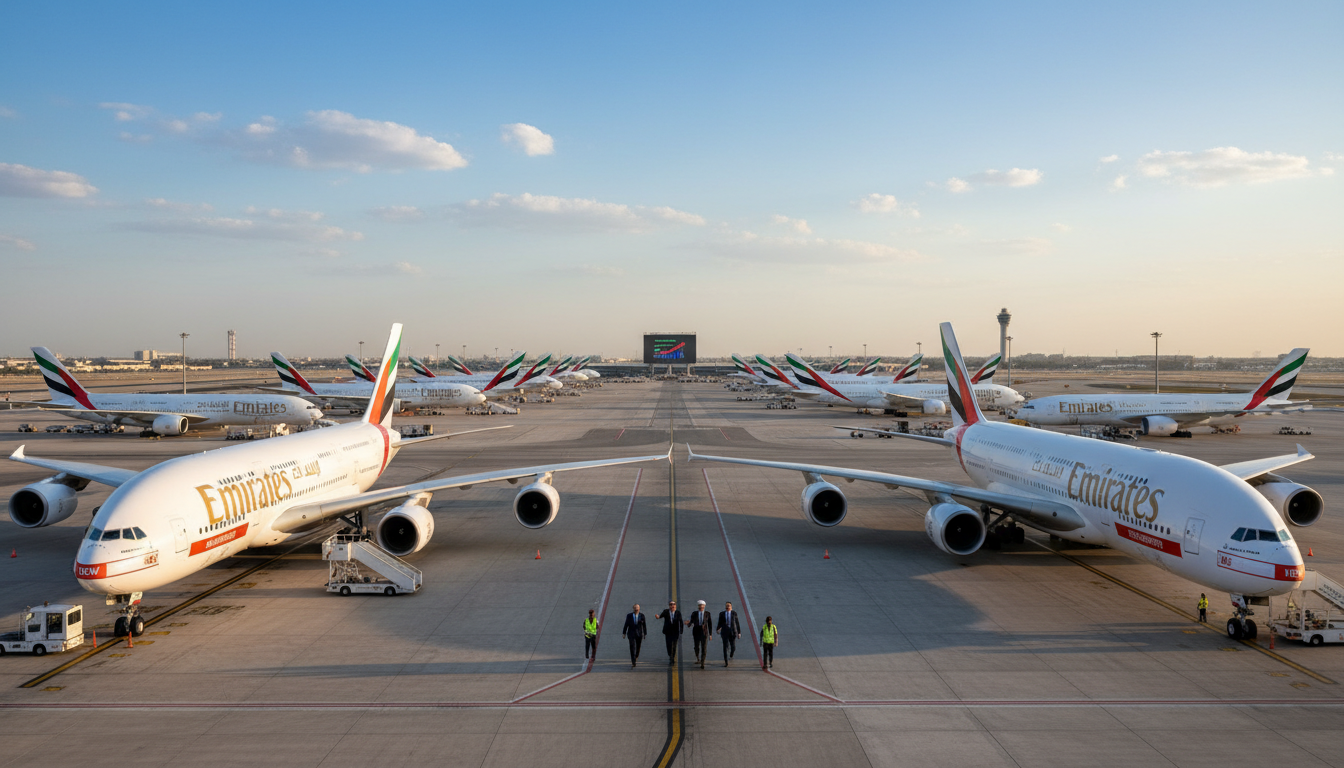
Emirates fleet expands to 277 aircraft after 20 deliveries in 2025–26
Emirates fleet reaches 277 aircraft after 20 deliveries; carrier secures AED10bn in financing and grows A350 fleet to 19 aircraft serving 21 destinations.
Emirates received 20 new aircraft during the 2025–26 financial year, bringing its total fleet to 277 aircraft with an average age of 10.8 years. The carrier also took ownership of several long‑standing types as leasing contracts expired, while accelerating A350 deployments across its network. The results reflect both fleet renewal and a financing programme that generated AED 10 billion to support growth and aircraft acquisitions.
Deliveries and fleet size for 2025–26
Emirates recorded 20 fresh deliveries to its fleet in the reported financial year, a continuation of its multi‑year modernisation plan. By year‑end the airline’s total fleet stood at 277 aircraft and the reported average fleet age was 10.8 years. These numbers signal a steady replacement and expansion cycle as the carrier manages both owned and leased assets.
Leases ended and aircraft ownership increased
During the year Emirates acquired ownership of 29 Airbus A380s and five Boeing 777s as their lease contracts concluded. The transition from leased to owned status alters the balance sheet and gives the airline greater control over long‑term asset utilisation. The move also reflects the carrier’s strategy of managing lease expiries to capture lifetime value from proven aircraft types.
A350 expansion and route deployment
Emirates welcomed 15 Airbus A350 aircraft during the year, bringing the A350 fleet in service to 19 aircraft. Those A350s were deployed across 21 destinations, underscoring the type’s role in the carrier’s medium‑ and long‑haul operations. Emirates has positioned the A350 to offer fuel efficiency and passenger comfort as it integrates the type into its route planning.
AED 10 billion raised through diverse financing structures
The airline reported it raised AED 10 billion through a blend of aircraft financing arrangements sourced from domestic and international markets. Instruments included Japanese operating leases, insurance‑wrapped financing, French tax‑lease structures and facilities supported by export credit agencies. Executives said the mix aimed to optimise cost, risk and tax efficiencies while ensuring continued access to capital for fleet renewal.
Passenger traffic, load factor and yield performance
Emirates carried 53.2 million passengers during the financial year, maintaining robust traffic volumes across its global network. Seat factor — the measure of capacity utilisation — averaged 78.4 percent, slightly below the prior year’s 78.9 percent. Revenue per passenger kilometre rose 4 percent year‑on‑year to 38.1 fils, equivalent to roughly 10.4 US cents, signalling improved yield management despite marginal changes in load factor.
Operational and strategic implications for network planning
The combination of fresh deliveries, increased ownership of key types and targeted financing provides Emirates with greater flexibility in fleet deployment. Ownership of A380s and 777s may influence capacity planning on major trunk routes, while A350 insertions support efficiency and new market opportunities. Fleet composition changes are likely to feed into schedule planning, route frequency decisions and long‑term network strategy.
The airline’s funding strategy and fleet developments arrive as carriers worldwide balance growth with fuel and capital costs, and Emirates’ results show a measured approach to asset management. Continued monitoring of traffic patterns and yields will be central to translating fleet investments into sustained financial performance.
Emirates’ 2025–26 outcome highlights the twin priorities of renewing aircraft and securing diverse financing to underpin expansion, while passenger numbers and yields point to resilient demand across its global network.
