
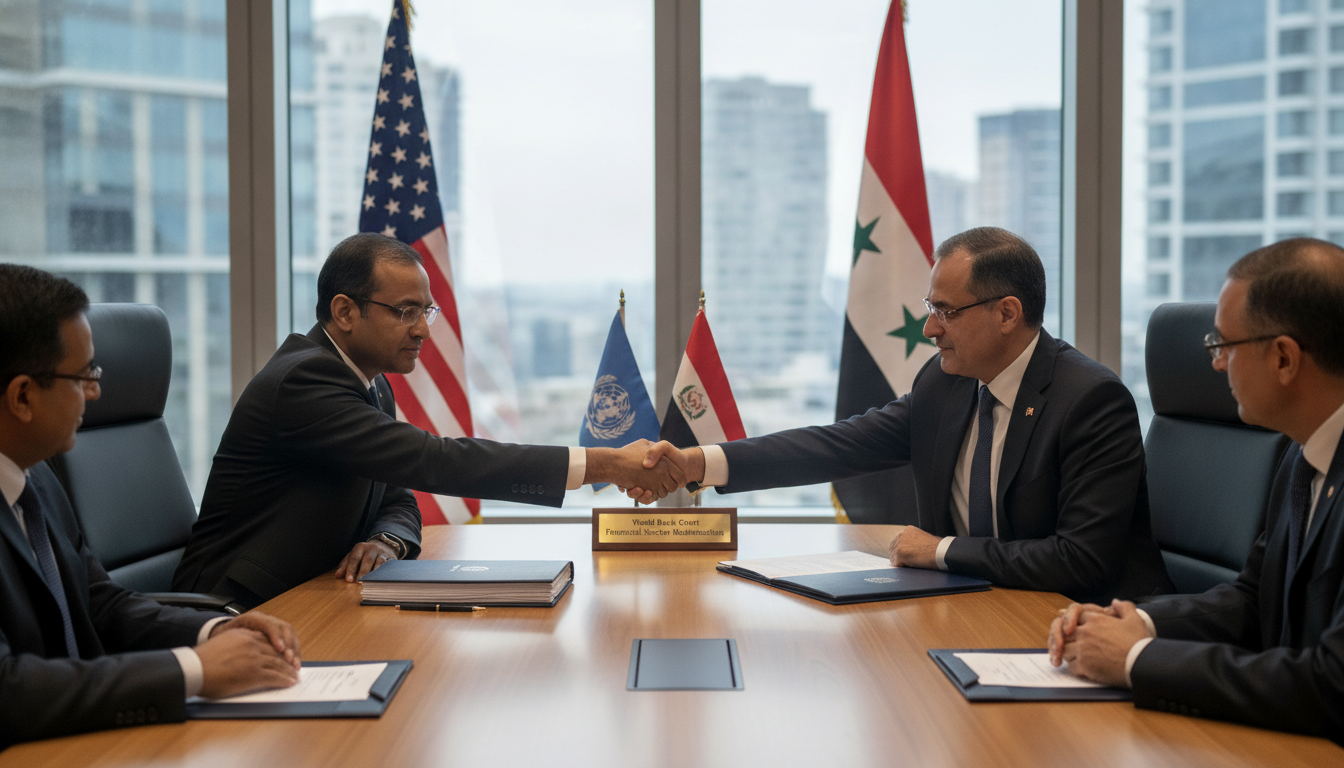
World Bank approves $100m grant to advance Syria financial sector modernization
World Bank approves $100 million IDA grant to support Syria financial sector modernization, aiming to expand secure digital payments and support 500,000 users.
The World Bank’s Board of Executive Directors has approved a $100 million grant from the International Development Association to support Syria financial sector modernization, officials said. The project is designed to build core financial infrastructure that will make payments faster, safer and more transparent while improving access to digital financial services for households and businesses. The funding is framed as a key step toward enabling a modern, resilient financial system that can underpin broader economic recovery in Syria. Central bank officials welcomed the decision and signalled continued commitment to reforms that enhance trust in the domestic financial system.
World Bank approval and project purpose
The approved IDA grant aims to finance foundational systems and reforms within Syria’s banking and payments architecture. According to the World Bank statement, the project will support investments that modernise payment systems, strengthen financial integrity, and help create conditions for wider formal financial inclusion. The Bank framed these changes as necessary to improve the efficiency and security of financial transactions, reduce operational costs and increase transparency across payment channels. Officials said the initiative is intended to lay the groundwork for a digitally enabled financial sector aligned with international practices.
Digital payments and inclusion targets
Project targets include enabling at least 15 million electronic payment transactions for individuals annually during the implementation period. The programme also aims to support no fewer than 500,000 individuals and firms to use digital payments effectively, with a target that at least 150,000 of those beneficiaries will be women. These measurable goals reflect a focus on expanding practical access to digital payments, promoting gender inclusion, and building user confidence in electronic financial services. The Bank indicated that achieving these benchmarks will rely on both technological upgrades and outreach to potential users.
Central Bank response and policy commitments
Syrian Central Bank Governor Mohammed Safwat Raslan described the grant as an important milestone in developing the country’s financial and banking infrastructure. State media quoted Raslan saying the central bank will continue efforts to build a modern financial sector that strengthens public trust and supports economic growth. Raslan also emphasised the project’s role in preparing the Syrian financial system for eventual reintegration with global financial networks. Officials indicated the central bank will coordinate closely with international partners and domestic institutions during implementation.
Expected improvements in security and transparency
The World Bank highlighted that modernised payment systems would increase the safety and efficiency of transactions while bolstering financial integrity. Upgrades to core infrastructure and regulatory frameworks are expected to reduce opportunities for fraud, improve transaction traceability and streamline clearing and settlement processes. The project also seeks to develop standards and operational practices that can help reduce informal cash-based activity over time. Improved transparency and stronger anti-money-laundering and counter-terrorist financing measures were identified as complements to the technical work on payments systems.
Implementation challenges and operational considerations
Experts and observers note that deploying a large-scale financial modernisation initiative faces practical and institutional challenges. Building interoperable systems, ensuring cybersecurity, training staff across banks and payment service providers, and raising digital literacy among users are among the tasks ahead. The project will also need effective governance arrangements to manage procurement, vendor selection and system integration while safeguarding public funds. Authorities and international partners will be expected to monitor progress closely and address barriers that could slow adoption of digital payment services.
Beneficiaries, timeline and monitoring
The project’s beneficiaries are envisaged to include households, small and medium-sized enterprises, and financial service providers that will gain from lower transaction costs and improved access. By targeting half a million users and 15 million transactions annually, the initiative sets concrete uptake and usage metrics to guide monitoring. The World Bank typically pairs such investments with technical assistance, capacity building and performance-based milestones to ensure objectives are met. Regular reporting and independent evaluations are likely to be part of the oversight framework while the programme is underway.
The $100 million IDA grant marks a significant international investment focused on modernising Syria’s payments and financial infrastructure, with explicit targets for digital inclusion and measurable outcomes. If implemented effectively, the project could reduce frictions in financial transactions, broaden access for underserved populations, and contribute to rebuilding confidence in formal financial channels across Syria.
