
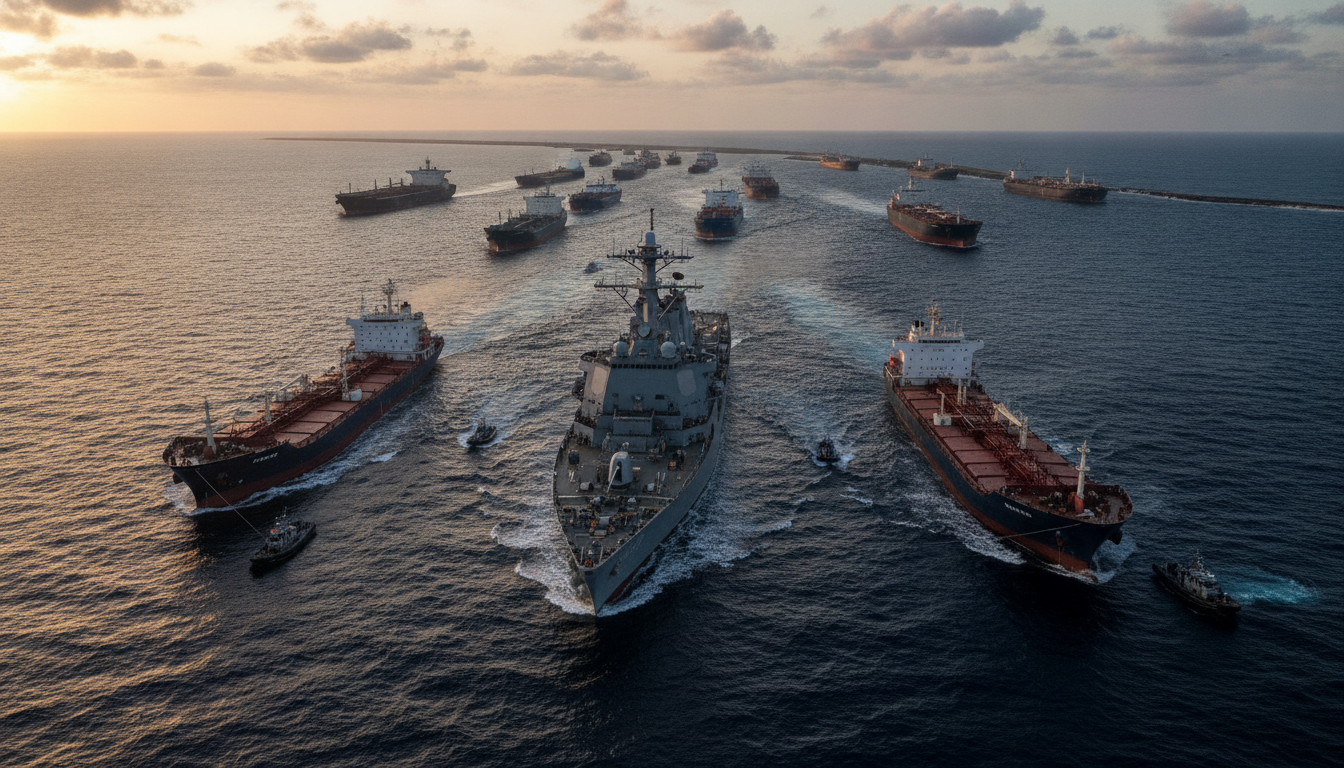
U.S. Redirects 51 Commercial Vessels in Support of Blockade on Iranian Ports, CENTCOM Says
CENTCOM: U.S. forces redirected 51 commercial vessels near Iran, disabled two ships and boarded two others as part of enforcement of maritime blockade.
The U.S. Central Command said on Friday that American forces redirected 51 commercial vessels as part of operations backing a U.S.-led blockade on Iranian ports. The announcement said two vessels were disabled and two others were boarded to verify compliance with the restrictions. The move marks a significant uptick in maritime enforcement activity in the northern Indian Ocean and Gulf region.
CENTCOM statement and scope of operation
CENTCOM issued a concise statement reporting the redirections, boardings and disabling of vessels, without providing detailed vessel names or precise locations. The command framed the actions as measures to enforce the maritime restrictions tied to the broader blockade effort. Officials did not publicly release a full operational timeline in the initial release.
The statement confirmed that U.S. naval and maritime forces carried out the redirections in coordination with ongoing patrols and surveillance assets. CENTCOM characterized the actions as targeted and intended to ensure that commercial shipping complied with the measures being applied to Iranian ports. No casualties or significant damage were reported in the statement.
Details of interdictions, boardings and disabling actions
According to CENTCOM, two commercial vessels were physically disabled and taken out of service temporarily to prevent them from breaching the blockade. Two additional ships were boarded by U.S. personnel to inspect manifests and equipment and to ensure adherence to the imposed restrictions. The remaining redirected vessels were guided away from the affected Iranian ports.
The command’s description indicates a mix of non-lethal interdiction tactics and logistical redirection rather than large-scale kinetic operations. CENTCOM did not specify whether the disabled vessels were disabled remotely, by physical boarding, or by other means. The authority said inspections focused on compliance with the operational restrictions rather than on criminal prosecutions.
Operational and legal framework cited by U.S. forces
CENTCOM framed the actions as enforcement of maritime restrictions tied to ongoing U.S. policy toward Iran, but the initial statement did not cite specific legal authorities or international mandates. U.S. naval operations in the region typically reference national security directives, sanctions enforcement and collective security arrangements with partners, though CENTCOM’s statement focused on operational facts.
Legal analysts note that interdiction and boarding operations must balance maritime law, flag-state consent and the rights of commercial operators. CENTCOM’s statement emphasized that the goal was compliance and safety for commercial mariners, suggesting an operational posture designed to limit escalation while maintaining pressure on targeted port activity.
Regional responses and diplomatic implications
The redirection of 51 commercial vessels is likely to draw reactions from regional governments, maritime industry stakeholders and international partners, particularly those with trade routes through the Gulf of Oman and the Arabian Gulf. Shipping insurers, freight operators and port authorities are expected to reassess routing and risk profiles in response to heightened enforcement activity.
Diplomatic channels will be closely watched for responses from Tehran and from governments with nationals aboard affected ships. The operational move may prompt calls for clarification of maritime rules and could accelerate discussions at international fora about navigation rights and the safety of civilian shipping in contested waters. CENTCOM did not report any diplomatic contacts at the time of its statement.
Commercial shipping and energy-route consequences
The immediate disruption to schedules and port calls could ripple through supply chains that rely on timely transits through the region. Gulf states and Gulf of Oman transits carry both energy shipments and non-energy cargo; extended enforcement operations risk increasing transit times and insurance costs. Shipping companies may consider alternate routes or delayed port calls until assurances of safe passage are provided.
Charterers and vessel operators will monitor future CENTCOM advisories for guidance on permissible approaches and safe corridors. The U.S. statement underlined an intent to minimize risk to civilian crews and cargo while enforcing restrictions, but operators must weigh commercial imperatives against safety and regulatory compliance.
The wider economic impact will depend on the duration of enforcement measures and the level of international coordination that follows. Market sensitivity to disruption in this maritime corridor means that even brief episodes of redirection can have outsized effects on freight rates and regional trade flows.
The U.S. Central Command’s announcement that U.S. forces redirected 51 commercial vessels and conducted targeted boardings and disabling actions underscores the increasing militarisation of maritime enforcement in the region. CENTCOM framed the operation as necessary to ensure compliance with restrictions on Iranian ports, while stressing safety and adherence to operational procedures.
Observers will watch for follow-up statements from CENTCOM, responses from regional governments and any action by international maritime organisations to clarify the rules of engagement for commercial shipping. For now, the reported redirections mark a notable escalation in on-the-water measures intended to limit access to specific Iranian maritime facilities.
