
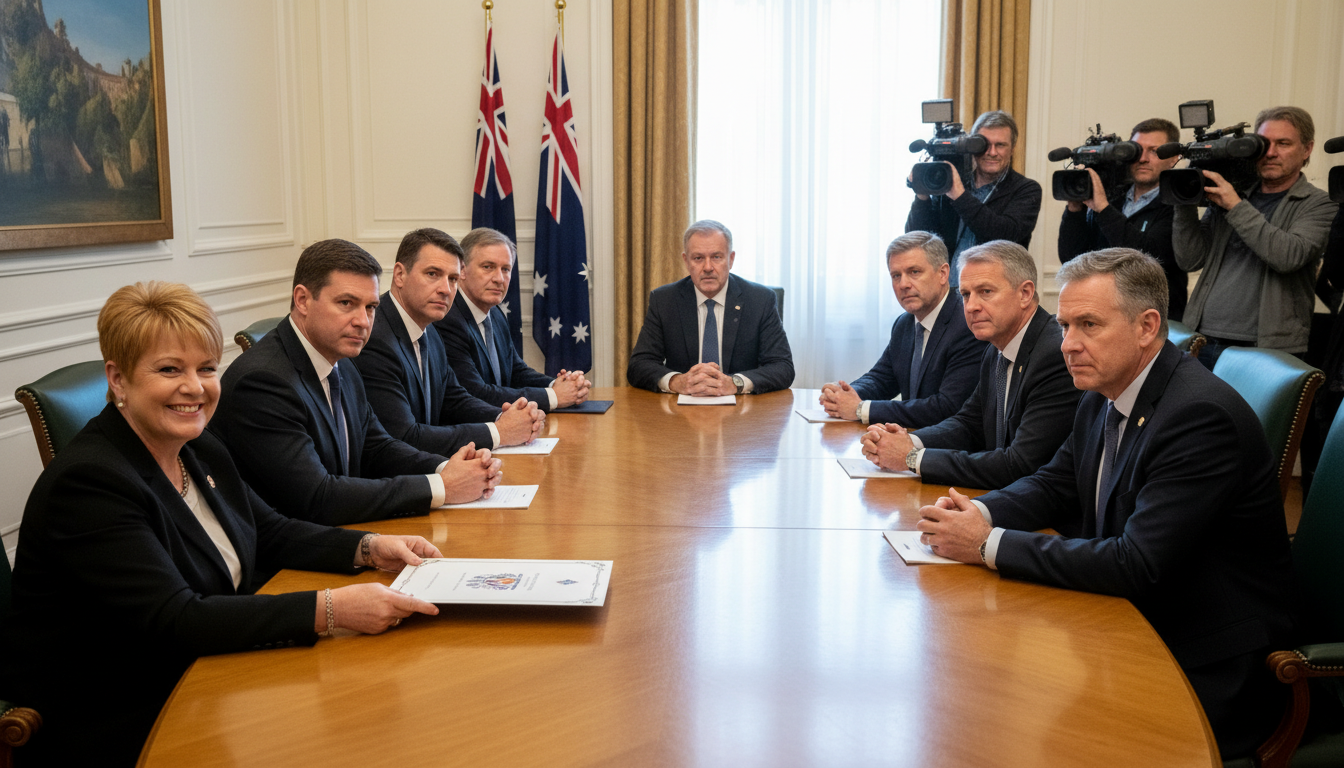
One Nation victory in Farrer by-election forces Coalition to confront alliance dilemma
One Nation victory in Farrer by-election shocks Australian politics as David Farley wins; Coalition under pressure to consider alliances and faces rural shift
Historic win in Farrer
The One Nation victory in the Farrer by-election delivered a striking upset, with candidate David Farley securing the electorate and giving the party its first seat in the federal House of Representatives. The result ends a long run for the Coalition in Farrer, a seat the Liberal-National alliance had held continuously since 1949. The outcome immediately raised questions about shifting voter sentiment in rural New South Wales and the broader durability of mainstream conservative support.
Detailed vote outcome and local drivers
Official figures showed Farley won about 39 percent of the vote in the rural Farrer electorate, while the nearest rival, an independent, took roughly 28 percent. The Liberal candidate managed about 12 percent and the Nationals candidate about 10 percent, underscoring a dramatic collapse for both Coalition partners. Local concerns — including rising living costs, housing shortages and heightened debate over immigration — were cited by analysts and campaigners as central drivers of the result.
Leader statements and party reaction
One Nation leader Pauline Hanson celebrated the breakthrough and framed it as the start of a broader advance, telling supporters her party would seek additional seats and reject political marginalisation. The triumph marks a milestone for Hanson’s long-standing campaign themes and provides One Nation a new platform within federal parliamentary politics. Party officials are now preparing to capitalise on the momentum while opponents assess how to blunt further gains.
Government and opposition responses
Treasurer Jim Chalmers described the Farrer result as a severe blow to the Coalition, saying the by-election amounted to an electoral rout for the alliance and raising the possibility that the Coalition might need to rely on One Nation to form or sustain a government. Prominent Liberal figures have not ruled out a minority government arrangement supported by One Nation, with at least one senior MP signalling the party must seek the maximum possible authority if it intends to govern. The comments have intensified debate about how mainstream parties should respond to an emboldened right-wing force.
Strategic implications for One Nation
One Nation’s strategy in contesting Farrer emphasised direct appeals to rural voters on economic and cultural issues, and the result suggests those messages resonated in at least this electorate. Having a member in the House of Representatives gives the party greater visibility and procedural standing, which could enhance its ability to influence debates and attract media attention. Political strategists say the party may attempt to replicate the model in other rural and regional seats where dissatisfaction with the major parties is acute.
Potential impact on federal politics and policy
The shock in Farrer complicates the national political arithmetic and could prompt the Coalition to reassess policy positions, candidate selection and campaign messaging ahead of future elections. If One Nation’s enhanced presence forces major parties to court its support, policy shifts on immigration, regional development and housing may follow as bargaining chips or areas of convergence. Observers warn that reliance on a small but pivotal party can produce unstable governing arrangements and shift parliamentary debate toward more polarised territory.
The Farrer by-election outcome will be scrutinised by campaign teams, policy advisers and voters as a potential bellwether for wider rural sentiment across Australia. Parties on all sides are now recalibrating their approaches amid signs that traditional electoral loyalties in regional areas are increasingly volatile. The coming months will test whether One Nation can convert this breakthrough into sustained influence or whether it will remain an isolated upset in a changing political landscape.
