
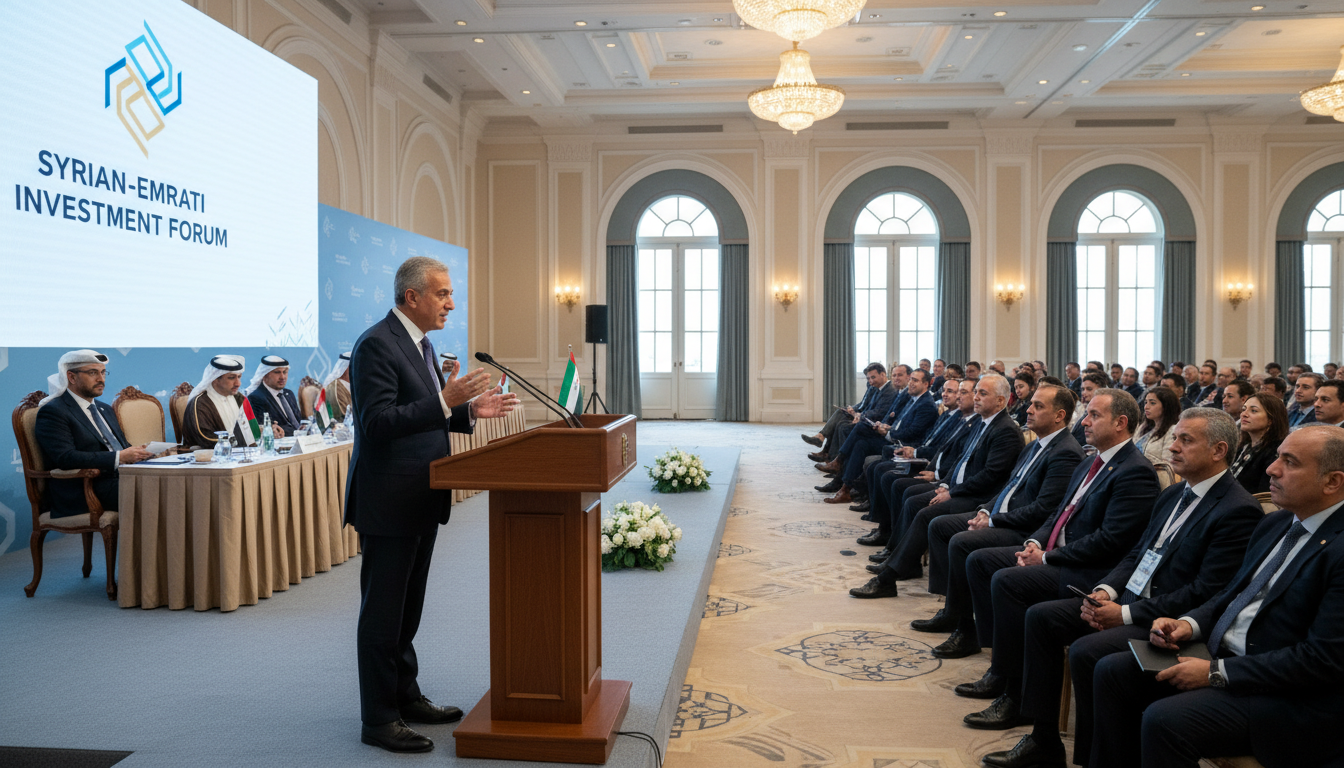
Syria-UAE investment forum in Damascus spotlights projects and deeper economic ties
UAE minister leads delegation at Syria-UAE investment forum in Damascus, pledging deeper economic ties across energy, tourism, agriculture and technology.
The Syria-UAE investment forum opened in Damascus on Monday, bringing Emirati officials and investors together with Syrian counterparts to map new commercial and developmental partnerships. Dr. Thani bin Ahmed Al Zeyoudi, UAE Minister of State for Foreign Trade, addressed the opening session at the Ebla Al-Sham Hotel in Rural Damascus and described the capital as holding a special place in the hearts of Emiratis. The forum, organised by the Syrian Investment Authority, aims to explore joint projects across sectors including energy, tourism, agriculture, health and digital services.
Minister underscores historic ties and bilateral intent
Dr. Al Zeyoudi emphasised the longstanding ties between the two countries and framed the gathering as an opportunity to elevate economic and investment relations. He said the next phase requires strengthened cooperation based on genuine partnership, integration and comprehensive development. The minister called for projects that generate real added value for both economies and foster sustainable growth. Excerpts of his remarks were broadcast by the Syrian Arab News Agency (SANA).
Forum format brings government and private sector into direct dialogue
Organisers designed the forum to combine plenary sessions with targeted roundtables, enabling direct engagement between officials and private investors. Syrian and Emirati participants are holding discussions on legal frameworks, incentives and barriers to investment. The format is intended to accelerate deal-making by moving from concept to actionable memoranda of understanding and pilot projects. Officials argued that direct dialogue and pragmatic coordination are essential to unlocking commercially viable ventures.
Wide sectoral agenda targets reconstruction and long-term growth
The forum’s agenda spans trade, finance, tourism, real estate, urban development, agriculture, food security, energy, aviation, logistics, healthcare, technology and digital transformation. Speakers highlighted opportunities in reconstruction-related construction, hospitality and infrastructure, alongside longer-term investments in renewable energy and agribusiness. Delegates flagged the strategic importance of integrated supply chains and logistics to lower costs and improve market access. Several panels focused on investment models that combine public incentives with private capital and technical expertise.
Emphasis on partnership-led, value‑adding projects
A recurring theme at the forum was the need for projects built on mutual interests that deliver measurable economic benefits and jobs. UAE participants stressed that investments should support local capacity building and transfer of technology, not only capital deployment. Syrian officials signalled openness to schemes that incorporate training, local supplier development and sustainable management practices. Both sides discussed mechanisms to de‑risk investments, including phased project rollouts and joint oversight arrangements.
Emirati delegation’s arrival and immediate engagements
The Emirati delegation arrived in Damascus on Sunday, May 10, 2026, for what organisers described as an official visit focused on economic and investment cooperation. During the opening day, delegates conducted bilateral meetings with Syrian ministers and investment authorities and participated in several sector-specific sessions. Officials indicated plans for follow-up technical working groups and feasibility studies to refine project concepts presented at the forum. Private sector representatives from both countries said they expect a pipeline of pilot projects to emerge in the coming months.
Regional context and the UAE’s evolving economic role
Observers noted the forum reflects a broader shift in regional economic engagement, with the UAE positioning itself as a hub for investment and reconstruction finance across the Levant. Business and diplomatic sources emphasised that investors will weigh political, regulatory and commercial risks alongside potential returns. Panelists discussed the need for transparent regulatory frameworks and predictable dispute-resolution mechanisms to attract larger-scale capital. The forum was portrayed as an early step in broader efforts to normalise and expand bilateral economic ties.
The Syria-UAE investment forum in Damascus concluded its first day with commitments to deepen technical cooperation and to explore concrete project proposals, while organisers pledged further meetings to translate discussions into agreements. Participants said future steps will prioritise projects that are bankable, job-creating and aligned with shared development objectives, signalling cautious but tangible momentum in Syria-UAE economic engagement.
