
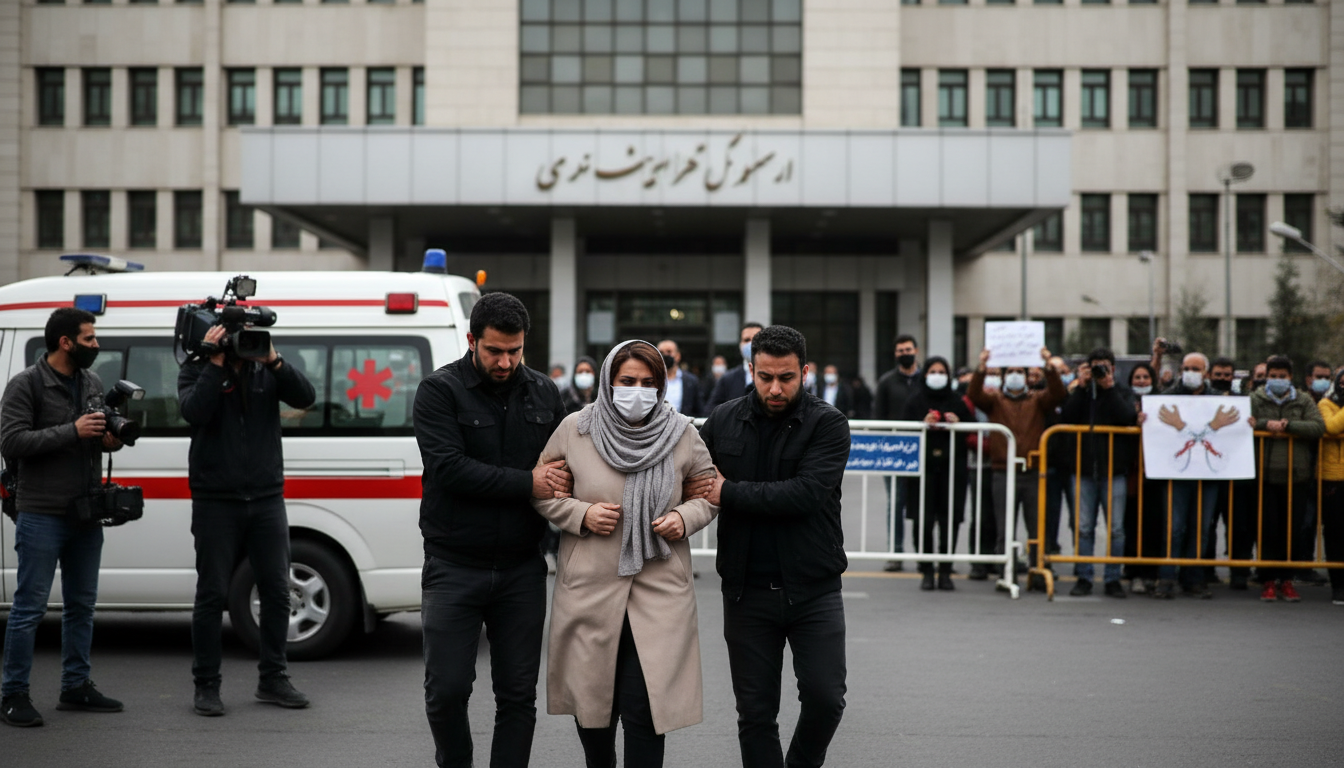
Narges Mohammadi Transferred to Tehran Hospital After Collapse; Family Demands Unconditional Release
Narges Mohammadi moved to a Tehran hospital on May 10, 2026, for treatment by her own medical team after collapsing and losing consciousness while imprisoned in Zanjan on May 1, 2026. The transfer, confirmed by the Narges Mohammadi Foundation, follows ten days of treatment in Zanjan and a legal order halting her sentence to permit medical care. Her family and lawyers have renewed calls for her unconditional release amid growing concern about her health and the conditions she endured in detention.
Medical Transfer Ordered After Collapse
Mostafa Nili, a lawyer for Narges Mohammadi, said on social media that the transfer to Tehran occurred on May 10, 2026, “following an order halting her sentence for medical treatment.” The foundation run by her family released a statement saying she will be treated by her own medical team at the Tehran facility.
The move reverses earlier refusals to transfer her from Zanjan, where she was first admitted after collapsing on May 1, 2026. Authorities had previously denied requests for transfer despite the deterioration of her condition, according to the family foundation.
Family Foundation Calls for Immediate Release
In its statement, the Narges Mohammadi Foundation called for “her unconditional freedom and the dismissal of all charges,” arguing that continued detention poses a direct threat to her life. The foundation’s appeal framed the transfer as a temporary medical measure and reiterated that only release would ensure her long-term safety.
Her husband, Taghi Rahmani, said in the foundation’s statement that “Narges Mohammadi’s life hangs in the balance” and warned that she must not be returned to the conditions that harmed her health. The family’s demands underscore a wider campaign by relatives and supporters for urgent medical parole or complete discharge from custody.
Timeline of Hospitalization and Legal Interventions
According to the foundation, Mohammadi was hospitalized in Zanjan on May 1, 2026, after collapsing and losing consciousness inside the prison facility. She received care there for ten days before the transfer to Tehran, where specialists from her chosen medical team are expected to oversee treatment.
The transfer on May 10, 2026, came after legal steps that temporarily halted the enforcement of her sentence to allow for medical intervention. Lawyers said the pause in detention was narrowly focused on treatment and did not amount to a judicial determination on her broader convictions.
Health Concerns and Allegations of Prison Abuse
Family members and her husband have long reported serious health issues, including chronic heart problems, and warned that repeated incarcerations had worsened her condition. Rahmani and the foundation have criticized prison authorities for what they describe as rough treatment and physical abuse by guards during previous periods of detention.
Those allegations add urgency to the family’s calls for release, with supporters arguing that repeated incarcerations and alleged mistreatment constitute an ongoing risk to her life. The foundation emphasized that medical supervision in Tehran should not be viewed as an alternative to ending what they call an unjust detention.
Legal Status and Recent Sentences
Narges Mohammadi, 54, received the 2023 Nobel Peace Prize for her work opposing the oppression of women in Iran and promoting human rights and freedom. At the time of that award she was serving a 10-year sentence handed down on charges of threatening national security.
Mohammadi was arrested again in December while on a yearlong furlough granted for health reasons, after delivering a speech critical of the government. In February 2026, an Iranian court imposed an additional seven and a half years in prison related to her opposition activities, compounding the legal penalties she currently faces.
International Attention and Memoir Excerpt Raises Alarm
An excerpt from Mohammadi’s upcoming memoir, published alongside reporting in The Guardian, quoted her saying there is “no hardship worse than illness combined with imprisonment.” The passage has been circulated by human rights advocates and added to international concern over the treatment of prisoners with serious medical conditions.
The memoir also contains the line that “authoritarian regimes do not always need an executioner’s rope. Sometimes, they simply wait for the human body to fail,” a phrase that has been cited by rights groups and observers as emblematic of broader fears about the treatment of dissidents. The transfer to Tehran is likely to amplify attention from foreign governments, advocacy organizations, and Nobel laureates who have previously called for Mohammadi’s release.
Narges Mohammadi remains under medical care in Tehran as her family and legal team press for complete dismissal of charges and a permanent end to her detention, while authorities have not publicly released a detailed medical bulletin or confirmed long-term plans for her custody.
