
Trump vows victory over Iran as Tehran rejects U.S. peace proposal
Trump vows victory over Iran after Tehran rebuffed Washington’s peace offer, raising fears of a prolonged conflict and continued disruptions to shipping through the Strait of Hormuz.
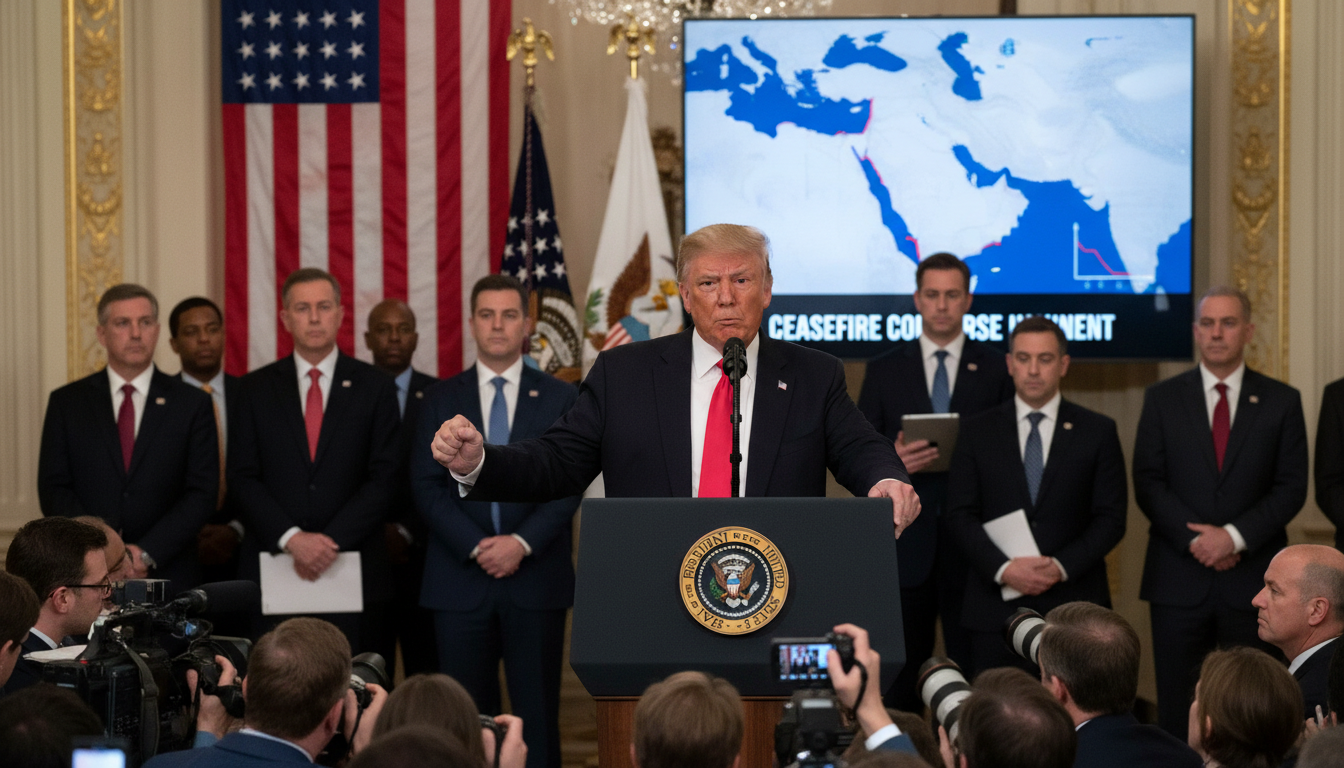
President Donald Trump told reporters at the White House that the United States will secure a “complete” victory in its confrontation with Iran after Tehran rejected Washington’s proposed ceasefire terms. Trump said Iran’s response indicated it expected the United States to weaken under pressure, a calculation he vowed would prove mistaken. His remarks followed a swift American dismissal of Tehran’s reply and have heightened concern that the months-long crisis could continue.
Trump’s White House comments
Trump framed Iran’s reply as insufficient and portrayed the ceasefire as fragile following the exchange of proposals between the two sides. He described Tehran’s message as lacking seriousness and suggested it would not alter U.S. policy or resolve the broader dispute. The president also accused Iranian negotiators of inconsistency and questioned their credibility in characterizing their reply as evasive.
Tehran’s rejection and messaging
Iran’s official response to the U.S. proposal was portrayed by Washington as a rejection that left key issues unresolved. Tehran signalled adherence to its core positions, officials said, arguing that the U.S. approach did not address what it describes as existential security concerns. Iranian leaders have repeatedly insisted any settlement must respect national sovereignty and include guarantees against future coercion.
Ceasefire prospects and diplomatic options
Both sides’ public posturing has cast doubt over the durability of the current ceasefire arrangement and narrowed visible diplomatic openings. U.S. officials called Tehran’s reply “weak,” while Iranian statements framed Washington’s proposal as conditional and insufficient. Diplomats and analysts say backchannels, third-party mediation and incremental confidence-building measures remain possible but will require significant concessions from one or both sides.
Maritime security and the Strait of Hormuz
The dispute has had an immediate impact on maritime traffic, with commercial operators reporting heightened risk in the Strait of Hormuz and surrounding waters. Disruptions to shipping in the region threaten global energy flows and have increased insurance and operational costs for vessels transiting the area. Gulf states and international maritime agencies have urged restraint and stepped-up monitoring, warning that prolonged instability could further strain supply chains.
Regional and international reactions
Governments across the Gulf and beyond have monitored the exchange closely, calling for de-escalation while urging diplomatic engagement to prevent spillover. European and Asian partners have reiterated support for maritime security and some have offered to facilitate talks or coordinate humanitarian and energy contingency measures. Regional leaders privately urge restraint and publicize support for negotiated solutions to avoid a wider confrontation.
Risk assessment and possible next steps
Analysts warn the situation could evolve rapidly if either side pursues punitive military or economic measures in response to the diplomatic stalemate. Continued targeting of maritime traffic or limited military strikes could trigger broader reprisals and further complicate avenues for negotiation. Observers say sustained international pressure, combined with credible guarantees and phased commitments, would be required to produce a durable de-escalation.
The president also made a pointed claim about Iran’s nuclear material, suggesting Tehran could provide what he termed “nuclear dust,” and said only major powers have the capacity to process such material. He reiterated that U.S. operations have targeted senior Iranian commanders and argued those actions constrained Tehran’s leadership. Iranian officials have dismissed U.S. accusations and continued to frame their actions as defensive responses to regional threats.
Washington and Tehran appear to be locked in a contest of wills where public rhetoric and tactical moves on the ground will shape the next phase of the crisis. Regional governments and international organisations are likely to intensify shuttle diplomacy aimed at preventing further escalation and reopening channels for a negotiated settlement.
The conflict’s future now hinges on whether either capital will step back from maximalist positions and permit mediated talks or whether continued mutual recrimination and limited military actions will entrench a longer, more dangerous phase of confrontation.
