
Alberta independence referendum drive gains momentum with 300,000 signatures
Alberta separatists submitted over 300,000 signatures seeking an Alberta independence referendum, citing economic grievances, oil export barriers and legal hurdles.
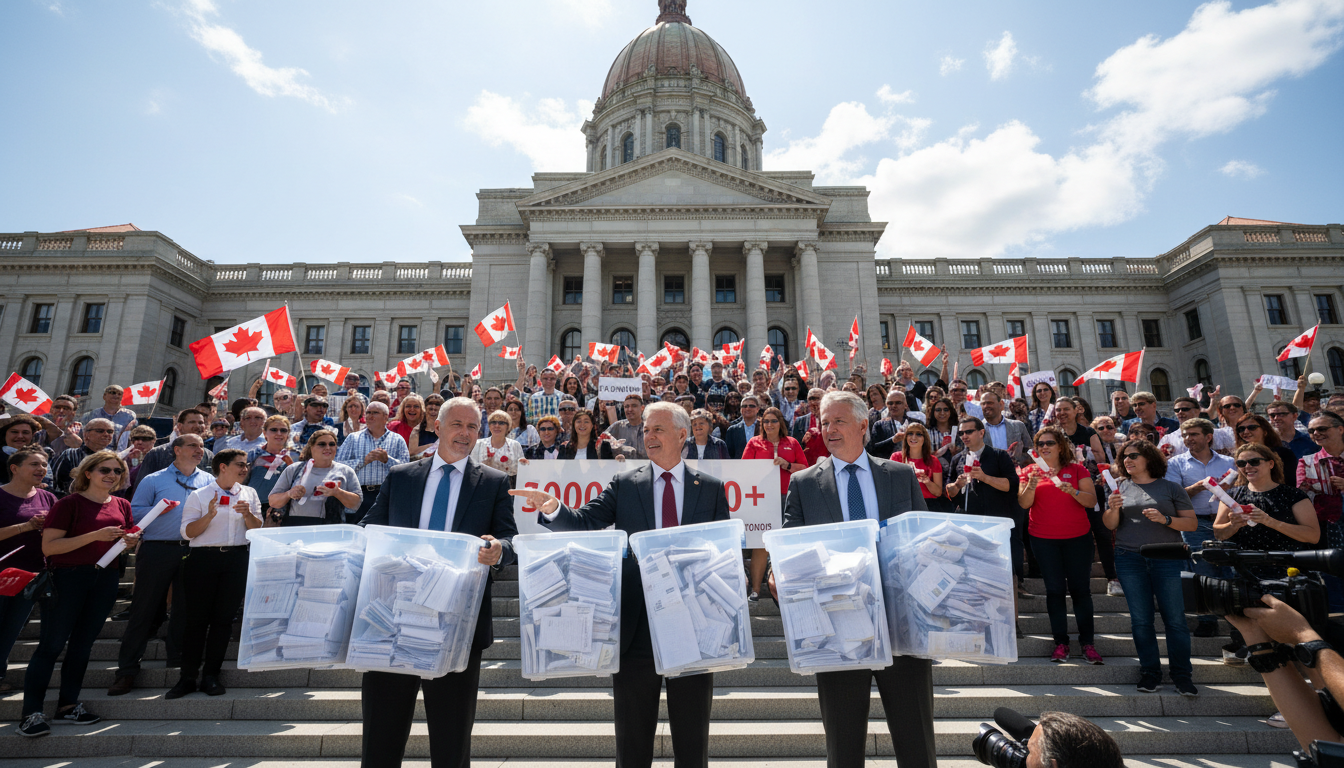
Alberta separatists have delivered more than 300,000 signatures to support a petition for an Alberta independence referendum, a number that approaches twice the legal threshold required to trigger a vote. The campaign’s organizers say the figure reflects widespread frustration across the province and claim roughly a quarter of Albertans would back secession if a referendum were held. The push has reignited long-standing debates about western alienation, federal-provincial fiscal arrangements and the constitutional path to secession.
Separatist Group Submits 300,000 Signatures
The petition handover marks a significant milestone for the separatist movement in Alberta, coming amid growing political agitation in the province. Organizers presented the signatures to provincial authorities and framed the submission as a democratic demand for a formal referendum on Alberta’s future within Canada.
Campaign leaders argue the petition demonstrates popular support strong enough to warrant a public vote, while federal officials and constitutional scholars caution that legal and procedural barriers remain substantial. Observers note the packet of signatures will likely trigger political discussion more than deliver an immediate legal pathway to independence.
Quebec referendums offer legal precedent but not a blueprint
Supporters of Alberta’s secession effort point to Quebec’s referendums in 1980 and 1995 as a legal and political reference point. The narrow 1995 result, in which the “stay” side prevailed by 50.58 percent, prompted the Supreme Court of Canada to issue an advisory opinion outlining the conditions under which a province might legitimately pursue independence.
That court opinion emphasized that a clear majority in a referendum would obligate Ottawa and other provinces to negotiate, provided the seceding province respected the rights of others. Legal experts say the Quebec precedent supplies a judicial framework but does not create a simple, automatic route to unilateral separation for Alberta.
Indigenous rights present a formidable constitutional obstacle
Indigenous leaders and legal advocates have already signalled that any Alberta independence bid would face immediate challenges grounded in treaty and constitutional rights. First Nations, Métis and Inuit communities contend that a unilateral move to secede could violate collective rights enshrined under historic treaties and Canada’s Charter of Rights and Freedoms.
Court challenges by Indigenous groups could delay or block secession efforts and would likely force prolonged national litigation. Constitutional lawyers warn that such legal contests would test the limits of the Quebec precedent and could inflame feelings of exclusion that fuel separatist sentiment.
Economic grievances fuel separatist momentum
Economic discontent lies at the heart of the independence push, with many Albertans citing perceived unfairness in federal transfer mechanisms and provincial revenues. Alberta supporters argue the equalization system redistributes wealth from resource-rich provinces to less productive regions, and they point to large transfers to Quebec over recent years as evidence of imbalance.
Proponents of separation say Alberta’s contribution to national revenue contrasts sharply with the benefits the province receives, stoking resentment that has intensified after a decade of federal Liberal governance. Critics of secession counter that independence would carry substantial fiscal, regulatory and market risks that could offset any gains from retaining more resource revenue.
Oil export constraints and interprovincial trade barriers
Alberta’s economic arguments are anchored in its energy endowment and the practical difficulties of exporting crude without broader cooperation. The province holds substantial oil reserves and contends that it requires transit and market access to capture the full value of its resources.
Complicating matters, significant interprovincial trade barriers exist within Canada that some analysts say impede efficient movement of goods and energy. Unlike the United States, Canada does not prohibit discriminatory trade measures between provinces, and long-standing internal barriers have frustrated efforts to integrate markets and streamline exports. Separatists argue these obstacles justify pursuing autonomy to manage Alberta’s natural resources more effectively.
Historical roots explain persistent western alienation
The movement for Alberta independence is not new; it builds on decades of Western Canadian grievances dating back to the formation of the provinces. Political leaders in Alberta have long debated federal spending, control over natural resources, and the balance of political influence between east and west.
Historical migration patterns, cultural influences and a tradition of conservative politics have left Alberta culturally and economically distinct from some eastern provinces. That history of divergence underpins modern separatist rhetoric and helps explain why calls for autonomy periodically re-emerge when federal-provincial tensions intensify.
The petition’s submission does not guarantee a referendum or a change in political status, but it does escalate a conversation that will demand legal, political and constitutional responses. Ottawa and provincial capitals must weigh complex questions about democratic expression, Indigenous rights and national cohesion as debate over an Alberta independence referendum continues to unfold.
