
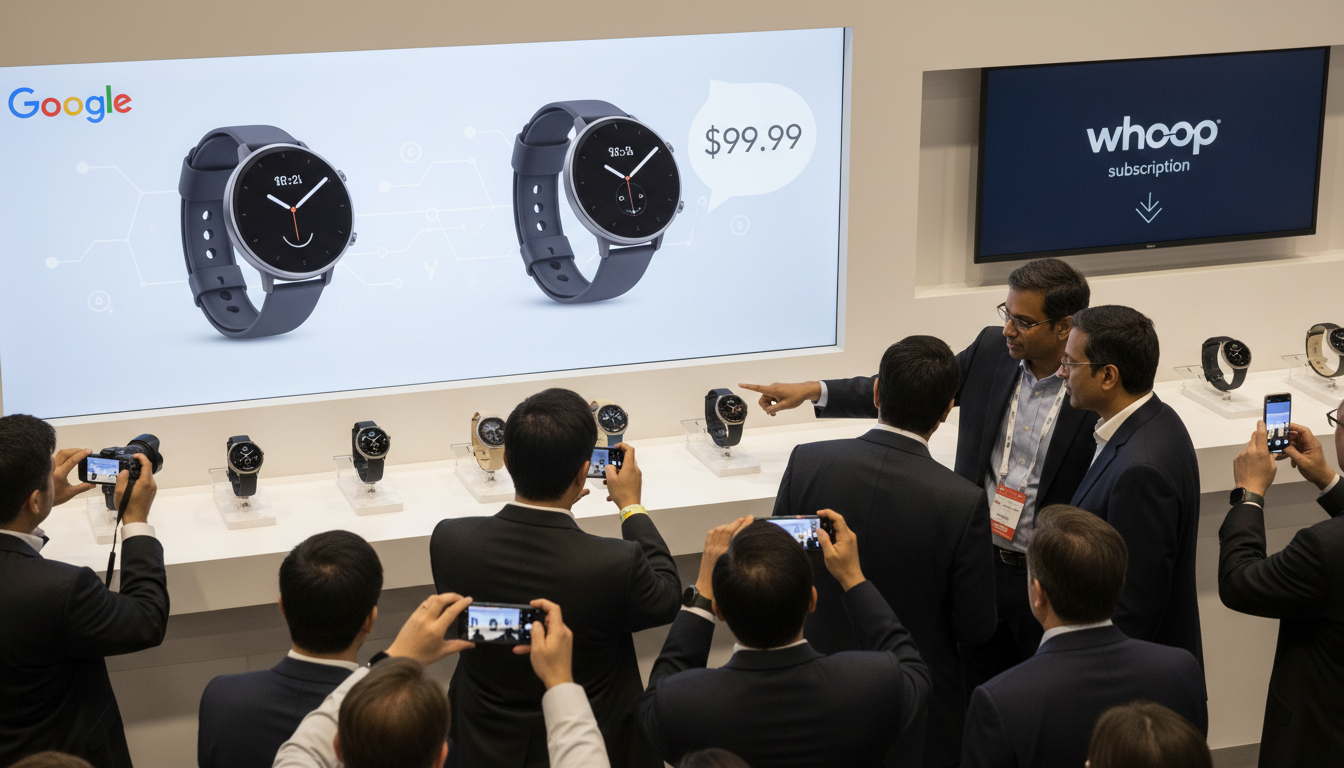
Google unveils Fitbit Air: $99 compact health tracker aimed at Whoop subscription market
Google launches Fitbit Air, a compact $99 health tracker with up to one-week battery and optional Google Health Premium; UAE pricing, features, Whoop comparison.
The Fitbit Air, unveiled by Google, is a compact health band priced from $99.99 and positioned as an affordable alternative to subscription-first devices. The new wearable, designed for continuous background monitoring, aims to give users basic sleep and activity insights without forcing an immediate membership. Google says the device is built for all-day wear and will tie into Google Health for deeper analysis for those who opt in.
Google positions Fitbit Air as a lightweight daily health monitor
Fitbit Air is presented as the smallest and cheapest band in Google’s Fitbit lineup, emphasising simplicity over smartwatch-style interaction. Rather than prioritising apps or persistent on-screen engagement, the device focuses on quietly collecting physiological data and syncing it to Google Health. The company markets the band as suitable for users who want reliable health tracking without the distractions of a full-featured smartwatch.
Google describes the Fitbit Air as designed for continuous use, with a battery life that can reach approximately one week on a single charge. That endurance is a central selling point for consumers seeking low-maintenance wearable technology. The device’s form factor and long battery life are aimed at encouraging constant wear to improve the continuity of health data capture.
Sensors and measurements included in Fitbit Air
According to Google’s product details, the band monitors heart rate around the clock and records steps, active minutes, distance and calories burned. It also reports blood oxygen saturation (SpO2), heart rate variability, respiratory rate, skin temperature changes and resting heart rate. Sleep data is broken down into stages and sleep quality, and the band flags patterns that could indicate irregular heart rhythms such as possible atrial fibrillation.
These continuous background measures are intended to feed daily readiness and strain metrics inside the Google Health app, offering users an at-a-glance sense of when to prioritise rest or activity. By collecting multiple physiological signals, Google aims to deliver actionable trends rather than isolated readings. The band is therefore pitched as a health-monitoring companion more than a wrist computer.
Battery life, design and wearability trade-offs
Fitbit Air’s pared-back approach means a smaller housing and reduced on-device interaction, which helps keep both size and price down. The simplified interface allows the band to remain unobtrusive, an attribute Google highlights for wearers who do not want frequent alerts or touchscreen interactions. The company says the device’s battery can last up to a week under normal use, reducing the need for daily charging.
The trade-off for a compact design is fewer on-device features compared with full smartwatches, but that is a deliberate choice to prioritise passive monitoring. Materials and strap options are positioned for comfort to encourage 24/7 wear, which supports the device’s health-tracking goals. For users who value continuous data capture more than app ecosystems, the Fitbit Air aims to be a practical, low-attention option.
Pricing, pre-orders and UAE availability
Google has set the retail price for Fitbit Air at $99.99, roughly 367 UAE dirhams, and opened pre-orders with a U.S. on-shelf date of May 26. Google has not yet announced an official local launch date for the UAE market, but the international price point and regional conversions suggest the device will compete on affordability. Buyers in the UAE should expect local stocking timelines to be confirmed by regional retailers or Google’s local channels in the coming weeks.
The base package supplies the band as a standalone purchase, with core tracking usable without an ongoing subscription. That upfront purchase model contrasts with subscription-first devices and may appeal to buyers who want to avoid monthly fees. Google’s pre-order incentives in some markets include a three-month trial of Google Health Premium, which could affect initial uptake patterns.
Subscription options versus Whoop’s membership-first model
Google offers expanded capabilities through Google Health Premium, a paid tier that unlocks personalised coaching driven by the Gemini model and more granular guidance on sleep and fitness. The standalone subscription has been reported at $9.99 per month or $99.99 per year—approximately 37 AED per month or 367 AED per year—though advanced features are optional rather than mandatory for basic tracking. This hybrid approach lets users decide whether to pay for deeper insights after they try the hardware.
By contrast, Whoop’s business model centres on membership: the company bundles devices with access to its analytics platform, and users pay annually for the service. In the UAE, Whoop’s packages have been offered at price points that start in the mid-hundreds of dirhams per year and rise for more premium plans. That distinction — buy-first for Fitbit Air, subscribe-first for Whoop — is likely to define a core part of the market competition.
Market implications for UAE wearable buyers and fitness consumers
Fitbit Air’s entry sharpens the choice for UAE consumers weighing upfront cost against ongoing subscription value in health wearables. Buyers seeking straightforward sleep and activity tracking at a lower entry price may find Fitbit Air attractive, while athletes and performance-oriented users may continue to favour subscription-driven platforms for deeper analytics. Local retailers and health-tech watchers will be watching both availability and post-launch subscription uptake to gauge how the regional market responds.
Fitbit Air represents Google’s strategy to recapture share in everyday health tracking by combining a low-cost band with an optional advanced analytics tier. For UAE consumers, the device offers a clear price-versus-subscription alternative to membership-led competitors, leaving the decision to users who must balance cost, depth of analysis and long-term goals for health data.
