
Trump Signals Possible Return to War with Iran, Decision Expected Sunday
Trump may decide on Sunday whether to resume military action against Iran, meeting U.S. negotiators to review a new Iranian offer and U.S. demands and more
President Trump said he expects to decide on Sunday whether to resume hostilities with Iran or accept a diplomatic deal, signaling a pivotal moment in U.S.-Iran relations.
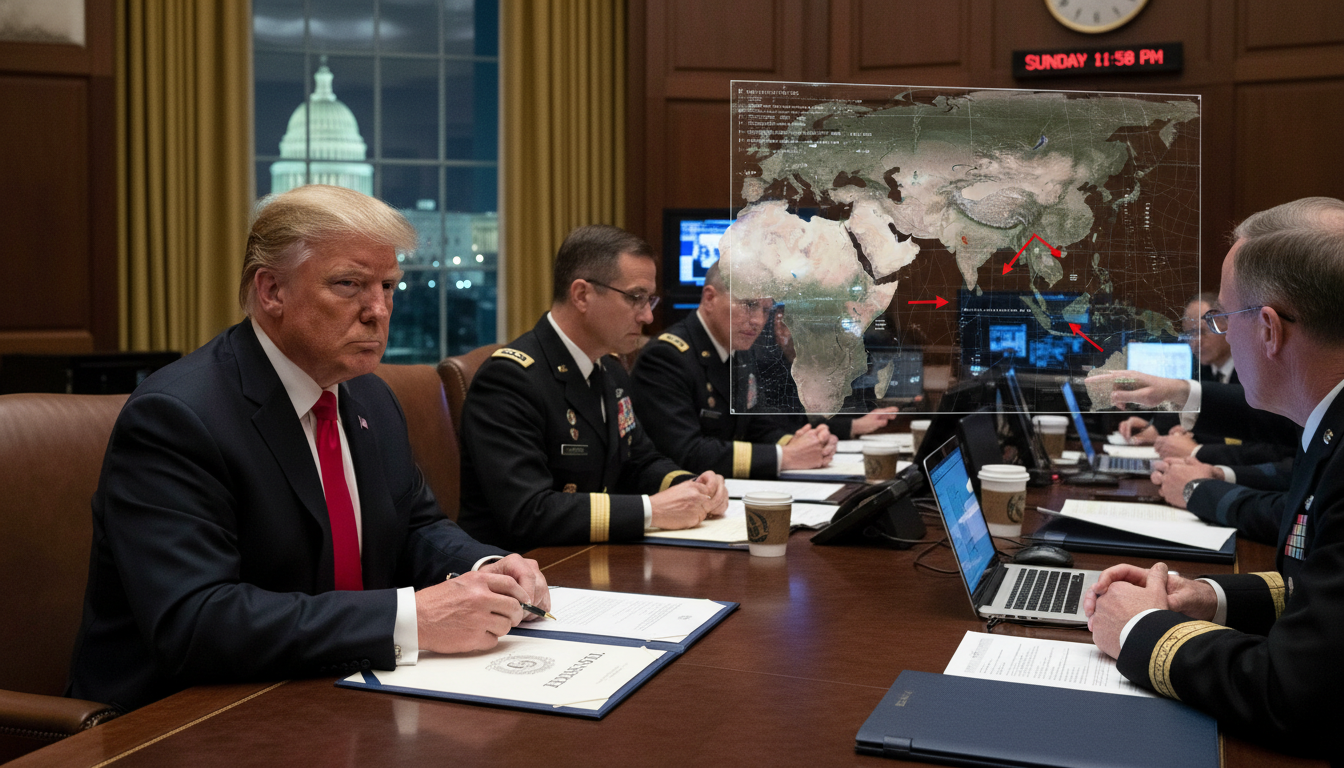
The president told a media outlet he is torn between pursuing a negotiated agreement and launching a military response, and that he would meet his negotiating team on Saturday to examine Tehran’s latest offer.
He framed the choice starkly, saying the United States would either strike Iran with unprecedented force or secure a strong agreement that addresses enrichment and Tehran’s existing stockpile of nuclear material.
Trump’s timeline and public remarks
On Saturday, President Trump publicly framed the decision as imminent, telling reporters and aides that a resolution would come the next day.
He described the options in blunt terms and underscored his personal role in choosing between diplomacy and force.
The remarks intensified attention on White House deliberations and placed a tight timetable on U.S. policy toward Iran.
U.S. negotiating team to review Iranian offer
Trump said he would meet his negotiating team on Saturday to review what he described as the latest Iranian proposal.
Officials involved in such talks typically assess technical details, verification mechanisms and the political implications of any concessions.
The outcome of that meeting is likely to shape whether the president pursues a negotiated settlement or opts for a military pathway.
Choice between military action and a deal
The president portrayed the decision as binary: either a powerful military response or a comprehensive agreement with Tehran.
That framing reflects the longstanding U.S. emphasis on preventing Iran from advancing nuclear capabilities while maintaining leverage to deter regional aggression.
Analysts caution that presenting the options as mutually exclusive raises the stakes and could limit diplomatic flexibility.
U.S. demands on enrichment and stockpile
Trump made clear he would only accept a deal that addresses uranium enrichment and the disposition of Iran’s current stockpile.
Those demands align with previous U.S. positions aimed at preventing Tehran from reaching weapons-grade material and ensuring robust verification.
Resolving such technical issues typically requires detailed inspections, enforceable timelines and international monitoring mechanisms.
Possible regional and international consequences
A decision to resume military action would carry significant regional risks, including escalation across the Gulf and threats to commercial shipping and energy markets.
Allies and partners in the region, as well as European states involved in diplomatic efforts, are likely to respond quickly to any major shift in U.S. policy.
Even the prospect of renewed hostilities can prompt market volatility and diplomatic scrambling to prevent broader conflict.
Paths to de-escalation and verification
If Trump opts for a diplomatic agreement, negotiators will need to translate the president’s demands into concrete, verifiable terms.
That process typically involves technical experts, international inspectors, and a phased approach to rollback and monitoring.
Successful verification also depends on international buy-in and clear enforcement measures to deter future violations.
A final decision is expected on Sunday, when the president’s advisers will have presented their assessment and the White House will weigh political, military and diplomatic considerations.
Whether the outcome is a negotiated settlement or an escalation, the choice will reverberate across the Middle East and shape U.S. relations with allies and adversaries alike.
The coming 24 to 48 hours will be critical for determining whether the United States pursues a negotiated resolution with Iran or moves toward military action, with implications for regional security and global markets.
