
Trump Warns Oman Over Strait of Hormuz Deal with Iran, Threatens Military Action
President Trump warned Oman not to make an agreement with Iran over the Strait of Hormuz, saying any partnership could prompt U.S. military action to keep the waterway open.
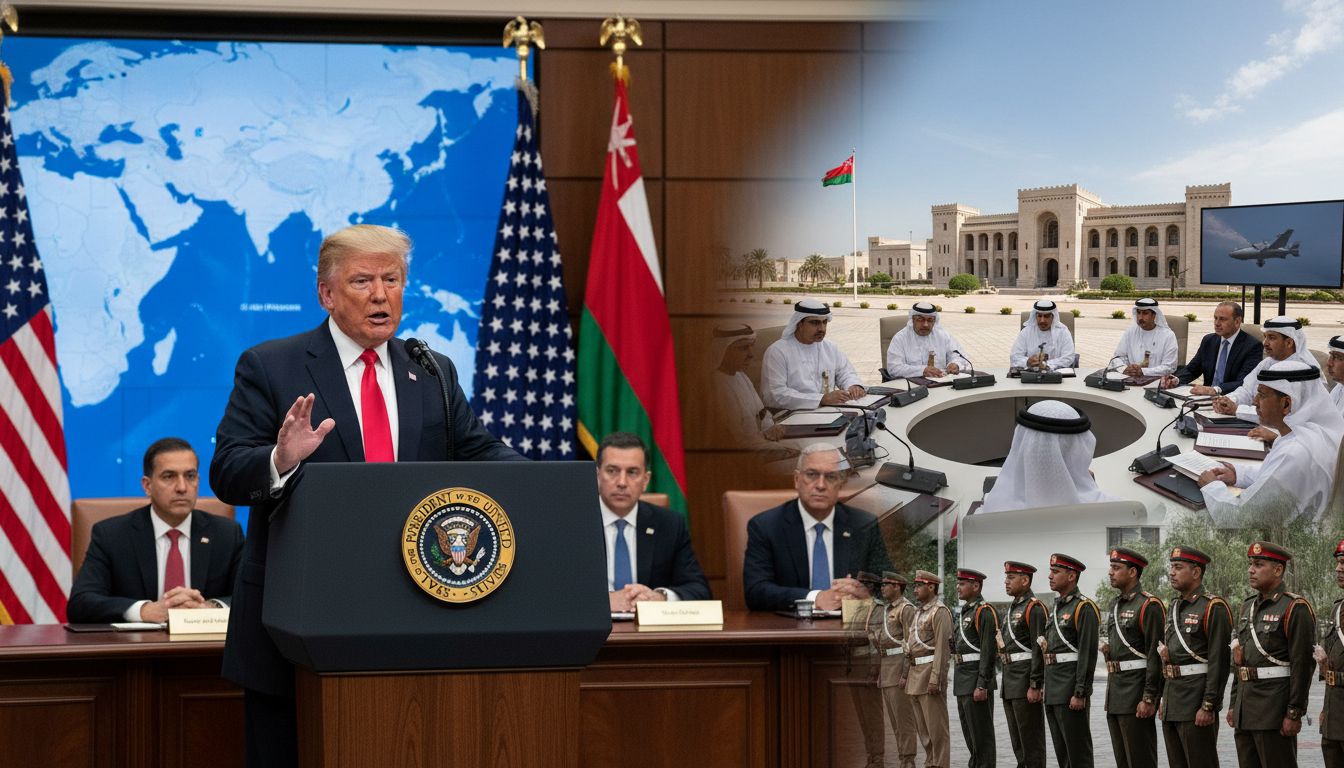
President Trump delivered a stark warning to Oman on Wednesday, saying the United States would respond forcefully if Muscat agreed with Iran to share control or impose fees on passage through the Strait of Hormuz. The comment, made during a cabinet meeting, directly invoked the strategic passage that anchors global energy shipments and regional security.
Trump’s Statement at a Cabinet Meeting
Mr. Trump told attendees that Oman “will behave just like everybody else, or we’ll have to blow them up,” responding to a reporter’s question about potential cooperation between Oman and Iran over the Strait of Hormuz. He added that he did not expect military action would be necessary, but said the U.S. would “watch over” the strait to ensure it remained open.
The president framed the U.S. position as one of guardianship over international navigation, asserting that no single country or bilateral arrangement should control the waterway. The remarks underscore Washington’s long-standing emphasis on freedom of navigation through one of the world’s most critical maritime chokepoints.
U.S. Position on International Navigation Rights
U.S. officials have historically insisted that the Strait of Hormuz must remain open to all commercial and military traffic without tolls or exclusive control. The administration’s comments reinforced that principle while signalling a willingness to use military means to prevent perceived attempts to restrict access.
Analysts note that such rhetoric serves both a deterrent purpose and a reassurance to global markets and Gulf allies that the United States views the strait as a matter of international concern. Nevertheless, the tone of the warning is likely to raise diplomatic tensions with Oman and Iran at a sensitive moment in the region.
Oman-Iran Talks Over Passage Fees
Iran has reportedly discussed a proposal with Oman to establish a joint system that would charge fees for vessels transiting the Strait of Hormuz, an idea that Washington has publicly opposed. The plan, according to accounts of the talks, would create a mechanism to regulate and monetize passage through the narrow channel between the Persian Gulf and the Gulf of Oman.
Oman’s foreign ministry did not immediately respond to requests for comment on the president’s statement, and Muscat has often emphasised a more neutral, mediation-driven role in regional disputes. Any formal move by Oman toward a fee-based regime with Iran would represent a significant shift in Gulf maritime arrangements and likely provoke rapid diplomatic responses.
Regional Security Context After Recent Hostilities
The warning comes amid heightened regional tensions following recent cross-border military actions that disrupted navigation and prompted temporary closure of the strait. Those incidents rattled global markets and heightened concern among trading partners that broader conflict could choke off oil exports and commercial shipping lanes.
Officials have been negotiating to reopen and secure the strait, but the recent escalation between the United States and Iran has made a quick diplomatic resolution appear unlikely. Observers caution that further threats or military operations would compound instability and could draw in neighbouring states and external powers.
Economic and Diplomatic Stakes for Gulf States
Any attempt to impose fees or assert control over the Strait of Hormuz would carry immediate economic consequences for Gulf exporters and global energy markets, given that a significant share of the world’s seaborne oil transits the passage. Gulf states, including the United Arab Emirates and Saudi Arabia, have a strong interest in preserving predictable maritime routes for their exports.
Diplomatically, Oman faces a delicate calculation: balancing relations with Iran, preserving its reputation as a mediator, and managing ties with the United States and other Gulf Cooperation Council partners. A formal agreement with Iran that altered the status quo would force Muscat into a high-stakes policy choice with regional and international ramifications.
Possible Diplomatic and Security Responses
Washington’s declaration of intent to “watch over” the strait suggests a combination of naval presence, surveillance and diplomatic outreach to partners and commercial shipping lines. Military planners would likely emphasise patrols and coalition coordination to deter any attempt to restrict passage, while diplomats would intensify engagement with Gulf capitals to reduce the risk of miscalculation.
At the same time, Oman may seek assurances or clarifications through quiet channels to avoid public escalation, and international maritime organisations could be urged to play a larger role in codifying navigational rights. The coming days are likely to see renewed shuttle diplomacy and careful messaging aimed at preventing confrontation.
As tensions persist, stakeholders will closely monitor statements from Muscat, Tehran and Washington for signs of accommodation or further escalation. The status of the Strait of Hormuz remains central to regional stability and global trade, and any change to its governance would reverberate across economies and security alliances worldwide.
