
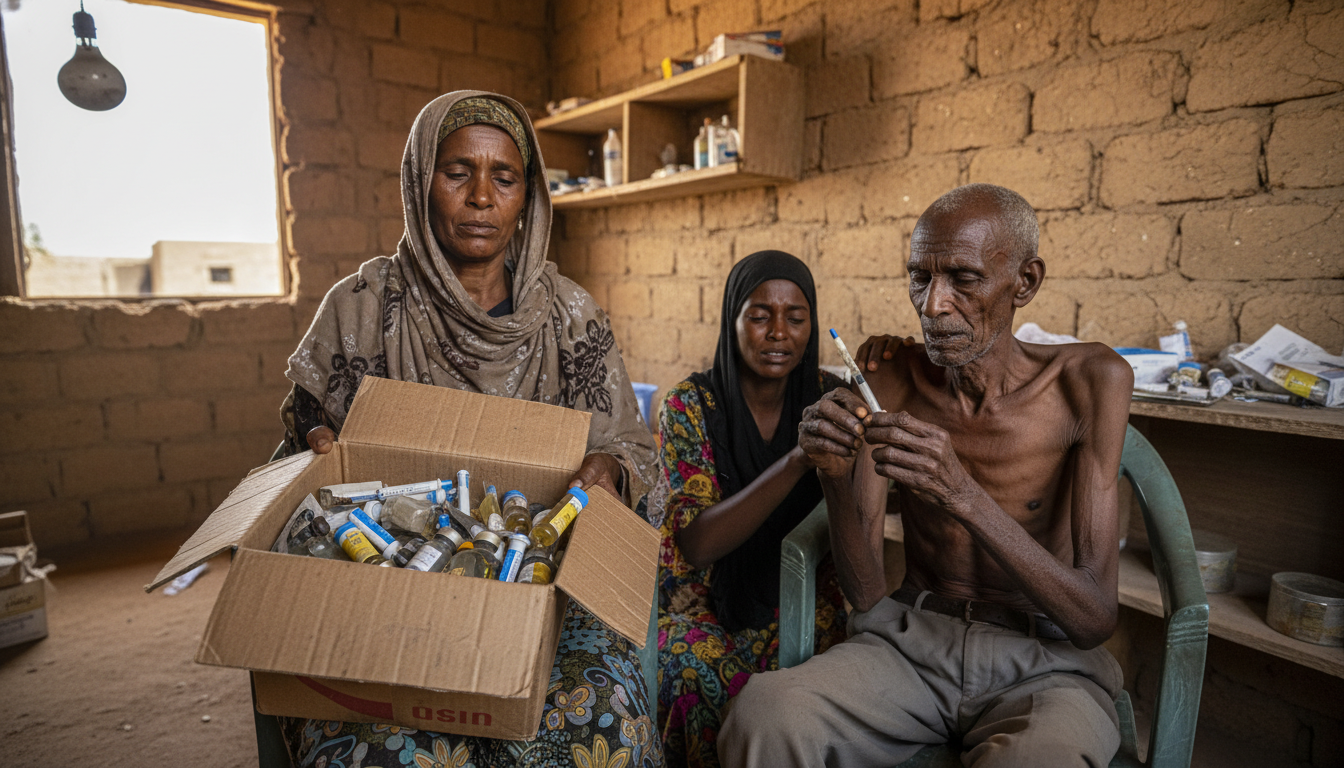
Sudan medicine crisis: Spoiled drugs and shuttered hospitals push patients to the brink
Sudan medicine crisis leaves millions without essential drugs as war shutters factories, fuels smuggling of spoiled injections and cripples health services.
The Sudan medicine crisis has left patients across the country struggling to secure safe, usable medicines as more than three years of fighting have dismantled production, storage and distribution networks. Diabetic patients count dwindling insulin doses while families confront a market flooded with unregulated, often spoiled drugs. International agencies warn the collapse of health services and repeated attacks on facilities have produced one of the largest humanitarian health emergencies in the world.
Diabetic patients counting doses amid ruined supplies
In Khartoum North, patients with chronic conditions are rationing insulin and living with the uncertainty of whether what remains is safe to use. One man in his early 50s described inspecting his vials for expiration dates but still fearing damage from poor storage and exposure to heat. The breakdown of refrigerated supply chains and the closure of pharmaceutical facilities mean that even medicines that appear in date can be ineffective or dangerous.
Clinic staff and pharmacists report rising numbers of people presenting with complications from missed or ineffective treatments. For people with diabetes, disrupted insulin availability quickly translates into life-threatening crises. The strain on families is compounded by soaring prices and long journeys to reach functioning pharmacies or clinics.
Smuggling floods markets with unregulated “Boko” medicines
With domestic production largely halted, illicit trade has filled the void and created new hazards for patients. Smuggling routes now deliver so-called “Boko” medicines — unregulated drugs that bypass quality controls and cold-chain requirements. Pharmacists warn that injections intended for intravenous use are particularly risky when transported and stored without temperature control.
Local professionals say many of these smuggled products are intended for malaria or other acute conditions but arrive damaged, rendering them ineffective or toxic. The reliance on informal channels has increased both the cost of medicines and the likelihood of severe adverse outcomes, including bloodstream infections and systemic shock when spoiled injections are administered.
Local manufacturing and health facilities largely silent
Sudan’s once-active pharmaceutical factories and public health infrastructure are operating at a fraction of their capacity. Industry experts recall a pre-war era when domestic plants produced large quantities of essential medicines for chronic and pediatric care. Today, most production lines stand idle and warehouses have been abandoned or looted.
A government monitoring report cited by health authorities showed that, as of October 2025, a substantial share of health facilities were nonoperational; a subsequent World Health Organization analysis on January 6, 2026, confirmed that 40 percent of facilities nationwide were entirely closed. The shutdown is even deeper in conflict zones, where the majority of hospitals and clinics have been forced to suspend services.
Warehouses collapsed and cross-border aid delayed
Officials at the National Medical Supplies Fund acknowledge efforts to secure key medicines but say the logistics network has been devastated by fighting. The fund reported partial availability for certain cancer drugs and maintained supplies for some kidney patients, while also warning of a collapse at central warehouse hubs. Department directors described inventory losses and the inability to maintain regular distribution to regional centers.
International deliveries face prolonged transit times and complex routes that can stretch supply chains to their limits. Analysis by health agencies found shipments routed from Gulf and West African ports through neighboring states may take weeks or months to reach remote areas such as parts of Darfur. Those delays, together with repeated looting, have left many hospitals without basic consumables and medicines.
Hospitals struck, staff killed and services looted
Violence against medical infrastructure has intensified the health crisis, with multiple attacks on hospitals documented in recent months. On March 20, 2026, a drone strike on a teaching hospital in East Darfur reportedly killed dozens, including medical personnel, and left many more injured. Early April assaults on facilities in White Nile and other states resulted in deaths among staff and the looting of equipment and supplies.
Humanitarian organisations and rights groups attribute some of these strikes and seizures to the warring parties, noting that such incidents not only cost lives immediately but also remove the capacity to treat patients for months or years. The repeated targeting of medical sites has sown fear among health workers and contributed to the mass displacement of civilians from besieged towns.
International warnings as health system nears collapse
Global health officials have repeatedly warned that Sudan’s health emergency requires urgent international action. A WHO news release dated April 14, 2026, described the situation as the world’s largest humanitarian crisis, with an estimated 21 million people lacking basic healthcare services out of 34 million needing aid. Agency leaders have called for renewed diplomatic and logistical efforts to protect medical staff, reopen supply lines and restore cold-chain capabilities.
Donors and neighbouring countries face the challenge of routing safe, temperature-controlled supplies into areas cut off by conflict while ensuring those deliveries are protected in transit. Aid organisations say that without immediate, large-scale interventions — including the rehabilitation of storage facilities and secure corridors for medical transport — preventable deaths from treatable conditions will continue to rise.
Restoring reliable access to medicines will require stabilising warehouses, reopening production where feasible, and severing the profit incentives for smuggling networks that now dominate the market. For millions of Sudanese, including those who must plan their days around dwindling insulin supplies, the next weeks and months will determine whether the country’s health crisis deepens or begins a fragile recovery.
