
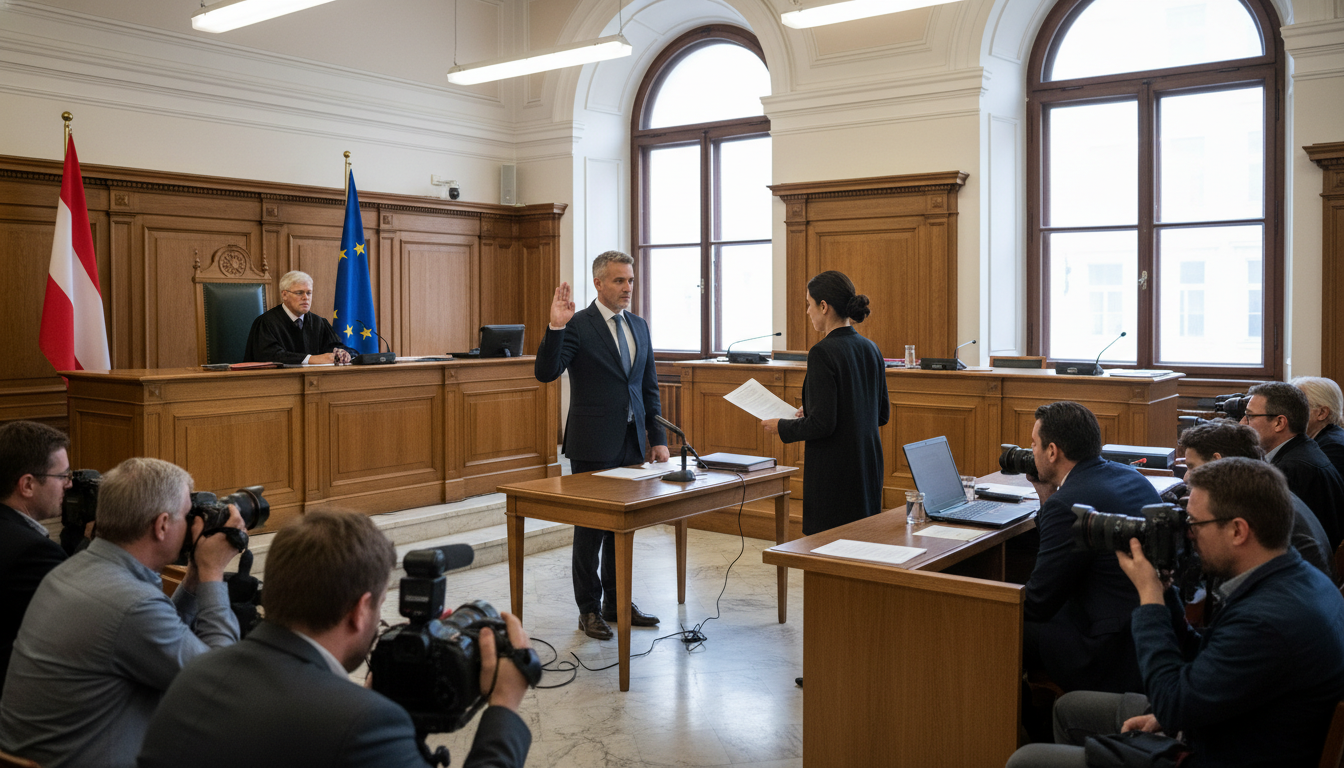
Khaled al-Halabi trial opens in Vienna as former Syrian general pleads not guilty
Khaled al-Halabi trial opens in Vienna as a former Syrian general pleads not guilty to torture, sexual coercion and aggravated bodily harm linked to Raqqa.
A former Syrian brigadier general, Khaled al-Halabi, has appeared in a Vienna court and pleaded not guilty as his trial opened on June 1, 2026. The Khaled al-Halabi trial marks one of several European cases brought over alleged abuses during the early years of the Syrian civil war. Prosecutors say the charges include torture, aggravated coercion, sexual coercion and serious bodily harm tied to events in Raqqa between 2011 and 2013.
Trial Opens in Vienna
The hearing began on Monday, June 1, 2026, at a Vienna courtroom where masked, armed police stood guard as proceedings opened. Al-Halabi entered a not guilty plea through a translator during the first session of the trial. His co-defendant, Lieutenant Colonel Musab Abu Rukba, also faces charges but did not testify at the opening.
Charges and Potential Penalties
Both defendants face multiple counts including aggravated torture, coercion, sexual coercion and inflicting serious bodily harm. Austrian prosecutors say the charges carry maximum sentences of up to 10 years in prison if convictions are secured. The indictment alleges repeated incidents and a pattern of abuse directed at members of a civilian protest movement.
Allegations Focus on Raqqa, April 2011–March 2013
Prosecutors place the alleged crimes in the Syrian city of Raqqa during a concentrated period from April 2011 to March 2013. Investigators contend that at least 21 individuals detained in prisons were subject to beatings and other abusive treatment. The accusations cover acts committed while the defendants were serving in local intelligence and police command roles.
Prosecution Describes Systematic Torture Methods
Austrian prosecutors told the court that violence was used systematically and involved “standardised torture methods,” according to statements delivered prior to the trial. Methods cited by the prosecution include repeated beatings and the use of hoses, and they allege the abuses followed directives from higher authorities. The Commission for International Justice and Accountability reportedly informed Austrian investigators of the alleged crimes in 2016.
Defence Argues No Orders to Use Violence
Al-Halabi, a 63-year-old Druze who fled Raqqa in 2013, denied that torture took place under his command and insisted there were no government instructions to use violence. He told the court his unit merely recorded personal details of detainees and did not carry out interrogations or systematic mistreatment. Abu Rukbah’s lawyer, Philipp Wolm, said there is no evidence to support charges against his client.
Jurisdiction, Asylum Status and Pre-Trial Detention
Both men applied for asylum in Austria in 2015 and have been living in Vienna, which is the legal basis for the Austrian court’s jurisdiction. Al-Halabi has been held in pre-trial detention since 2024, while Abu Rukbah remains a co-defendant in the same proceedings. Prosecutors say the defendants’ residence in Austria allows national courts to try alleged war crimes under universal jurisdiction principles.
Witnesses, Evidence and International Context
The trial is scheduled to continue through June 30, with alleged victims located in Syria and across Europe expected to give testimony. Investigators will present witness accounts and documentary evidence gathered by organisations that document war crimes and human rights abuses. Similar prosecutions related to the Syrian conflict have been pursued in Germany, France and Sweden, reflecting growing international efforts to seek accountability.
The Vienna trial of Khaled al-Halabi will test Austrian courts’ ability to adjudicate alleged international crimes committed abroad and will likely draw attention from human rights groups and Syrian diaspora communities. Proceedings are expected to proceed on a daily schedule through the end of June, with rulings on admissibility of evidence and witness testimony shaping the course of the case.
