
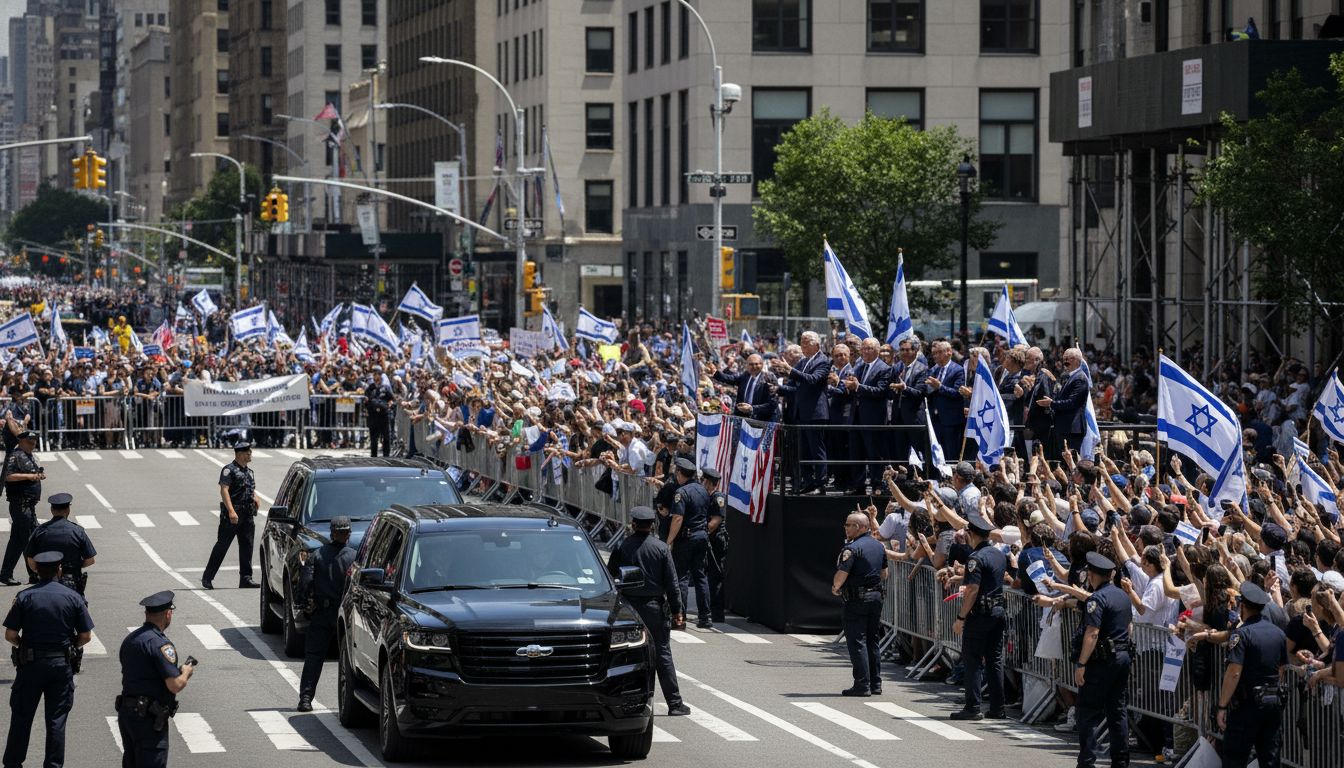
Israeli and US Officials Join Israel Day Parade in New York Amid Rising International Scrutiny
Israeli and US officials joined thousands at the Israel Day parade in New York on June 1, 2026, drawing renewed attention as criticism mounts over military actions in Gaza and Lebanon. The participation of high-profile figures highlighted the event’s role as the world’s largest public gathering in support of the State of Israel. Organizers said the parade celebrated solidarity, while opponents and international observers framed the attendance as politically charged against a backdrop of regional conflict.
Officials’ Attendance Draws Attention
The parade saw a visible presence of Israeli and American political figures and delegations marching through Manhattan, underscoring longstanding diplomatic and community ties. Organizers estimated tens of thousands of participants, with floats, flags and delegations from Jewish and pro-Israel organisations lining the route. For many attendees, the event was a public expression of cultural identity and support for Israel’s sovereignty.
Critics argued the presence of elected officials risked normalising policies that have attracted global condemnation over recent months. The inclusion of senior figures from both countries was seized upon by media and advocacy groups as a symbolic endorsement at a time when the region’s situation remains volatile. Authorities on both sides sought to frame attendance as civic participation rather than formal government endorsement.
Scale and History of the Israel Day Parade
The Israel Day parade in New York, often cited as the largest annual pro-Israel gathering worldwide, traces its origins to community celebrations decades ago. The event traditionally draws a broad coalition of Jewish organisations, youth groups and political allies who march to mark Israel’s independence and cultural ties. In recent years, the parade’s size and visibility have made it a focal point for both celebration and protest.
This year’s procession followed a familiar route through Midtown Manhattan and included municipal contingents, student groups and diplomatic delegations. Street closures and police deployments reflected the expected scale, with authorities preparing for both celebratory crowds and demonstrators seeking to voice opposition. The pageantry and organization remained central to the parade’s message of unity for participants.
International Criticism Over Gaza and Lebanon
The parade occurred as Israel faced intensified global scrutiny for its military operations in Gaza and cross-border tensions with Lebanon. International organisations and several governments have expressed concern about civilian casualties and the humanitarian impact of sustained hostilities. These dynamics intensified debate about the appropriateness of official participation in high-profile public events.
Observers noted that images of officials marching alongside celebrants were rapidly circulated on social and traditional media, fuelling commentary from both supporters and detractors. Humanitarian agencies and rights groups reiterated calls for restraint and adherence to international law, framing the New York event within a broader context of diplomatic pressure. The timing of the parade thus amplified political messages on all sides, turning what is usually a cultural celebration into a contested public forum.
Statements From US and Israeli Representatives
Spokespeople for attending US officials emphasised the ceremonial and community-focused nature of their participation, noting longstanding ties between the two countries. Statements released by official channels framed attendance as a recognition of shared values and the contributions of the American Jewish community. Messages stressed that the presence at the parade did not equate to new policy announcements or shifts in diplomatic posture.
Israeli representatives attending the parade reiterated commitments to national security and the welfare of civilians while thanking diaspora communities for their support. They framed the gathering as an opportunity to strengthen people-to-people relations and cultural bonds. Both sides underlined that the event served community-building purposes even as they acknowledged broader geopolitical tensions.
Reactions From Advocacy Groups and Protesters
Protest groups used the perimeter of the parade to stage demonstrations, carrying signs and chanting slogans that called for ceasefires and greater protection for civilians. Organisers of the demonstrations said their aim was to draw attention to the humanitarian consequences of recent hostilities and to urge policymakers to pursue diplomatic solutions. Police maintained a visible presence to separate marchers and protesters and to keep traffic moving on adjacent streets.
Pro-Israel advocacy organisations condemned what they described as attempts to politicise the parade, insisting the event’s purpose is to celebrate cultural ties and community resilience. Several local Jewish federations issued statements urging respect for peaceful expression on all sides. The interaction between celebrants and demonstrators underscored the extent to which the New York event had become a stage for competing narratives about the conflict.
Implications for Diplomacy and Domestic Politics
Analysts say the appearance of senior officials at the parade will be interpreted differently across diplomatic and domestic political arenas. For supporters, such visibility reinforces bilateral solidarity and reassures constituencies with close ties to Israel. For critics, it risks blurring lines between community engagement and implicit approval of contentious policies, potentially complicating diplomatic messaging.
The episode may also influence political calculations ahead of coming electoral cycles and international forums, where public opinion and protest movements can shape debate. Diplomats and policymakers will likely weigh the benefits of direct engagement with diaspora communities against the reputational risks posed by high-profile appearances. In the near term, officials on both sides signalled an intent to maintain outreach while managing the optics of participation amid ongoing regional tensions.
The Israel Day parade in New York on June 1, 2026, thus became more than a cultural procession; it served as a prism through which competing views of the conflict and the role of public officials were projected and contested.
