
US-Iran war intensifies as strikes on Qeshm Island spark wider Gulf exchanges
US and Iran trade strikes around Qeshm Island as the US-Iran war widens across the Gulf, raising regional tensions and complicating diplomacy.
The US-Iran war entered its 96th day on June 3, 2026, after US forces carried out strikes on Qeshm Island and Iran reported explosions in the area. CENTCOM said the operations were carried out in self-defence, while Iranian state-linked outlets and the IRGC reported retaliatory missile and drone launches against US assets. The exchanges have widened the conflict’s footprint across the Gulf and neighboring countries.
US strikes on Qeshm Island and Iranian claims
CENTCOM confirmed it struck an Iranian ground control station on Qeshm Island, describing the action as necessary to protect US forces and regional partners. Iranian media and the IRGC reported that the strikes damaged facilities and said Tehran responded with missile and drone attacks targeting US positions.
Independent verification of some battlefield claims remains limited, with both sides offering starkly different accounts of damage and effectiveness. CENTCOM denied that Iranian strikes reached the headquarters of the US Fifth Fleet in Bahrain or a regional airbase, saying all such attempts were intercepted or failed.
Escalation across the Gulf airspace
The military exchanges spilled beyond the immediate strike zone, with CENTCOM reporting interceptions of multiple Iranian missiles and drones aimed at US forces. Kuwait said its air-defence systems had intercepted incoming projectiles, and Bahrain reported activating civil warning sirens as a precautionary measure.
US officials stressed vigilance in the region and reiterated their readiness to defend personnel and installations. Regional air and sea routes, including movements near the Strait of Hormuz, have seen heightened military activity and increased surveillance.
Diplomatic talks and the question of sanctions relief
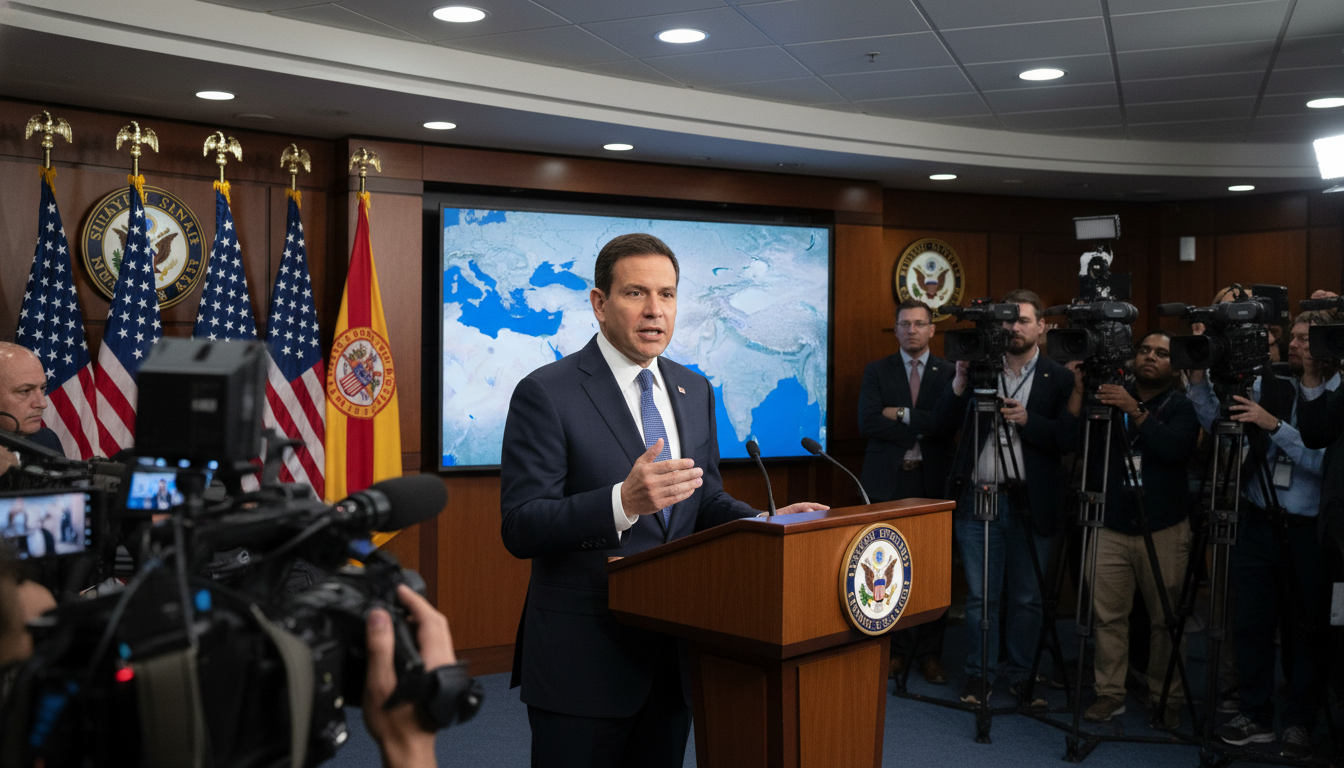
Diplomatic efforts to halt the fighting continued amid deep mistrust on both sides, with negotiations described by US and Iranian officials as ongoing but uncertain. Senator Marco Rubio told a Senate hearing that Washington will only consider lifting sanctions if Tehran agrees to give up enriched uranium and make verifiable nuclear concessions.
US leadership framed sanctions relief as contingent on concrete nuclear steps, rejecting proposals that would trade relief solely for assurances on maritime corridors. Iranian negotiators, meanwhile, signalled that continued Israeli strikes on Lebanon could derail talks and push Tehran back toward confrontation.
Regional impact: Kuwait, Bahrain and Lebanon
Neighbouring countries are feeling the consequences of the widening confrontation, from intercepted attacks over Kuwaiti airspace to alarms in Bahrain’s civilian areas. Local authorities reported no US casualties in the latest wave of interceptions, but civilian risk and commercial disruptions have increased.
In Lebanon, the conflict on Israel’s northern border intensified. Palestinian and Lebanese health authorities reported casualties from Israeli strikes in southern towns, while Hezbollah said it launched multiple attacks on Israeli positions. The violence in Lebanon adds another volatile front that could further complicate regional diplomacy and humanitarian conditions.
Political fallout in Washington and policy debate
The US military actions and diplomatic posture have sharpened divisions in Washington, with Democratic senators sharply criticising the Trump administration’s handling of the conflict. Lawmakers argued the closure of the Strait of Hormuz and the broader disruption to trade and energy markets show the costs of the current approach.
Administration officials defended the strikes as targeted measures to protect forces and deter aggression, while also pointing to ongoing negotiations as a path to reduce tensions. Analysts note that any durable diplomatic settlement will need to offer tangible incentives to both sides, balancing nuclear restrictions with economic relief mechanisms for Iran.
Israel’s northern strategy and internal criticism
Israel signalled plans to strengthen defences in its north, announcing fortification measures and a multibillion-dollar investment in regional security and economic development. The government said these measures aim to mitigate cross-border drone threats and shore up communities near the Lebanese frontier.
At the same time, domestic criticism of Israel’s leadership has grown, with opponents accusing the government of prioritising political calculations over broader strategic goals. Observers say the interplay between Israeli actions, US policy and Iranian responses is shaping the operational tempo across multiple theatres.
The conflict’s multiple strands — military strikes, intercepted attacks, diplomatic bargaining and domestic politics — are converging to create a volatile regional environment. With talks continuing but outcomes unclear, the immediate prospect is one of sustained tension rather than rapid de-escalation.
