
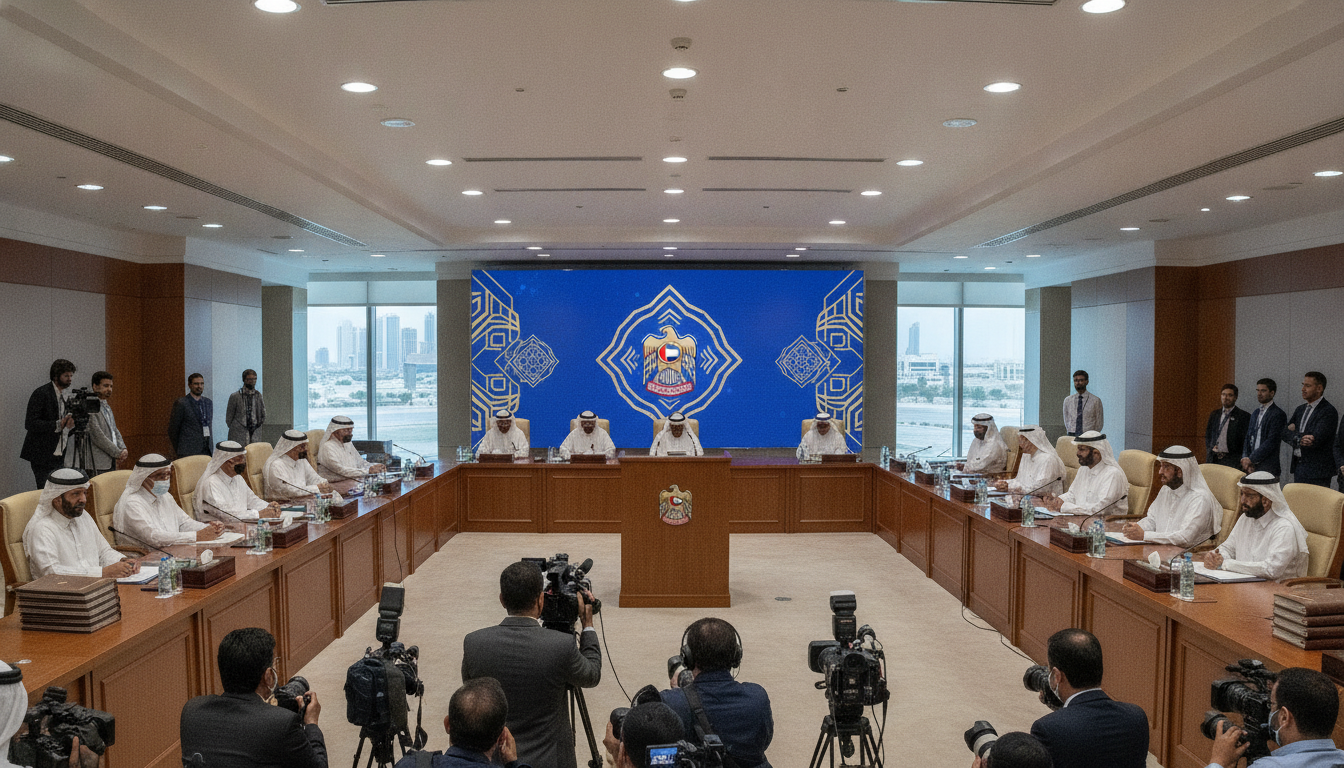
UAE Ministry of Finance 2025 Annual Report Highlights AED 9.9bn Sukuk and New Youth Cadre Initiative
Sheikh Maktoum reviews UAE Ministry of Finance 2025 report, AED9.9bn Islamic sukuk, spending reforms and Global UAE Cadres to boost Emirati talent.
The UAE Ministry of Finance 2025 annual report was reviewed publicly by His Highness Sheikh Maktoum bin Mohammed bin Rashid Al Maktoum, who said the document captures a year of strategic fiscal development and sustainability advances. The review highlights measures to improve government spending efficiency, refine the tax framework and raise the UAE’s competitiveness on the global stage. The report also records nine successful Islamic treasury sukuk auctions totaling AED 9.9 billion and introduces the Global UAE Cadres programme to place Emirati talent in international finance institutions.
Official review and national priorities
His Highness emphasized that the 2025 report reflects an “exceptional year” of policy progress and institutional strengthening across the federal finance apparatus. He framed the achievements in terms of long-term sustainability and intergenerational opportunity, underlining that fiscal policy must deliver lasting benefits for future Emirati generations. The public reference to the report reinforces the government’s intent to balance fiscal prudence with strategic investments in people and competitiveness.
Fiscal performance and spending efficiency
The annual report documents initiatives aimed at raising the efficiency of public spending through tighter expenditure management and performance-based budgeting. Officials say the steps taken are designed to optimize resource allocation across priority sectors while safeguarding social and economic resilience. These efforts are presented as part of a broader drive to ensure that fiscal policy supports sustainable growth and long-term national objectives.
Sukuk issuance and debt management
A central element of the report is the execution of nine auctions for Islamic treasury sukuk with aggregate issuance of AED 9.9 billion. The sukuk programme is described as a tool for enhancing liquidity, broadening the investor base and aligning debt management with Islamic finance principles. By using sukuk, authorities aim to deepen domestic capital markets and provide investable instruments suited to regional and international investors seeking Sharia-compliant assets.
Tax system development and policy reform
The report highlights continued work to modernize the tax architecture and improve the business environment through clearer, more predictable fiscal rules. Reforms referenced include measures to streamline tax administration and align policy with international standards, while maintaining competitiveness for businesses operating in the UAE. Policymakers see a more robust tax framework as a foundation for fiscal sustainability and a means to support public service delivery.
Global UAE Cadres initiative for Emirati talent
Among the report’s notable launches is the Global UAE Cadres initiative, intended to enable Emirati youth to gain placements in regional and international financial institutions. The programme is positioned as a strategic investment in human capital designed to build global experience and networks for Emirati professionals. Officials say the initiative will complement domestic capacity-building by exposing participants to best practices in finance and governance.
Sustainability, competitiveness and future prospects
Sustainability and competitiveness are recurrent themes throughout the report, with fiscal policy linked explicitly to the UAE’s broader economic transformation goals. The document frames achievements not merely by short-term metrics but by the durability of reforms and the country’s ability to attract global capital and talent. Looking ahead, the Ministry signals a continued focus on fiscal tools that support innovation, resilience and an open, diversified economy.
The emphasis on intergenerational opportunity, combined with concrete financial operations such as the sukuk issuances, signals a dual approach: immediate market engagement alongside investments in human capital and institutional capacity. This mix is presented as central to maintaining the UAE’s standing as a competitive regional hub for finance and business.
Sheikh Maktoum’s public appraisal of the 2025 report underscores the federal leadership’s endorsement of the direction set by the Ministry, and positions the document as both a record of past work and a roadmap for the coming period. The initiatives and financial measures highlighted are likely to inform policy choices and market expectations as the UAE continues its economic development trajectory.
