
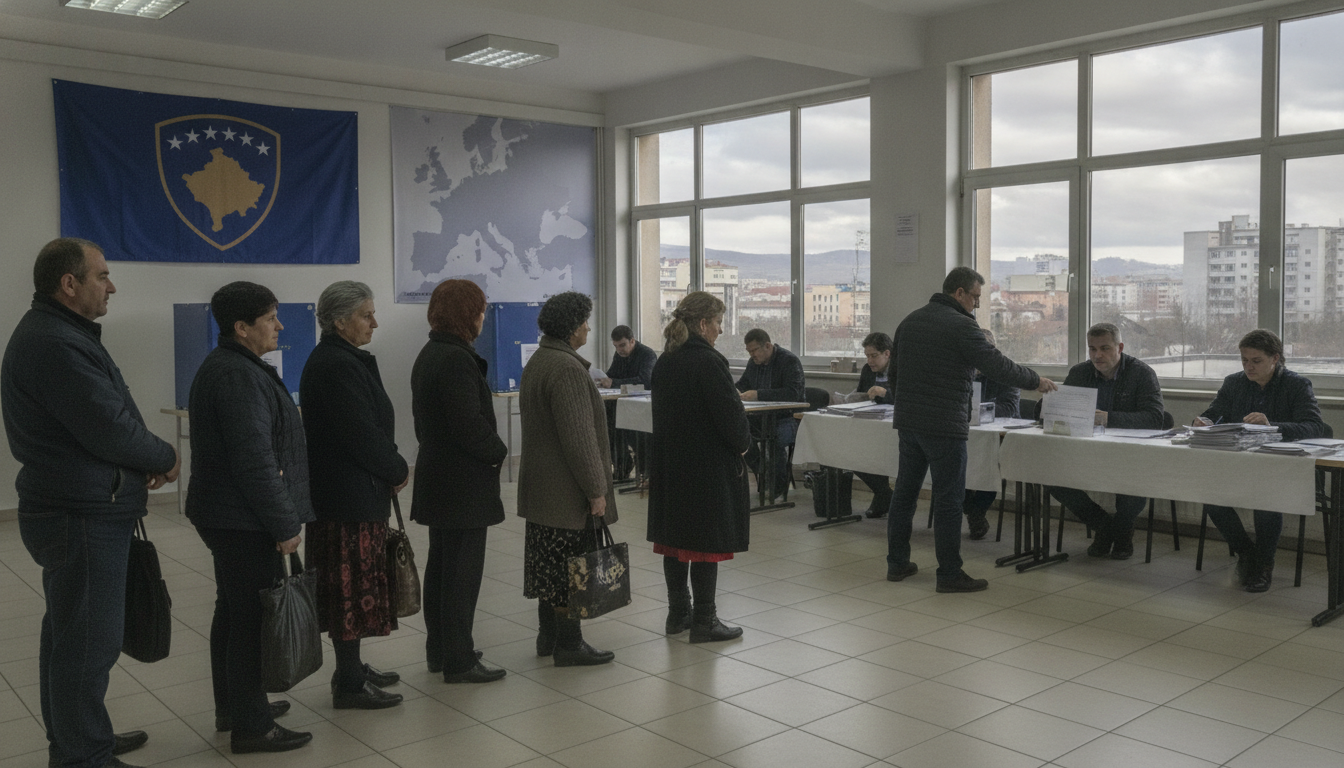
Kosovo early parliamentary election tests stability as voters return for third vote in 18 months
Kosovo early parliamentary election: voters return to polls for a third ballot in 18 months as political deadlock stalls EU bid and deepens economic strain.
Voters in Kosovo went to the polls on Sunday in an early parliamentary election that marks the third national vote in roughly 18 months, seeking to break a prolonged political deadlock. The Kosovo early parliamentary election is the latest attempt to resolve a stalemate that has left the country without a stable government and delayed key decisions on EU integration and international funding. Political leaders and analysts say expectations for a dramatic shift in the balance of power are low, even as public frustration grows over economic hardship and institutional paralysis.
Third vote follows failed presidential consensus
The vote was triggered after Kosovo’s major parties failed to agree by a March deadline on a successor to former President Vjosa Osmani, necessitating a fresh ballot. Under Kosovo’s constitution, the president must be elected by at least 80 of the 120 lawmakers in the assembly, a threshold that has required broader cross-party support. The inconclusive election in February 2025 and a second contest in December left the government without full functionality for months, prompting today’s early parliamentary election.
Leading parties and key personalities
Prime Minister Albin Kurti’s centre-left Vetevendosje party has retained a clear parliamentary majority since the December election, but its dominance has not translated into the 80-vote consensus needed for the presidency. Kurti faces mounting criticism from the two main opposition blocs, the Democratic Party of Kosovo (PDK) and the Democratic League of Kosovo (LDK), who accuse his administration of attempting to centralise power across state institutions. Former President Vjosa Osmani is standing on the LDK list after breaking with Kurti over his refusal to back her for a second term.
Economic strain magnifies voter concerns
The prolonged crisis has taken a tangible toll on Kosovo’s economy, which was already suffering from the global energy crunch and rising fuel prices. Analysts and business representatives say the absence of a stable cabinet has delayed access to international funds and investment pipelines that could ease price pressures and support public services. For many Kosovar voters, immediate concerns about living standards and jobs have overtaken constitutional debates as the central issue at the ballot box.
Institutional vacuum and international implications
The institutional vacuum has also affected Kosovo’s efforts to move closer to the European Union and NATO, with stalled reforms and postponed negotiations cited as direct consequences of political instability. European officials, including António Costa during a recent visit, urged leaders in Pristina to resolve the impasse and demonstrate unity around EU accession goals. Kosovo remains recognised by the United States and most EU member states, but not by Serbia, Russia or China, complicating its international standing and the bilateral talks required for wider recognition.
Tensions in the north and security concerns
Ethnic tensions persist in Kosovo’s northern municipalities, where most of the Serbian minority lives and periodic flare-ups have raised concerns about wider unrest. Both Pristina and Belgrade face pressure from the EU and other international mediators to resume dialogue and repair ties as a precondition for progress on membership bids. Observers warn that a lack of political clarity in Pristina can embolden hardline actors and increase the risk of localized confrontations that would undermine stability.
What the results are likely to mean
Most political analysts do not expect a radical realignment of parliamentary seats compared with the December vote, suggesting continuity rather than a decisive break in the short term. Even if Vetevendosje repeats strong electoral performance, the requirement for a broad parliamentary consensus to elect the president ensures that negotiations and compromises will remain necessary. The immediate priorities for any incoming government will include restoring access to EU and international funds, stabilising energy supplies, and addressing inflationary pressures that have hit households.
International partners and local civil society groups have called for post-election dialogue aimed at creating a functioning executive that can deliver reforms and unlock stalled aid. Many voters have expressed disappointment with repeated campaigns and say they want attention returned to daily economic concerns rather than prolonged institutional disputes. The political calculus now hinges on whether party leaders can translate electoral mandates into pragmatic coalitions capable of meeting constitutional thresholds and restoring governance.
The outcome of this Kosovo early parliamentary election will shape the country’s trajectory on EU integration, its relationship with Belgrade, and its economic recovery in the months ahead.
