
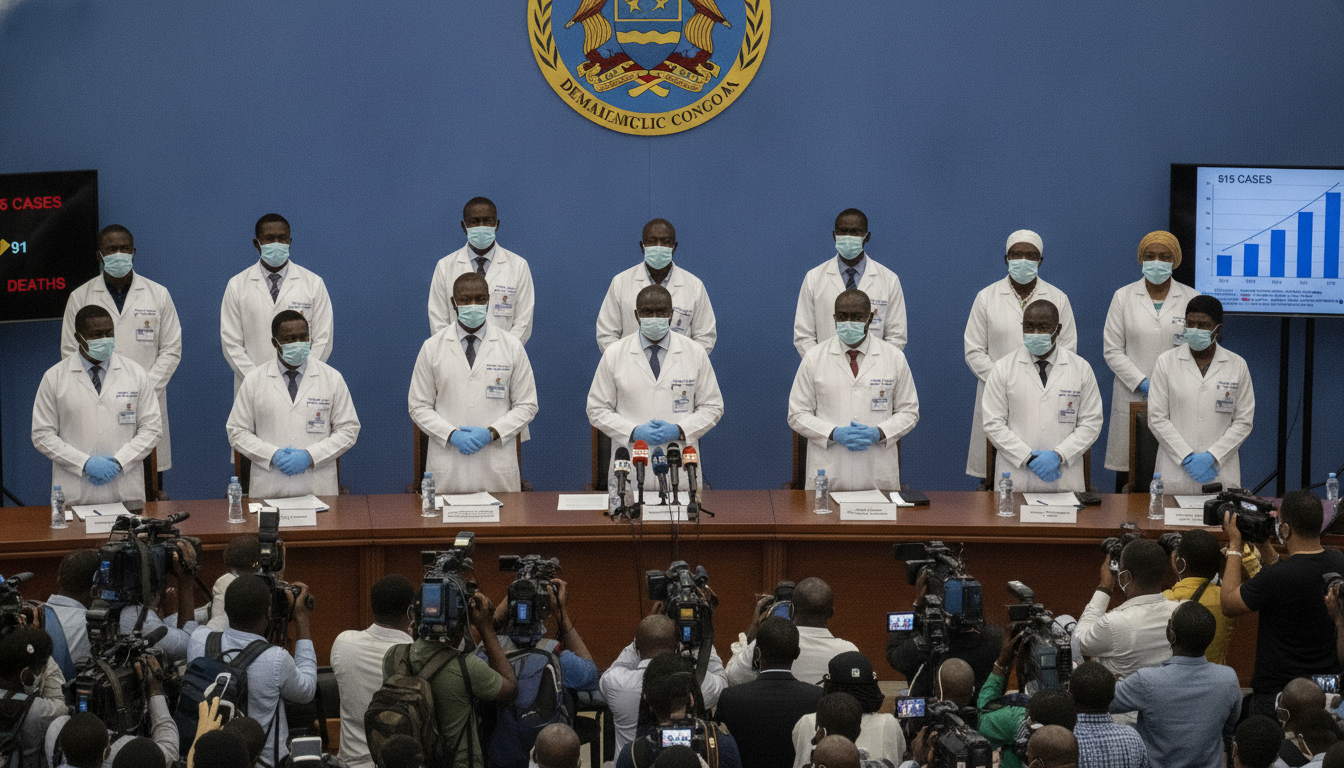
Ebola outbreak in Democratic Republic of Congo: 27 new cases raise confirmed total to 515
DRC reports 27 new Ebola cases, raising confirmed infections to 515 with 91 deaths, health ministry announced on June 7, 2026 amid ongoing outbreak response.
The Democratic Republic of Congo announced on June 7, 2026 that confirmed Ebola cases have risen to 515 after 27 new samples tested positive in the previous 24 hours, officials said. The surge, disclosed by government data, includes 91 confirmed deaths and highlights continued transmission in affected areas.
New laboratory confirmations reported in 24 hours
The government said the 27 additional positive samples were identified during routine testing over the past day. Authorities did not immediately detail the geographic distribution of the new confirmations in their initial bulletin.
Laboratory teams continue to process samples from suspected cases and contacts as part of intensified surveillance. Health officials emphasized that daily case tallies reflect ongoing detection rather than a single localized event.
Confirmed cases and fatalities tallied by authorities
Official figures released on June 7, 2026 place the cumulative number of laboratory-confirmed Ebola infections at 515, with 91 deaths among those confirmed cases. The government data distinguishes confirmed fatalities from suspected or probable deaths that remain under investigation.
Officials noted that the confirmed death count is drawn from laboratory-verified cases and may be updated as investigations conclude. Accurate case classification remains a priority for health teams responding to the outbreak.
Testing and surveillance activities described by health officials
Health authorities reported that sample collection and testing are being maintained across affected provinces to identify and isolate cases quickly. Mobile testing units and reference laboratories are being used to shorten diagnostic turnaround times, according to the government statement.
Contact tracing operations have been expanded in recent days to map transmission chains and prioritize vaccination for high-risk contacts. Surveillance teams are also monitoring cross-border movements to limit spread beyond the Congolese borders.
Clinical care and resources for patients
Health facilities treating Ebola patients continue to provide supportive care while managing infection-prevention measures to protect staff and non-Ebola patients. Hospitals and treatment centers are working to maintain isolation wards and ensure adequate personal protective equipment for frontline workers.
Authorities have highlighted the importance of rapid referral and safe patient transport to reduce community exposure. The scale-up of clinical care capacity remains essential to reduce mortality and manage severe cases.
Community engagement and public health messaging
Government communications emphasize community awareness of symptoms and the need to seek care early. Public health teams are coordinating with local leaders to encourage reporting of suspected cases and adherence to infection-prevention practices.
Risk communication efforts aim to counter misinformation and explain the role of testing, isolation, and safe burials in limiting transmission. Authorities are urging communities to cooperate with contact tracers and vaccination teams when deployed.
Regional implications and coordination efforts
The continuation of confirmed cases underscores potential risks for neighboring areas and the need for cross-border surveillance. National authorities are coordinating with regional health bodies to share situational updates and harmonize response measures.
Preparedness measures at border crossings and transport hubs are being reinforced to detect symptomatic travelers and prevent wider dissemination. Coordination with international partners is being leveraged to support laboratory capacity and logistics where required.
The situation remains dynamic as health officials process incoming test results and update case classifications. Authorities have assured the public that monitoring will continue and that further briefings will be issued as new information becomes available.
