
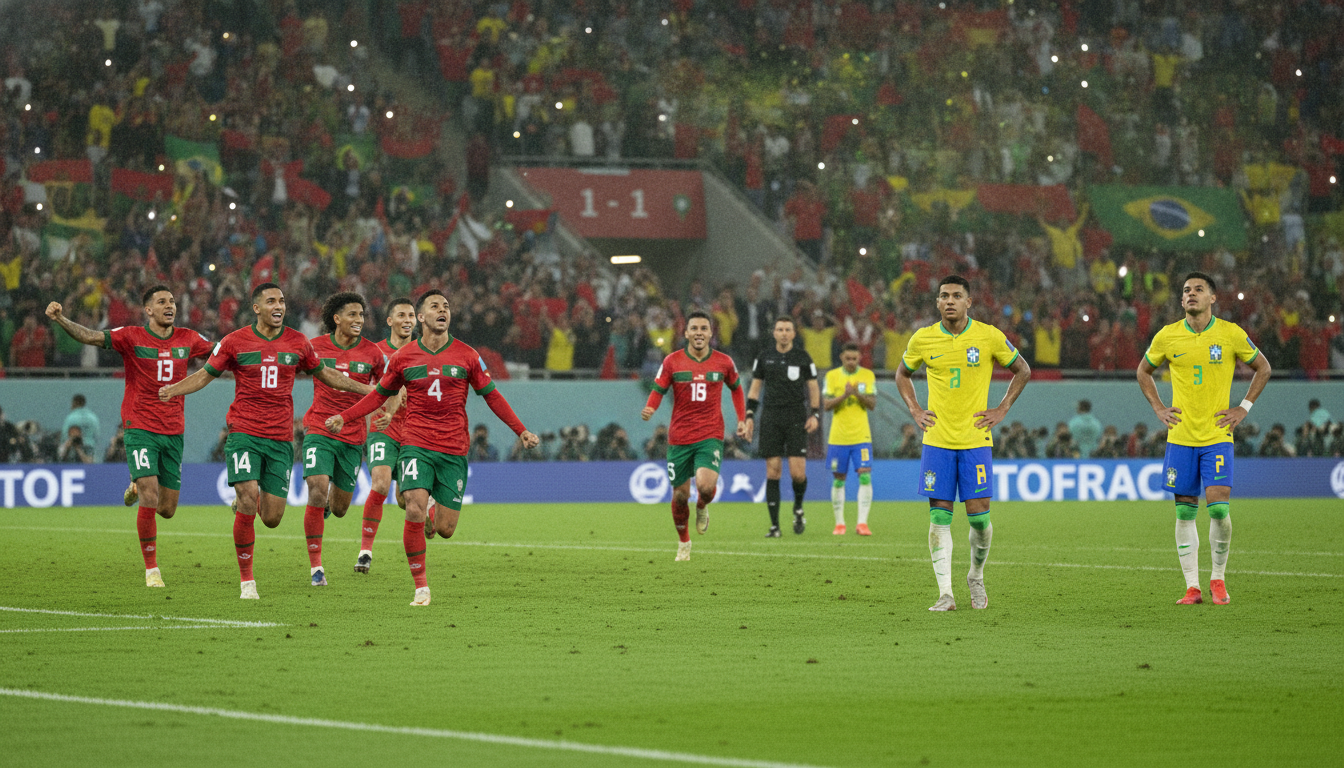
Morocco draw with Brazil 1-1 in World Cup 2026 opener signals new era
Morocco draw with Brazil 1-1 in World Cup 2026 opener highlighted tactical discipline, Yassine Bounou’s saves and a young generation ready to compete globally.
Morocco’s national team confirmed its rise on the world stage by holding Brazil to a 1-1 draw in the opening match of the 2026 FIFA World Cup. The Morocco draw with Brazil result underlined a performance built on tactical organisation, defensive resilience and decisive goalkeeping. The outcome sent a clear message to the tournament’s heavyweights that Morocco is no longer an occasional surprise but a consistent contender.
Early control and a statement result
Morocco seized the early initiative and controlled large stretches of the opening half, unsettling Brazil with high pressing and quick transitions. The Atlas Lions created several clear chances and took the lead through a well-worked move that reflected their confidence and game plan. Brazil responded before halftime, but Morocco’s ability to maintain structure and composure through the first 45 minutes was the defining feature of the match. The draw with Brazil therefore felt less like damage limitation and more like an earned statement.
Tactical blueprint from coach Mohamed Wahbi
Coach Mohamed Wahbi’s game plan combined disciplined pressing with careful exploitation of space behind Brazil’s full-backs. Wahbi, who previously coached Moroccan youth sides to significant victories over Brazil, set up a team that could shift between organised containment and sudden attacking intent. His substitutions and in-game adjustments demonstrated an acute reading of the match, allowing Morocco to blunt Brazil’s typical rhythm. The tactical approach highlighted coaching continuity and a clear identity for the national side.
Ayoub Bouaddi announces himself on the world stage
One of the match’s most striking stories was the performance of 18-year-old Ayoub Bouaddi, who made his first official appearance for Morocco with poise beyond his years. Bouaddi ranged freely through midfield, linked defence and attack effectively and showed an ability to keep possession under pressure. His calm decision-making and technical quality suggested he could become a mainstay in Morocco’s midfield for years to come. The teenager’s display was a timely reminder of the country’s productive youth development.
Yassine Bounou’s crucial saves preserved the result
Goalkeeper Yassine Bounou, widely regarded as one of Morocco’s most reliable players, produced a string of vital saves that kept his team ahead at critical moments. Bounou’s interventions late in the first half and during periods of sustained Brazilian pressure in the second half were decisive. Beyond shot-stopping, his calm presence and distribution helped sustain Morocco’s tactical balance. The goalkeeper’s performance reinforced his status as a world-class figure between the posts.
2022 semi-final run proves sustainable, not accidental
The collective maturity on display suggested that Morocco’s memorable World Cup run in 2022 was not a one-off phenomenon. In the opening half especially, Morocco dictated play and created opportunities that could easily have yielded a larger margin. Brazilian attempts to impose themselves were frequently frustrated by compact defensive lines and intelligent midfield rotations. This continuity from 2022 to the present underlines a broader national project rather than a transient peak.
A new generation ready to carry the torch
Beyond the headline names, the match showcased a cohort of younger players gaining vital international experience on football’s biggest stage. Several squad members made their World Cup debuts, and many are younger than 25, indicating a sustained pipeline of talent. That mix of youthful energy and experienced leadership gives Morocco flexibility in squad selection and a platform for development. The balance between promising newcomers and established performers will be key to Morocco’s prospects deeper into the tournament.
Morocco’s draw with Brazil will be judged not only by the point gained but by the broader implications for the team’s trajectory. The result combined tactical discipline, individual brilliance and a clear vision from the coaching staff, offering a compelling case that Morocco has entered a new competitive phase. As the tournament progresses, expectations will rise and the Atlas Lions will be watched closely by rivals and fans alike.
