
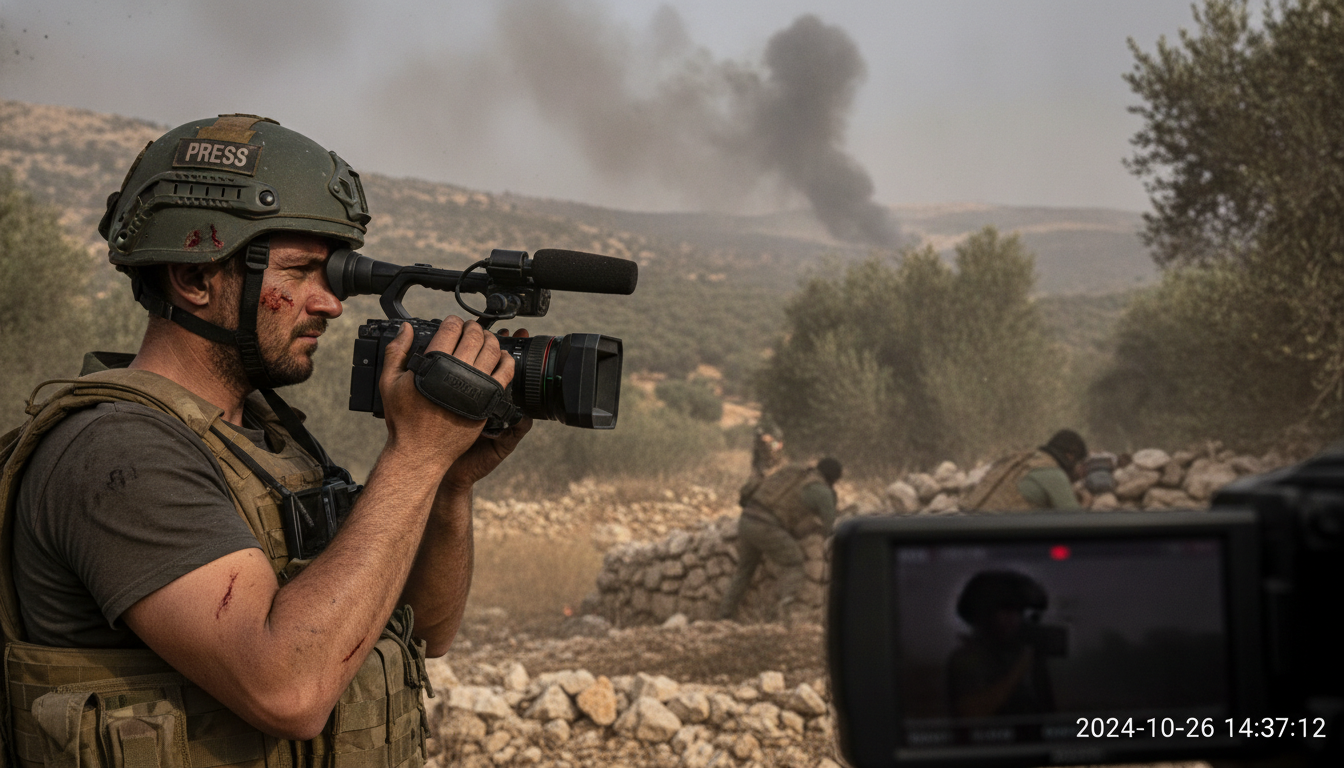
Press TV journalist Hadi Hoteit struck by shrapnel while reporting in southern Lebanon
Press TV journalist Hadi Hoteit was hit by shrapnel while filming Israeli strikes in southern Lebanon on June 15, 2026; he is hospitalised despite wearing a ‘Press’ vest.
Press TV said Hadi Hoteit, a correspondent covering clashes near the Lebanese-Israeli border, was wounded by flying shrapnel while recording scenes of overnight strikes in the south of Lebanon. The broadcaster reported that Hoteit was clearly marked as media and was taken to hospital for treatment, where he remains under medical care. The incident adds to growing concern over the safety of journalists operating in front-line areas amid cross-border hostilities.
Journalist wounded while reporting in southern Lebanon
Press TV identified the injured reporter as Hadi Hoteit and said he sustained shrapnel wounds while on assignment near frontline areas in southern Lebanon. The network stated he was wearing a vest marked “Press” at the time and that the injuries were caused by ordnance from recent strikes.
Local sources described Hoteit’s work as covering the immediate aftermath of strikes aimed at militant positions, and said he had been documenting damage when the projectile fragments struck him. Authorities on the ground and emergency crews moved him to a nearby medical facility for treatment and observation.
Incident account and eyewitness details
Eyewitnesses told reporters that the area had been under intermittent shelling and aerial activity when Hoteit was hit, and that journalists were present documenting the events. Several colleagues described scenes of sudden explosions and debris, with journalists attempting to shield themselves and each other as fragments rained down.
A fellow media worker said crews had clearly marked vehicles and vests and were positioned at some distance from known military targets. Those on site expressed concern that the intensity and unpredictability of strikes in populated or contested zones increase the risk to non-combatants, including accredited reporters.
Medical treatment and current condition
Hospital staff treating Hoteit confirmed he was admitted with shrapnel wounds and received initial stabilization and imaging to assess the extent of his injuries. Medical sources said he underwent wound care and remained under close observation, with further treatment planned depending on follow-up assessments.
Press TV reported that Hoteit was conscious and communicating with medical personnel, though official medical bulletins have not provided a full prognosis. Family members and colleagues were notified and have been granted access in line with hospital procedures and security arrangements.
Press TV statement and local response
In a statement, Press TV condemned the attack and called for a thorough investigation into how an identified journalist was struck while carrying out reporting duties. The broadcaster urged authorities and parties to the conflict to ensure the safety of media personnel operating in frontline zones.
Local organisations and media unions also voiced concern about the incident, reiterating calls for safer access corridors for journalists and clearer mechanisms to protect accredited reporters. Calls for accountability stressed that deliberate or reckless attacks on journalists would violate international norms governing the protection of civilians and press workers.
Security situation in the border region
The southern Lebanon border area has seen repeated exchanges of fire and targeted strikes in recent weeks, with security forces on both sides citing tactical operations against armed groups. Residents in border towns have reported property damage and disruptions to daily life as a result of intermittent bombardments and crossings into civilian areas.
Humanitarian agencies have warned that sustained hostilities raise risks of greater civilian harm and complicate relief efforts. Journalists covering these developments face increased hazards from unexploded ordnance, stray munitions, and the fluid front lines that make distinguishing between combatant and non-combatant zones difficult.
Calls for journalist protections and legal obligations
Press freedom organisations and legal experts emphasise that journalists are protected under international humanitarian and human rights law and should not be targeted in conflict. They urged parties to adhere to obligations to avoid harm to civilians and to take all feasible precautions to protect media workers and news-gathering infrastructure.
Advocates also pressed for independent inquiries when journalists are injured, to establish circumstances and responsibility. These groups called on international bodies and local authorities to strengthen monitoring and reporting mechanisms that document attacks on the press and deter future incidents.
The shooting of Hadi Hoteit underscores the acute dangers faced by frontline reporters covering volatile cross-border incidents in southern Lebanon, and renews demands for clearer protections and accountability for harm to members of the press.
