
Ethiopia bus crash kills at least 31 as vehicle plunges into ravine near Dessie
At least 31 people were killed when a crowded bus veered off a mountainous road and fell into a ravine on June 15, 2026, in northern Ethiopia, exposing dangerous Harego routes and stretched emergency services.
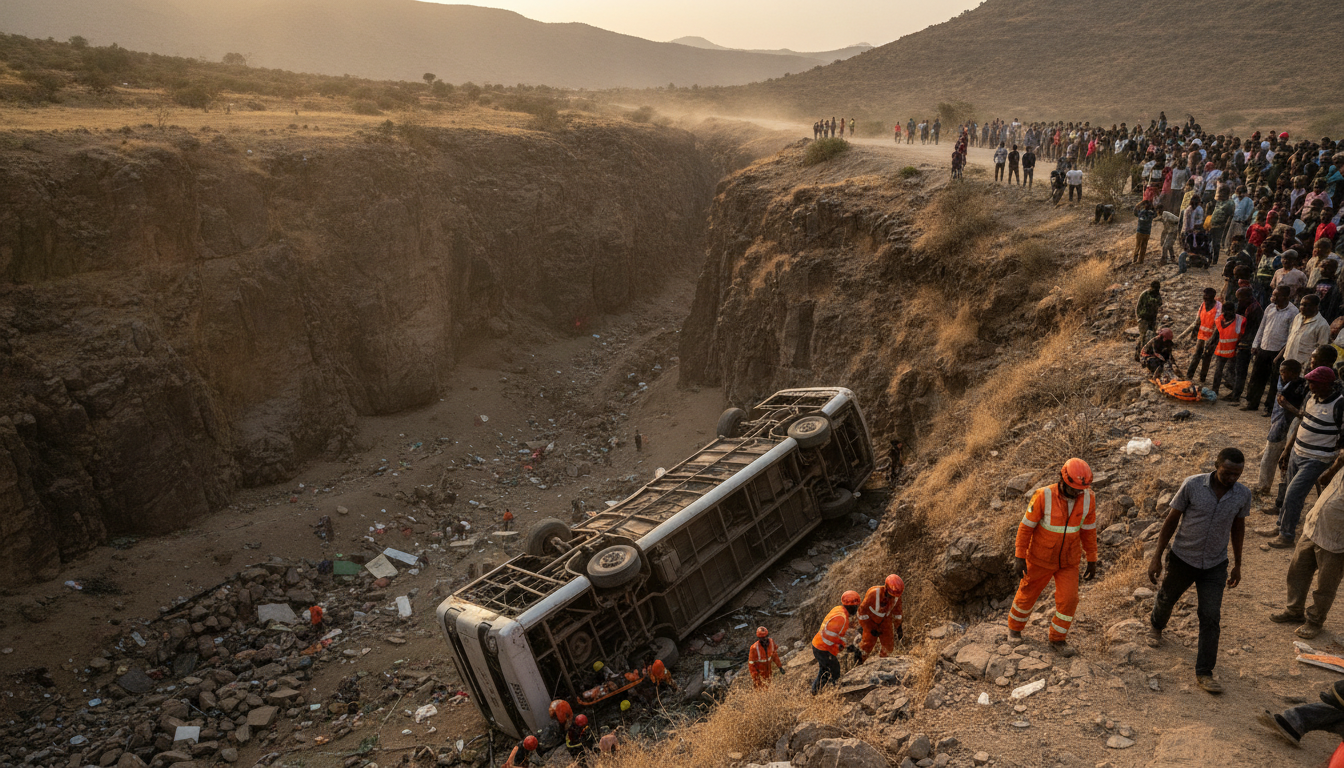
An overcrowded passenger bus travelling from Dessie to Addis Ababa crashed early on Monday and plunged into a ravine about 100 metres deep, regional police confirmed. The Ethiopia bus crash left at least 31 people dead and scores more injured, according to officials and local reports. Images shared on social media showed a badly mangled vehicle broken apart on a steep hillside, underscoring the severity of the impact.
Crash and immediate aftermath
Emergency services and local residents reached the scene on the Harego road, a zigzagging mountain route surrounded by dense forest. First responders and volunteers worked through difficult terrain to recover victims and transport the wounded to nearby health centres. Police said several victims died before they could receive medical attention, citing delays caused by the remote location and the scale of the crash.
Ambulance coverage in the area remains limited, forcing many injured passengers to travel by private vehicle or on foot to reach treatment. Local health facilities reported being overwhelmed as dozens arrived with serious fractures and internal injuries. Officials have opened an investigation to determine the precise sequence of events that led to the bus leaving the road.
Route details and road hazards
The bus had departed Dessie in the Amhara region and was en route to the capital, Addis Ababa, when it left the carriageway. The Harego stretch is known locally for sharp bends and steep drop-offs, conditions made more hazardous after rainfall or at night. Drivers and residents have long warned that inadequate signage, uneven surfaces and lack of guardrails make the road particularly risky for heavy vehicles.
A United Nations report and national statistics have repeatedly identified Ethiopia’s rural highways as high-risk, with road markings and traffic signage often absent. Authorities have acknowledged that road maintenance and safety upgrades lag behind increasing vehicle numbers and passenger demand.
Rescue challenges and medical response
Rescue teams said the depth and steepness of the ravine complicated recovery efforts and delayed specialist medical evacuation. In many cases, victims had to be carried up narrow paths before being transferred to ambulances or private cars. Health workers told reporters that some patients arrived at clinics in critical condition after long delays, reducing the chances of survival for those with severe trauma.
Regional hospitals mobilised extra staff and set up triage areas, but shortages of blood products, surgical supplies and critical care beds were reported. Humanitarian actors and local authorities said they were coordinating to move the most seriously injured to larger hospitals in Dessie and Addis Ababa.
Historical pattern of deadly road accidents
Road traffic deaths in Ethiopia have risen significantly over the past decade and a half, with official counts and international analyses pointing to a worsening trend. Between 2007 and 2018, recorded road fatalities more than doubled, a rise attributed to growing vehicle fleets, urbanisation and persistently weak infrastructure. High-profile incidents continue to punctuate the country’s roads, including a December 2024 truck crash in the southern Sidama region that killed 71 people when a vehicle plunged into a river.
Experts say a combination of factors — from overloaded vehicles and poor vehicle maintenance to limited enforcement of traffic rules — fuels the high toll. Efforts to expand road networks have often outpaced investments in safety features such as signage, guardrails and emergency response capacity.
Official reaction and local response
Regional police confirmed the casualty figures and said investigators were on site to collect evidence and interview survivors and the driver, where possible. Local leaders offered condolences and appealed for calm while emergency services carried out recovery and treatment operations. Relatives and neighbours gathered at hospitals and makeshift reception points, some fundraising to cover travel and medical costs for the injured.
Community groups and civil society activists called for a faster national response to road safety, urging the federal government to prioritise emergency medical coverage, road maintenance and stricter enforcement of vehicle loading limits. Transport unions and bus operators have often cited economic pressures that can encourage unsafe practices, including carrying excess passengers on rural routes.
Calls for infrastructure investment and policy change
Safety advocates said the latest Ethiopia bus crash underscores an urgent need for targeted investments in hazardous corridors and a national plan to improve post-crash response. Recommendations shared by researchers and international agencies include expanding ambulance networks, installing road signage and guardrails along high-risk mountain roads, and rolling out driver training tied to tougher licensing standards. Long-term solutions also call for better data collection to identify accident hotspots and to prioritise interventions where they will save the most lives.
Donor agencies and development partners have previously recommended integrated projects combining road upgrades with community awareness campaigns and emergency response training. Observers said such combined measures could reduce both the frequency and lethality of crashes on routes like Harego.
Authorities have pledged to provide updates as the investigation proceeds and have asked anyone with information about the crash to come forward. Rehabilitation and support for families of the deceased, along with treatment for the injured, will be key immediate priorities as the region copes with the aftermath of the tragedy.
