
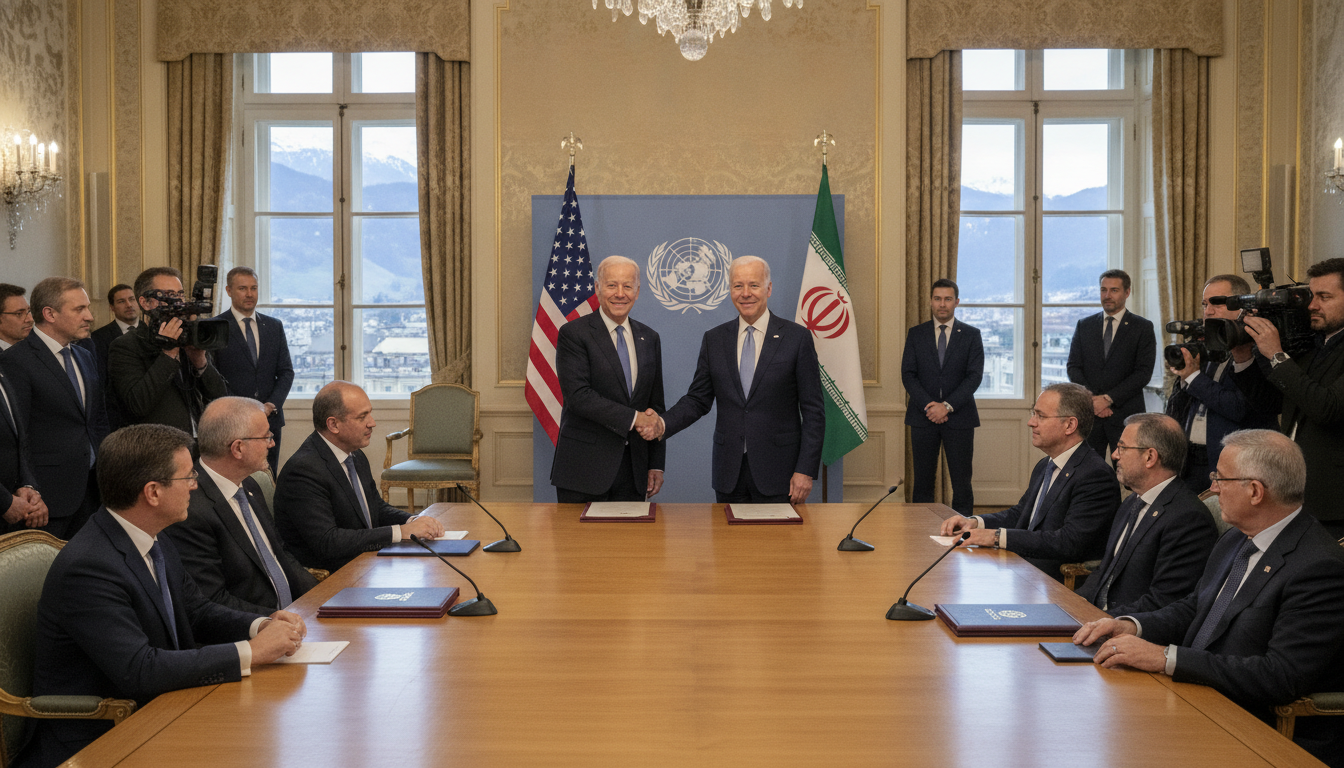
U.S.-Iran framework agreement signed electronically; formal signing set for Friday in Switzerland
U.S.-Iran framework agreement signed electronically on Sunday, with a formal ceremony in Switzerland Friday; Washington says no funds released and demands an end to terror financing.
Agreement Signed Electronically Ahead of Planned Ceremony
The U.S.-Iran framework agreement was signed electronically on Sunday, with U.S. officials confirming a formal signing ceremony is scheduled for Friday in Switzerland. The framework aims to end the hostilities between the two states and to reopen the strategic Strait of Hormuz to commercial traffic.
Vice President J.D. Vance said the electronic signature formalizes an understanding reached after weeks of intense negotiations. He described the deal as an initial, binding framework that still requires a public ceremonial endorsement by representatives from both sides.
Sanctions Relief Contingent on Long-Term Iranian Commitments
U.S. officials said any significant sanctions relief will be conditional on ironclad, long-term commitments from Tehran. Vance told American networks that Washington expects clear guarantees that Iran will cease financing designated terrorist groups and abandon nuclear weapons ambitions.
The administration framed sanctions relief as a reciprocal step tied to verifiable behavioral change, rather than an immediate transfer of resources. Officials emphasized that lifting penalties would follow phased verification and monitoring mechanisms agreed by both parties.
No U.S. Funds Released Under the Framework, Officials Say
Senior U.S. figures reiterated that no American funds have been released to Iran following the electronic signing. Vance specifically stated that there has been no transfer of U.S. money since the framework was signed and that the accord does not authorize immediate financial payments.
U.S. spokespeople clarified that the agreement’s economic provisions are tied to performance benchmarks, and any financial adjustments would be executed under separate, tightly controlled procedures. The insistence on withholding funds reflected Washington’s effort to maintain leverage during final implementation steps.
Direct Diplomatic Channels Between Washington and Tehran
U.S. officials reported direct contact with Tehran’s political and military leadership during the negotiations, a shift from previous indirect or multichannel communications. Vance said that Washington is engaging with a full spectrum of Iranian decision-makers, describing the dialogue as more direct and streamlined.
The U.S. view, as expressed by senior officials, is that direct engagement has improved the prospects for a durable deal by reducing reliance on back-channel intermediaries. Both sides are expected to send full delegations to the signing ceremony in Switzerland, underscoring the diplomatic significance of the framework.
Scope of the Framework and Remaining Details
While both capitals have declared agreement on a framework to end the conflict and reopen maritime routes, several implementation details remain undisclosed. U.S. statements acknowledge that the framework sets broad commitments but leaves technical provisions — including verification, timelines, and enforcement — to be finalized before full activation.
Analysts say the success of the pact will hinge on precise, enforceable measures that address nuclear constraints, counterterrorism assurances, and maritime security protocols for the Strait of Hormuz. Observers also note that progress during the Friday ceremony will likely focus on formalizing oversight structures and the sequence of reciprocal steps.
Next Steps Toward Formal Ratification and Oversight
Officials expect the Friday signing in Switzerland to be a pivotal moment that converts the electronic accord into a publicly ratified framework. The ceremony is intended to signal political buy-in while delegations move quickly to negotiate the annexes and technical protocols required for implementation.
U.S. statements suggest subsequent rounds of verification and monitoring will be established to ensure compliance, and that sanctions relief will be paced according to performance. Both sides will likely announce joint committees or third-party monitoring arrangements to oversee the process in the weeks following the formal signing.
The framework represents a tentative but significant shift in relations, with Washington stressing that its commitments are conditional and reversible if Iran fails to meet agreed benchmarks.
