
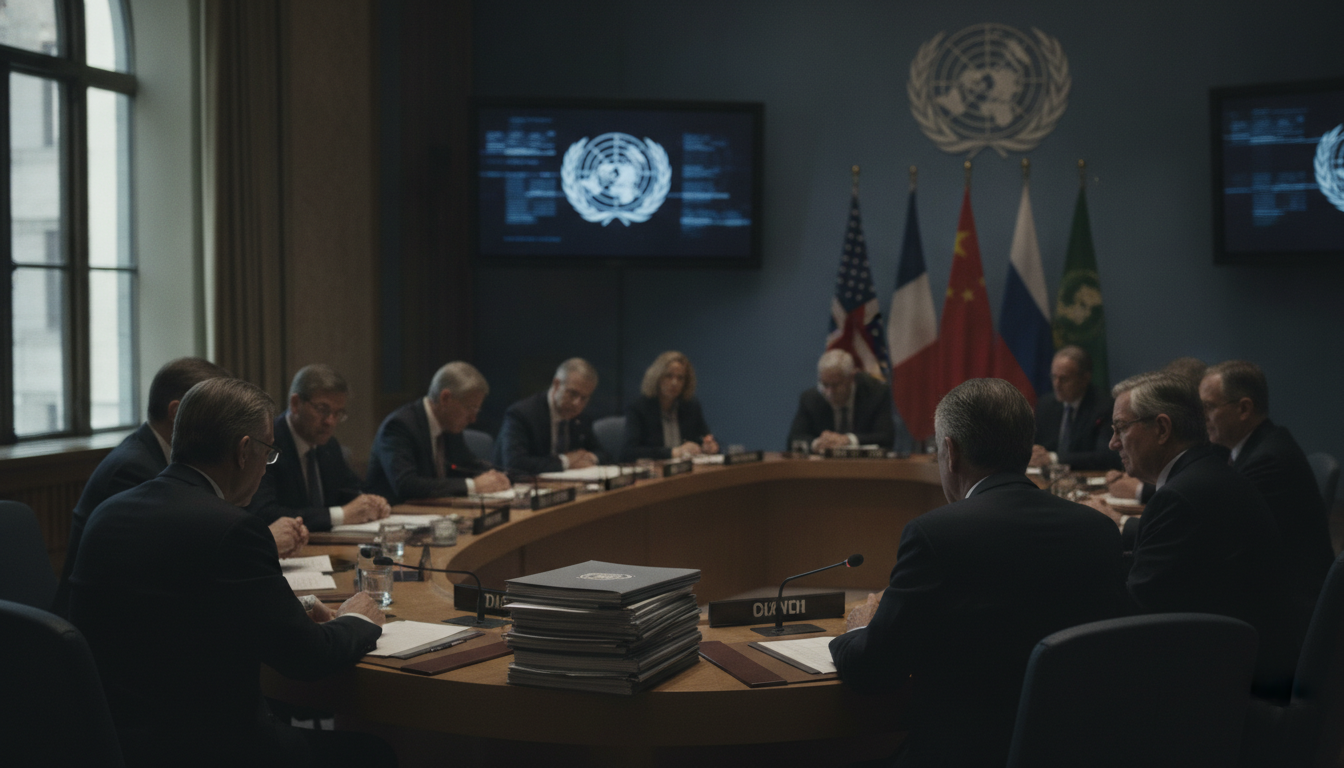
Report reveals how permanent Security Council members shape the UN Secretary-General selection
New report by the 1 Represents 8 Billion campaign finds US, UK, China, France and Russia have influenced UN Secretary-General selection processes, urging greater transparency.
The 1 Represents 8 Billion campaign has published a report concluding that the UN Secretary-General selection process has long been shaped by behind-the-scenes deals involving the five permanent members of the Security Council.
Researchers say interviews with more than 40 former diplomats, past candidates and senior officials show repeated attempts by the United States, the United Kingdom, China, France and Russia to influence appointments.
The report warns that these interventions risk undermining the independence of the office and could shape the authority and reform agenda of the next UN Secretary-General.
Campaign and report findings
The coalition behind the report, which advocates for transparent selection rules, recorded multiple instances in which permanent members sought tangible concessions in return for support.
Authors note the pattern spans decades and several administrations, affecting not only the top office but also senior positions across the UN system.
The report aims to inform the secret voting round expected in the Security Council as the race to succeed the incumbent moves into its decisive phase.
Documented examples across administrations
Researchers compiled cases where trade-offs were observable in public records or memoirs, and others where timing and personnel moves suggest linkage to diplomatic bargains.
The report cites accounts indicating that past Secretaries-General have at times acceded to requests for senior appointments or equivalent posts to secure backing.
In some instances the arrangements are explicit in semi-official accounts, while in others the association is inferred from a sequence of appointments and diplomatic activity.
Named incidents and patterns
Former Secretary-General Ban Ki-moon is quoted as having described resistance from one permanent member during his own selection, while subsequent appointments indicate concessions were effectively made.
The team behind the report also highlights similar patterns around Kofi Annan and other predecessors, with transfers or new posts created that aligned with the interests of specific governments.
Although direct proof is not always available, the consistency of the patterns and corroborating testimony from multiple sources strengthen the report’s conclusions.
How past Secretaries-General responded
Secretaries-General have adopted varied strategies to manage pressure from powerful members of the Security Council.
Some sought to insulate key functions by appointing trusted teams and creating internal advisory groups, while others tolerated external input in order to secure broader acceptance.
Tactics ranged from forming independent task forces to delegating operational authority to lower-ranking officials seen as more loyal, a mix that reflects the office’s limited capacity to resist geopolitical bargaining.
Recent practices under the current Secretary-General
According to the report, the current Secretary-General has navigated a complex balance between accepting customary influence over senior posts and preserving selection prerogatives.
In several recent appointments the Secretary-General reportedly limited choices to candidates of a required nationality but exercised discretion in selecting individuals who demonstrated greater independence.
At the same time, the study notes that demands for representation in junior and mid-level executive posts have grown, expanding the scope of influence beyond the highest ranks.
Implications for the upcoming vote
Observers warn that if the next Secretary-General campaign follows established patterns, commitments made in advance to secure support could constrain reform efforts.
The report’s authors argue that pre-committed allocations of senior roles to permanent members would leave little room for sweeping changes within the UN apparatus.
As the secret ballot in the Security Council approaches, advocates for change say increased transparency could strengthen candidates’ ability to resist such bargains.
Calls for transparency and reform
Civil society groups and a range of member states cited in the report are urging procedural reforms to make the UN Secretary-General selection more open and merit-based.
Proposed measures include clearer candidate vetting, public hearings, and a more formal role for the General Assembly so that appointments are less susceptible to private trade-offs.
Campaigners say these steps would enhance legitimacy, allow the next Secretary-General to pursue an independent agenda, and restore confidence in the multilateral system.
The report represents a detailed effort to map how geopolitical influence has intersected with leadership choices at the United Nations, raising questions about accountability and the practical limits of the Secretary-General’s independence as the world body faces renewed calls for reform.
