
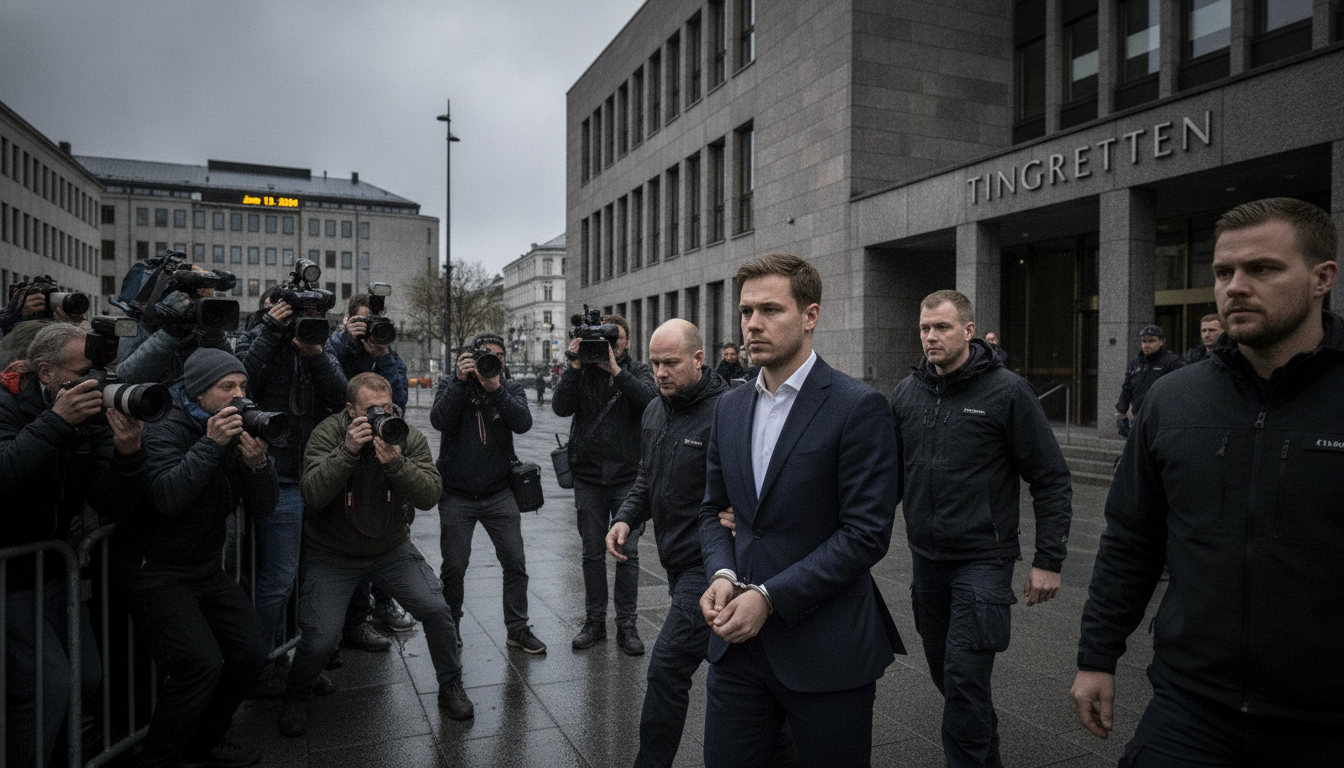
Marius Borg Høiby sentenced to four years after Oslo conviction for rape and domestic violence
Marius Borg Høiby was convicted and sentenced to four years in prison on June 15, 2026, following a high-profile Oslo trial that exposed sexual assault and domestic violence allegations.
The Oslo court on Monday found Marius Borg Høiby, 29, guilty of two counts of rape and several related offences, delivering a four-year prison sentence after a trial that lasted several weeks. The conviction, announced on June 15, 2026, marks a significant development in a case that has focused intense national attention on his connections to the Norwegian royal household. (apnews.com)
Court verdict and sentence
The district court in Oslo convicted Høiby of two counts of rape and a count of domestic violence, among multiple other charges, and imposed a four-year custodial term. The conviction followed evidence presented over a protracted trial and legal debate about the severity and number of offences alleged against him. (theguardian.com)
Høiby did not appear in the courtroom for the sentence reading in person; he followed the hearing by video link from detention. Only one of the women who had accused him of rape attended the sentencing session at the courthouse. (theguardian.com)
Charges detailed by prosecutors and court evidence
Prosecutors had accused Høiby of sexually assaulting four women who were asleep or otherwise unable to resist at separate events between 2018 and 2024. Evidence presented to the court included video material, electronic communications, and testimony describing patterns of behaviour and substance use. (thelocal.no)
Court testimony also referred to one assault that the prosecution said occurred in a basement at the Crown Prince’s official residence, an allegation that amplified the public interest in the case. The court ultimately found Høiby guilty on two of the rape counts and cleared him on others, reflecting the complexity of the evidence and differing witness accounts. (thelocal.no)
Prosecution demands and defence response
The public prosecutor had sought a sentence of seven years and seven months, arguing that multiple victims had been incapacitated at the times of the assaults and that Høiby’s conduct warranted a lengthy term. The prosecution described the incidents as serious violations committed over several years. (theguardian.com)
Høiby denied the most serious allegations during the trial but acknowledged and pleaded guilty to a number of lesser offences, including drug-related charges and breaches of restraining orders. Defence lawyers signalled that they would evaluate the verdict and consider an appeal. (theguardian.com)
Royal household response
The Royal Palace released a brief statement stressing that the matter had been handled by the courts and that it had no comment on the verdict. The palace had previously expressed sympathy for all those affected by the case without engaging in commentary on the judicial proceedings. (apnews.com)
Although Høiby is connected to Crown Princess Mette-Marit as her eldest son from an earlier relationship, he holds no royal title, performs no official duties, and is not in the line of succession. Nonetheless, his familial ties have made the trial a sustained point of public scrutiny for the monarchy. (apnews.com)
Media scrutiny and public reaction in Norway
The trial attracted wide coverage across Norwegian and international media, with reporting focused on the allegations, courtroom evidence, and the implications for the royal family’s public standing. Commentators and readers debated how the case might affect public trust in institutions and in the personal reputations of those tangentially connected to the accused. (theguardian.com)
Victim advocacy groups highlighted the case as part of broader conversations on consent and accountability, while legal commentators emphasised the court’s role in weighing conflicting testimony and physical evidence. Public reaction remained mixed, reflecting both support for victims and concern over the wider ramifications for the monarchy. (theguardian.com)
Legal timeline and next steps
The investigation that led to the charges began amid an arrest in August 2024 and the trial was opened in early February 2026, running over several weeks before Monday’s verdict. The court’s decision addressed dozens of charges spanning sexual offences, assault, and drug-related crimes. (thelocal.no)
Both the defence and the prosecution indicated that appeals were possible, meaning the sentence could be reviewed by higher courts. The coming weeks are expected to determine whether the verdict and the four-year sentence will be contested in an appellate process.
The conviction of Marius Borg Høiby closes a chapter in the trial itself but is likely to keep reverberating in public debate about accountability, privilege and the relationship between private conduct and public institutions in Norway.
