
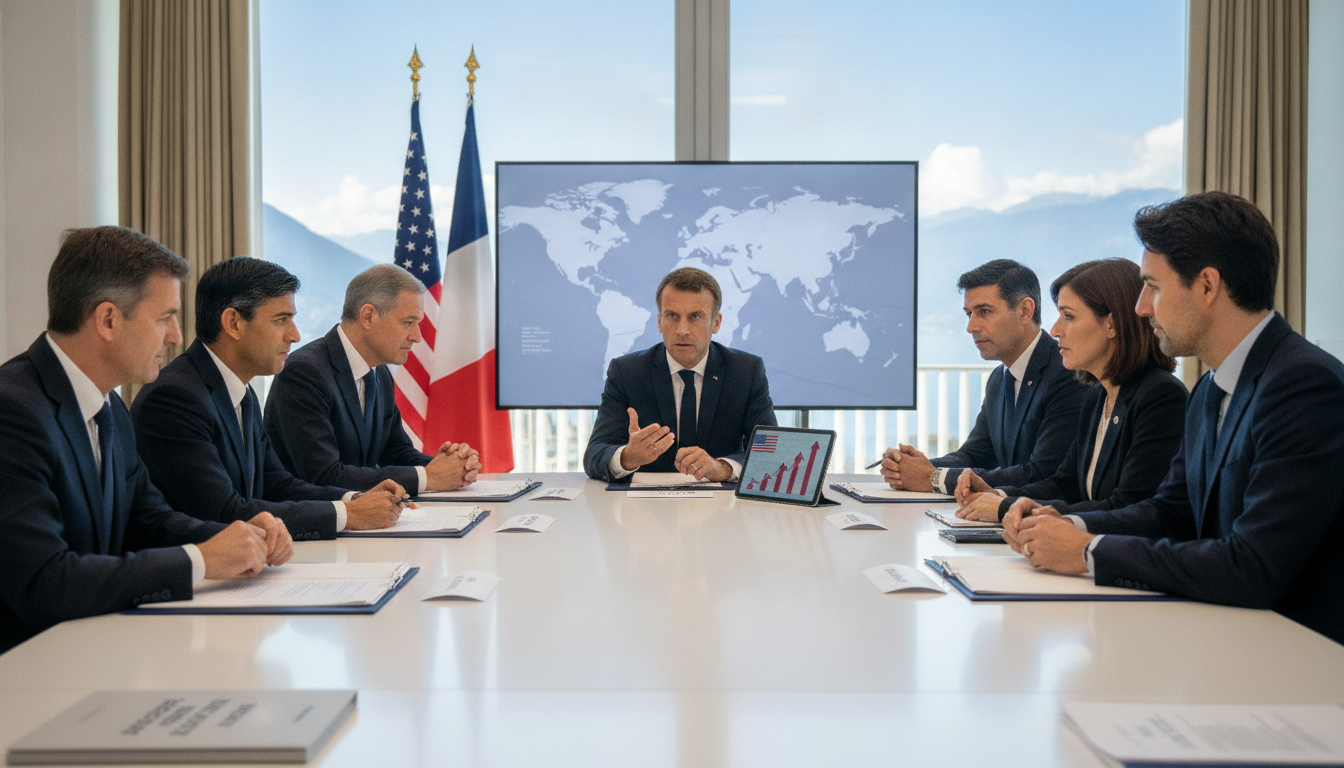
Evian G7 summit spotlights U.S.-Iran framework, Ukraine and global economic imbalances
At the Evian G7 summit (June 15–17, 2026) leaders press for details on a U.S.-Iran framework, discuss Ukraine, global economic imbalances and critical minerals.
Leaders arriving at Evian-les-Bains opened a three-day G7 summit marked by urgent diplomatic and economic priorities, with the preliminary U.S.-Iran framework dominating early discussion. Delegations gathered in the French resort on June 15 ahead of scheduled talks that run through June 17, 2026. Allies signaled a demand for clarity on terms that could reshape security in the Gulf and test international coordination.
Questions over the U.S.-Iran agreement
G7 leaders made the U.S.-Iran preliminary accord the immediate focus, pressing Washington for a full text and implementation timeline before endorsing any outcome. French hosts and other members said they expect formal documentation to be presented in Switzerland on Friday, June 19, 2026, and sought details on verification, timelines and the role of regional partners. The lack of a public, detailed agreement heightened calls within the summit for transparency and confidence-building measures that would reassure Gulf states and global energy markets.
Security priorities in the Strait of Hormuz
Claims that the Strait of Hormuz would reopen within days following the U.S.-Iran understanding added urgency to security discussions at Evian, where energy security and freedom of navigation topped the agenda. Delegations urged concrete measures to end disruptions to oil and gas shipments and demanded monitoring arrangements to prevent renewed blockades. Officials noted that reopening the strait would depend on durable verification and reciprocal actions by Tehran and Washington, not only public statements.
Ukraine meeting and military support
President Volodymyr Zelensky attended a scheduled bilateral session with G7 leaders on June 16, 2026, underscoring Kyiv’s priority need for additional military and financial backing. Allies discussed recent shifts on the battlefield and coordinated responses to renewed strikes on Ukrainian population centers, with European and North American partners reiterating their commitment to maintain pressure on Moscow. French President Emmanuel Macron framed the discussions as part of an effort to work “with partners to pursue a ceasefire and then a negotiated settlement,” while emphasizing continued support for Ukraine’s defense needs.
Economic imbalances and supply-chain resilience
France used its G7 presidency to foreground macroeconomic imbalances that it says risk long-term instability, urging coordinated policy action on trade, production and investment. Officials highlighted concerns about concentrated supply chains for critical minerals and called for diversified sources beyond the dominant supplier, with public and private initiatives to spur alternative production. Leaders also debated measures to correct excessive production in some markets, rising consumption in others, and gaps in European investment that contribute to global imbalances.
Trade tensions and digital tax dispute
Bilateral frictions surfaced when the U.S. president warned of steep tariffs on French wine over France’s digital tax policies, injecting a trade spat into an already full agenda. French officials responded by indicating the matter would not be formally raised at the summit, seeking to keep multilateral focus on broader economic and security priorities. Summit participants acknowledged that such bilateral disagreements can complicate consensus but said they remained committed to pursuing coordinated outcomes on trade and taxation through established channels.
Diplomatic strains and the role of the United States
The presence of the U.S. president at Evian brought into sharp relief ongoing Allied concerns about unpredictability in American foreign policy and its implications for the postwar international order. Several partners noted that recent unilateral moves had caused ripple effects across diplomacy, trade and regional security, prompting questions about Washington’s long-term commitments. French leadership framed the summit as a pivotal moment to reaffirm shared responsibilities and to prepare for upcoming presidencies of major international forums.
Leaders at the Evian G7 summit said they would seek clear, verifiable steps on the U.S.-Iran framework and coordinate approaches to Ukraine, economic rebalancing and supply-chain security over the coming days. While divergent bilateral disputes persisted, participating states emphasized the need for common ground to stabilize energy flows, strengthen defense support for Ukraine and reduce strategic dependencies on single suppliers. The summit, which runs June 15–17, 2026 in Evian-les-Bains, will test whether the G7 can translate announcements into enforceable actions that reassure partners and markets.
