
Lebanon seeks international backing to halt Israeli attacks in southern Lebanon, PM says
Lebanese PM Nawaf Salam says Beirut and presidential channels are mobilising international support to halt Israeli attacks in southern Lebanon and restore services.
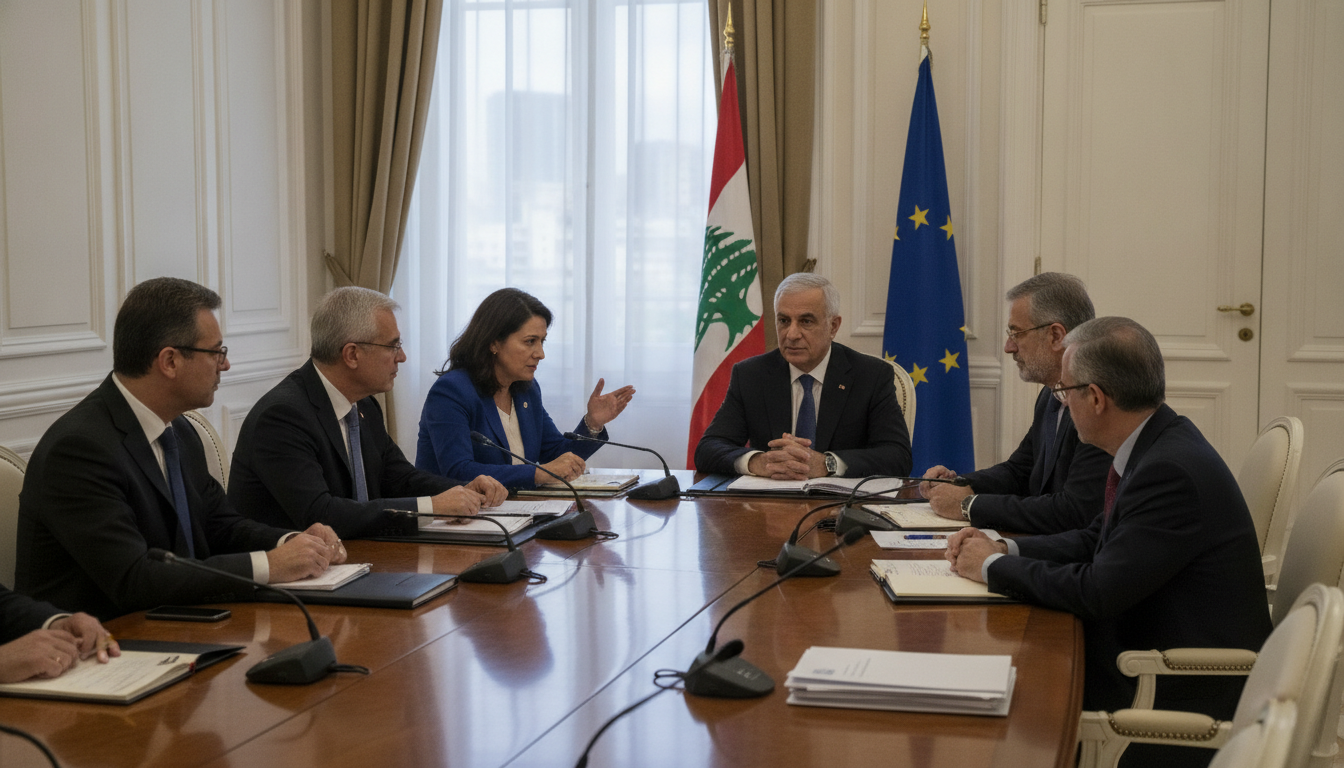
Prime Minister Nawaf Salam told ministers that he and President Joseph Aoun have opened diplomatic channels to rally global backing to stop the Israeli strikes that have battered southern Lebanon. The Cabinet discussed the urgent task of enabling displaced families to return, assessing damage and coordinating the clearance of debris. Information Minister Paul Morkos said the government is prioritising basic services and infrastructure repairs to stabilise front-line communities.
Diplomatic outreach by Beirut and the presidency
Lebanon’s leadership is pursuing a two-track diplomatic approach, combining official mechanisms with bilateral appeals to friendly and brotherly states, the prime minister said. These contacts aim to generate political pressure and humanitarian support that could contribute to an immediate halt to the hostilities. Officials described the outreach as intensive, with messages framed around civilian protection, respect for sovereignty and urgent relief needs.
The government emphasised that the diplomatic effort is ongoing and involves regional and international interlocutors who have shown concern for civilian displacement and infrastructure damage. While no specific pledges were announced after the meeting, ministers noted increased engagement from partners willing to discuss ceasefire measures and humanitarian corridors.
Cabinet focuses on return of displaced residents
A central objective of today’s Cabinet session was preparing conditions for the safe return of residents displaced from southern towns and villages. Ministers reviewed assessments of homes, public buildings and essential infrastructure to determine which areas can be reopened for civilians. The administration called for coordinated security guarantees and humanitarian access to allow phased returns without exposing communities to renewed risk.
Authorities said clearance of rubble and reopening of key roads are already under way where conditions permit, and that restoration of public order and services will guide the pace of repatriation. The government underscored the importance of clear communication with local leaders to ensure returns are voluntary and orderly.
Damage assessment, debris removal and bridge repairs
Ministers were briefed on a rolling survey of the damage across southern districts, including assessments of roads, bridges and utility networks. Teams have begun removing debris in damaged neighborhoods and prioritising the reopening of transport links that connect towns to service hubs. Bridge repairs and targeted reconstruction of critical crossing points are slated to start in the coming days to restore movement for residents and relief convoys.
Restoration activities are being coordinated with municipal authorities and technical experts to ensure that temporary fixes meet safety standards while longer-term repairs are planned. The Cabinet called for transparent monitoring of reconstruction contracts and the use of local contractors where possible to speed delivery and support the local economy.
Awaiting indictment decision in Beirut port probe
On the investigation into the Beirut port explosion and the upcoming August 4 anniversary, Prime Minister Salam said the government is awaiting the prosecutor’s indictment decision, which officials expect within months. He told ministers that, in his view, judicial obstacles that slowed progress under previous administrations have been removed, but he stressed respect for the separation of powers and the independence of the judiciary.
The Cabinet reiterated that executive authorities will refrain from interfering in judicial procedures while stressing the importance of accountability for the disaster that devastated large parts of the capital. Officials said the state must balance demands for a timely legal outcome with the need to preserve judicial independence.
Negotiations aim for phased Israeli withdrawals
Salam outlined a diplomatic objective of securing successive Israeli withdrawals from Lebanese territory as part of negotiations aimed at a complete pullback. The government described the approach as incremental: each withdrawal would be intended to reduce tensions, create space for humanitarian operations and build momentum toward a full end to hostilities. Beirut’s stated goal remains the restoration of Lebanese sovereignty over all occupied areas.
Ministers discussed coordinating political and technical elements of negotiations, including the documentation of positions and the engagement of international observers to verify withdrawals and reduced military activity along the border.
Restoring utilities and communications as priorities
The Cabinet placed particular emphasis on restoring water, electricity and telecommunications in affected areas to support returning families and relief efforts. Officials outlined short-term measures to stabilise supply — including emergency water trucking, generator deployment and repairs to transmission lines — alongside plans for more durable fixes. Reestablishing mobile and fixed communications was deemed essential both for humanitarian coordination and for families to reconnect.
Ministries involved in service restoration were instructed to report progress regularly and to prioritise areas with the highest concentrations of displaced residents. The government also signalled openness to international technical assistance to accelerate repairs and to ensure resilience against future disruptions.
Lebanon’s leadership presented today’s actions as a combined diplomatic and domestic response aimed at stopping the violence, relieving civilian suffering and rebuilding damaged communities. The Cabinet called for continued international engagement and pledged to maintain coordination across ministries as investigations and negotiations proceed.
