
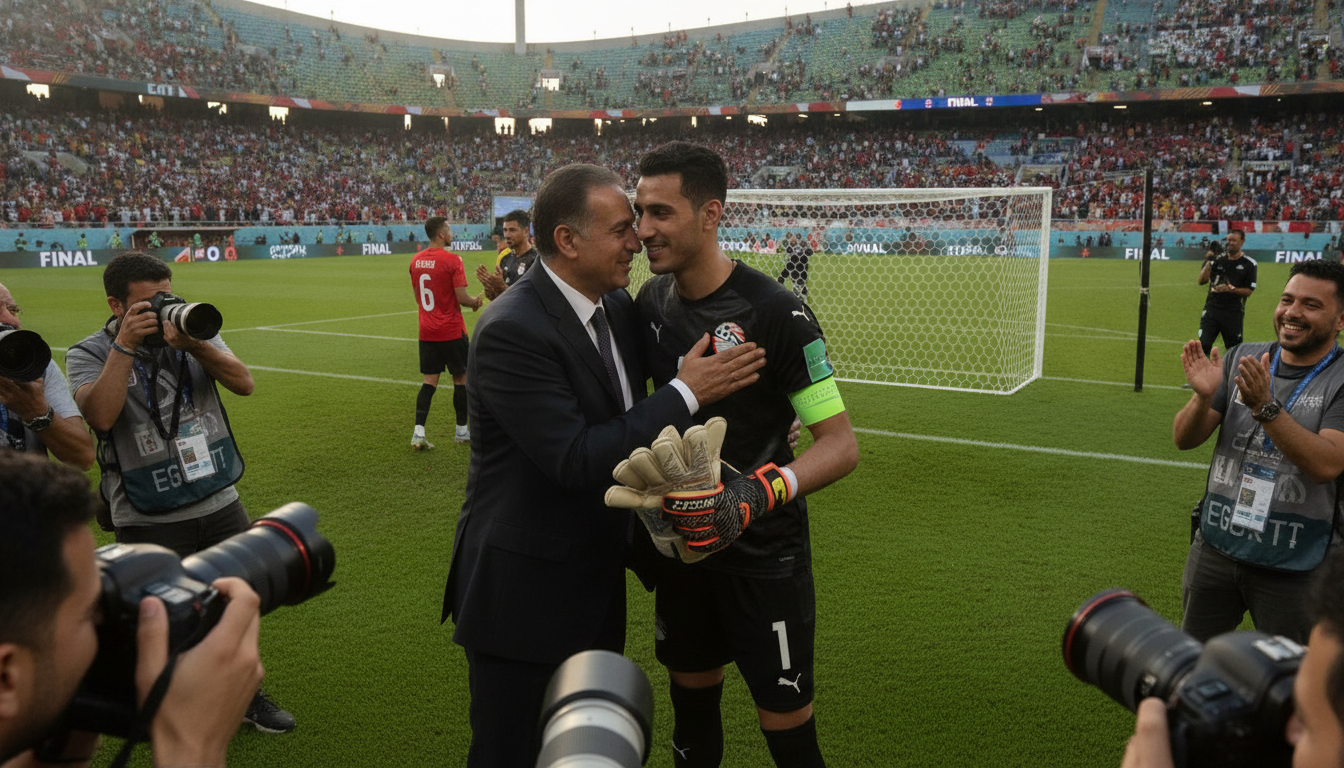
Mustafa Shobeir starts as Egypt make World Cup history with father‑son goalkeeping duo
Egypt goalkeeper Mustafa Shobeir started in the Pharaohs’ 1-1 Group G draw with Belgium at the 2026 FIFA World Cup, a selection that cemented a rare father‑and‑son World Cup goalkeeping milestone for the Shobeir family. Mustafa’s appearance against Belgium marked a return of the Shobeir name to football’s global stage nearly 36 years after his father Ahmed Shobair guarded Egypt’s goal in Italy 1990, placing them alongside the Schmeichel family on the tournament’s historical list. (skysports.com)
Shobeir handed the nod for Egypt’s opener
Mostafa Shobeir started between the posts as Egypt faced Belgium at Lumen Field in Seattle, where Emam Ashour put the visitors ahead before Belgium forced an own goal to draw level. The match ended 1-1, with Shobeir making several important saves that helped Egypt secure a point in a tightly contested Group G opener. (skysports.com)
Egypt coach Hossam Hassan’s decision to start the younger Shobeir over more experienced options drew immediate attention, given the high stakes of a World Cup opener and the calibre of Belgium’s attack. Observers noted Shobeir’s composure under pressure and a number of saves that kept Egypt in the contest during the closing stages. (tntsports.co.uk)
Shobeir family joins exclusive World Cup list
Mustafa’s appearance completed a remarkable family arc: his father, Ahmed Shobair, was Egypt’s first‑choice goalkeeper at the 1990 World Cup in Italy, and his return to the tournament stage as a son extends the family’s World Cup legacy. Ahmed Shobair featured prominently for Egypt in 1990 and is widely remembered for his role in the squad that returned the Pharaohs to the finals after a long absence. (en.wikipedia.org)
The Shobeirs now sit on a very short list of families whose members have both started World Cup matches as goalkeepers, a distinction that elevates their place in Egypt’s football history. That continuity between generations — from Ahmed’s 1990 appearances to Mustafa’s 2026 start — resonated with fans and commentators across the region. (en.wikipedia.org)
Comparison with the Schmeichel goalkeeper lineage
The only comparable example in World Cup history is the Danish Schmeichel family, with Peter Schmeichel starting for Denmark at the 1998 World Cup and his son Kasper later representing his country at the 2018 and 2022 tournaments. The Schmeichels have long been held up as the archetype of a goalkeeping dynasty at the World Cup. (en.wikipedia.org)
Kasper Schmeichel’s multiple World Cup appearances underscored the rarity of a son following a father into the tournament, and the Shobeirs’ inclusion in that narrative now places Egyptian football alongside the best‑known international goalkeeping families. Football historians note that such legacies are uncommon and often remembered long after the tournaments conclude. (en.wikipedia.org)
Path from Al Ahly to the World Cup stage
Mostafa Shobeir’s rise through the ranks at Al Ahly and his subsequent inclusion in Egypt’s national setup mapped a steady development curve that culminated in his selection for the World Cup squad. He served as a promising option at club level and drew the national team call‑ups that eventually led to his AFCON and World Cup opportunities. (skysports.com)
His tournament experience began to build at the Africa Cup of Nations, where he made his AFCON debut in a goalless draw with Angola and kept a clean sheet on that occasion. That performance, and further displays during the continental competition, helped make the case for his inclusion in the World Cup roster. (english.ahram.org.eg)
Coaching rationale and goalkeeper competition
Hossam Hassan’s selection of Mostafa Shobeir as a starter reflected a strategic choice to back a younger goalkeeper showing form and confidence at both club and continental level. The decision suggested a forward‑looking approach by the coaching staff, balancing experience with the immediate match plan against a high‑quality Belgian side. (tntsports.co.uk)
The presence of established names such as Mohamed El Shenawy on the roster meant that Egypt entered the tournament with legitimate depth in goal. That internal competition for the number one spot was widely discussed in the build‑up to the World Cup, with analysts noting that the coach’s selection would be influenced by recent form and tactical considerations. (skysports.com)
Implications for Egypt’s World Cup campaign
Shobeir’s composed performance in the opener gives Egypt a reliable option between the sticks as they proceed through a demanding Group G that includes Belgium, New Zealand and Iran. The point earned in Seattle provides an early platform from which Egypt can pursue qualification to the knockout rounds. (skysports.com)
Beyond the immediate tactical outcomes, Mustafa Shobeir’s World Cup start carries broader symbolic weight for Egyptian football; it reconnects a modern squad with a storied past and highlights the development pipeline that can produce international‑level talent. The family milestone will be recounted alongside performance analysis as the tournament progresses. (en.wikipedia.org)
Mustafa Shobeir’s display in Seattle not only helped secure a crucial point for Egypt but also wrote a new chapter in his family’s history, reinforcing the rare and enduring link between generations that football sometimes produces.
