
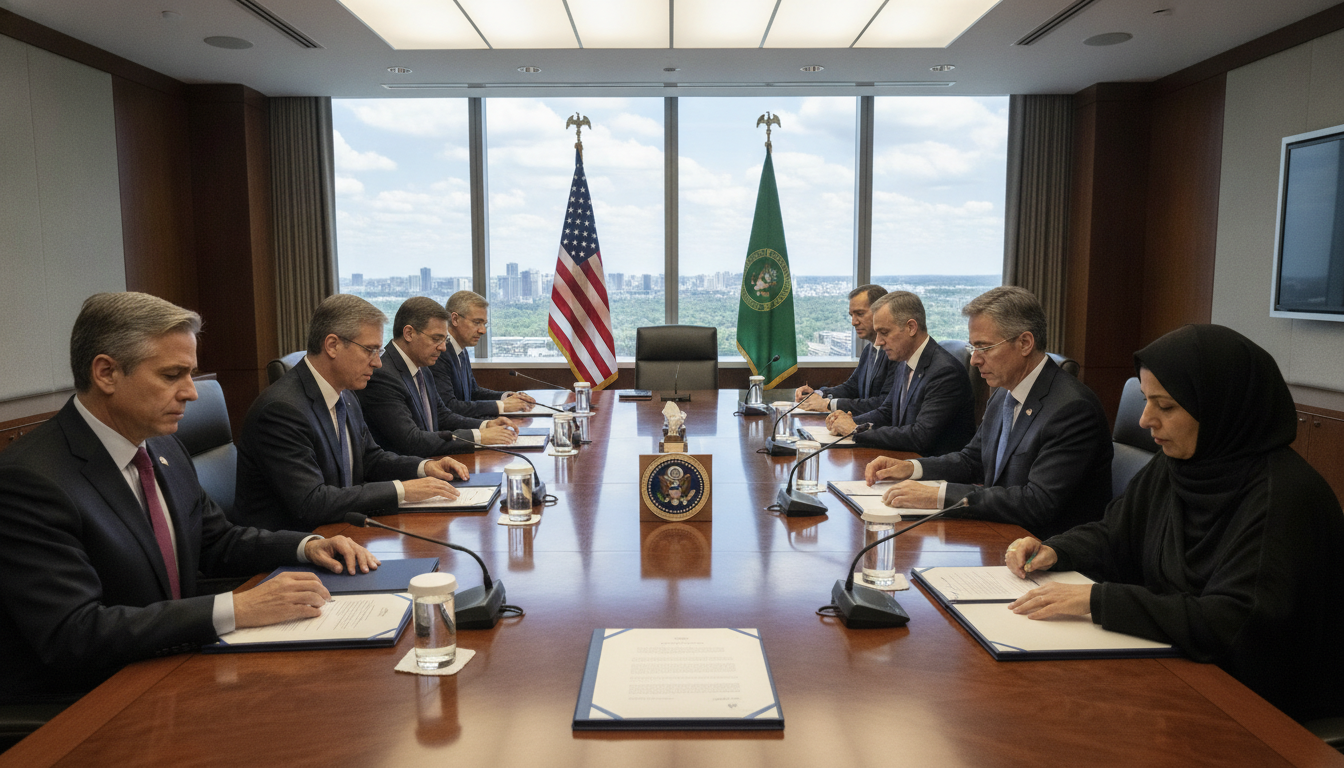
US releases text of 14-point memorandum with Iran amid lingering implementation questions
US outlines 14-point memorandum with Iran detailing Lebanon ceasefire, Hormuz transit, nuclear downblending, sanctions rollback and $300bn reconstruction pledge.
The United States on Wednesday provided a full readout of a 14-point memorandum of understanding reached with Iran, offering the clearest public account yet of a deal whose implementation remains uncertain. The 14-point memorandum addresses ceasefires, maritime access through the Strait of Hormuz, the fate of Iran’s enriched uranium and the lifting of sanctions, but Iran has not publicly confirmed the US version of the text. Officials said no physical copy was released, and several key clauses leave major operational and legal questions unresolved.
Ceasefire Terms for Lebanon
The memorandum opens with a commitment to “immediate and permanent termination of military operations on all fronts, including in Lebanon,” and to uphold Lebanon’s territorial integrity and sovereignty. The formulation is notable for addressing Lebanon directly but stops short of mentioning Israel or the Lebanese armed group Hezbollah, leaving ambiguity about how a cessation of hostilities would be enforced. Because neither Israel nor Hezbollah are parties to the US‑Iran agreement, analysts warn that implementation would require separate, multilateral measures or additional accords. Israeli officials have already signaled resistance to a broad withdrawal, complicating prospects for a verifiable and durable ceasefire.
The document appears to reflect Tehran’s long-standing insistence that an end to Israeli strikes in Lebanon is a precondition for broader peace talks, a demand Tehran reiterated in April when Iranian Parliament Speaker Mohammad Bagher Ghalibaf set similar red lines. Washington and Tehran previously met for direct talks in Pakistan in April, and a temporary 10‑day ceasefire announced on April 16 aimed to open space for negotiations, but sporadic strikes and troop movements have continued since that window.
Sovereignty Clause and Regime Change
A central paragraph of the memorandum states that both parties will “undertake to respect each other’s sovereignty and territorial integrity, and to refrain from interfering in each other’s internal affairs.” That language signals a formal US renunciation of efforts to pursue regime change in Tehran, a point Washington had sought to downplay in recent public remarks. The statement contrasts with earlier rhetoric from both capitals during the period of heightened conflict, and it is likely intended to provide a diplomatic basis for normalization.
Observers caution, however, that a pledge of non‑interference is political rather than legal enforcement, and the memorandum contains no detailed verification or dispute‑settlement mechanisms tied to domestic politics. The durability of such an assurance will depend on follow‑through measures and the willingness of regional partners to reinforce a stable settlement.
Strait of Hormuz transit and naval withdrawals
The US readout says Washington will begin removing its naval blockade and will “fully end the naval blockade within 30 days,” while Iran agreed to facilitate safe passage for commercial vessels for a 60‑day period and to engage Oman in talks on future maritime administration. The text attempts to balance US demands for freedom of navigation with Iran’s leverage over the waterway, but it is sparse on technical specifics such as mine clearance, insurance arrangements and inspection regimes. Shipping insurers and operators have said they will not resume normal transit without concrete guarantees that mines and other hazards have been removed.
Iran’s lead negotiator has publicly indicated the strait “will not return to pre‑war conditions” and that Tehran intends to levy fees for maritime services, a position that would clash with established interpretations of international law that bar tolls for transit through natural straits. The memorandum’s wording leaves the question of future charges and practical enforcement to later bilateral or multilateral talks, raising short‑term risks for oil and shipping markets until operational details are settled.
Nuclear material disposition and IAEA supervision
One clause reaffirms Iran’s commitment not to “procure or develop nuclear weapons” and outlines a mechanism — to be mutually agreed — for the disposition of enriched material, with a baseline methodology of on‑site downblending under International Atomic Energy Agency supervision. Downblending is an irreversible technical process that would reduce highly enriched uranium to levels consistent with civilian nuclear power, a move that Washington has long sought to reduce breakout risk. The memorandum signals a potential US willingness to accept on‑site dilution rather than transfer of material abroad, but it leaves the precise verification steps and timelines to future negotiations.
Estimates cited earlier put Iran’s stockpile of material enriched to 60 percent well above civilian power requirements, a point that has driven international concern about rapid pathways to weapons‑grade enrichments. The memorandum does not specify monitoring protocols or access rights beyond IAEA supervision, and experts note that robust, intrusive verification will be critical to ensuring that downblending is complete and irreversible.
Sanctions relief and reconstruction funding
The agreement’s sanctions clause states the United States “undertakes to terminate all types of sanctions against Iran in an agreed‑upon schedule as part of the final deal,” but it does not specify whether that commitment extends to UN or third‑party sanctions. Separately, the memorandum refers to a reconstruction and economic development plan of at least $300 billion to be developed with regional partners, and it pledges US assistance in granting necessary licenses and waivers for related financial transactions. The text does not identify funders or conditions on spending, and US officials have suggested that Gulf states could be solicited to contribute rather than relying solely on US taxpayer funds.
Many billions in Iranian assets remain frozen in foreign banks, and Tehran has said access to those funds is essential for post‑conflict recovery. The lack of a clear funding architecture or oversight framework in the memorandum raises questions about who will control reconstruction disbursements and how to prevent diversion of funds to military or proxy activities.
The memorandum marks a significant diplomatic step by putting key issues on paper, but the absence of a signed, mutually distributed text and the number of operational details left for later negotiation mean that scepticism will persist. Implementation will require parallel agreements with regional actors, robust verification mechanisms — particularly for nuclear and maritime provisions — and clearly defined funding and sanctions rollback procedures to translate paper commitments into enduring peace.
