
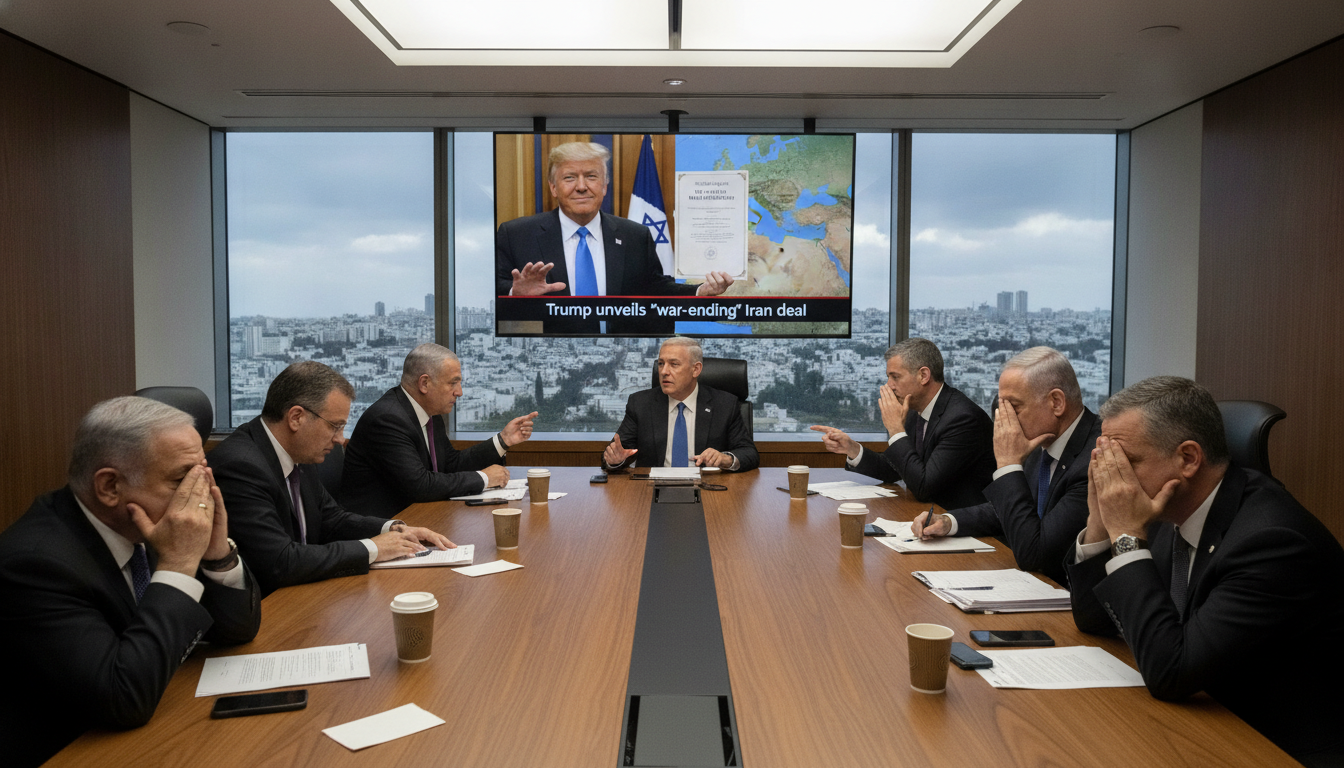
Israel alarms at Trump-Iran agreement as leaders and analysts warn Tehran emerges stronger
Israel alarmed by Trump-Iran agreement to end the war; officials warn Tehran grows stronger and regional security, including Gulf states, faces new strains and unease.
The Trump-Iran agreement announced this week to end the war prompted shock and widespread concern in Israel, where officials, analysts, and public figures said the deal fails to secure key Israeli objectives. Reactions ranged from silence in the corridors of power to sharp criticism from former security officials who argued the terms leave Israel more exposed. The proposed withdrawal of American forces from the region and the lack of limits on Iran’s missile and proxy capabilities were singled out as immediate strategic setbacks.
Israeli leadership largely silent
Prime Minister Benjamin Netanyahu and senior cabinet ministers offered no formal statement overnight, leaving junior ministers and lawmakers to manage the initial political fallout. The absence of an official response deepened uncertainty among observers about whether Israel will accept the U.S. commitments or push for urgent renegotiation. Ministers and backbenchers tried to reassure the public that options remain, but the prevailing tone was one of cautious disbelief.
Security planners warn of new constraints
Security analysts said the agreement’s requirement for U.S. forces to pull back from Iran’s vicinity within 30 days significantly alters the deterrent calculus. Critics argue that a rapid American retreat effectively hands Tehran a diplomatic and propaganda victory by claiming it has expelled U.S. forces from the region. At the same time, the deal does not address the growth of Iran’s ballistic missile stockpile or the operational reach of allied militias such as Hezbollah and the Houthis.
Concerns over sanctions relief and reconstruction funds
Officials and commentators cautioned that sanctions relief and unfrozen assets could provide Tehran with hundreds of billions of dollars in liquidity at a critical moment. That influx of funds, they warned, risks financing missile procurement and bolstering Iran’s regional proxies rather than supporting civilian reconstruction. Analysts urged close monitoring of how released funds are transferred and of any mechanisms intended to prevent diversion to military or proxy networks.
Analysts say Iran emerges politically emboldened
Former national security advisers and regional experts described the agreement as a strategic win for Tehran, saying the regime looks set to reassert influence across the Levant and the Gulf. Some analysts argued that Iran’s leadership, despite wartime pressures, will claim enhanced legitimacy after forcing a negotiated end that does not curtail its missile forces. The narrative in Israeli commentary framed the result as an unexpected reversal of wartime expectations and a testament to Iran’s resilience.
Domestic political fallout for Netanyahu
The agreement intensified scrutiny of Mr. Netanyahu’s strategy, which had relied heavily on close ties with the U.S. presidency to advance Israeli security objectives. Columnists and opposition figures accused the prime minister of overplaying his influence and tying Israel’s fate too closely to a single foreign leader. Pollsters and analysts said public sentiment was shifting as citizens weighed the costs of a deal that many see as delivering less than what Israel fought for.
Public and media reaction across the political spectrum
Israeli media coverage featured a mix of indignation and alarm, with commentators using stark language to describe the perceived strategic loss. Some lawmakers staged symbolic gestures to signal disillusionment with the U.S. approach, while others urged calm and diplomatic engagement to seek clarifications. Civic groups and analysts called for a thorough review of Israel’s defence posture and contingency plans in light of the new constraints.
Diplomatic options and next steps
Israeli officials are expected to pursue immediate diplomatic consultations with Washington to clarify the agreement’s operational details and any exceptions for Israeli security needs. Diplomats in Jerusalem and regional capitals are likely to press for guarantees on missile non-proliferation and concrete safeguards against the transfer of assets to militias. Military planners meanwhile will be assessing how to adapt force deployments and contingency measures if U.S. military presence in the region is curtailed.
Observers noted that the agreement sets the stage for further negotiations on the nuclear issue and other security matters that Israel considers existential. For now, officials and the public alike are grappling with a deal they say stops short of addressing core threats, even as leaders consider both diplomatic remedies and adjustments to national defence strategies.
Israel faces a period of intense political debate and strategic reassessment as the implications of the Trump-Iran agreement unfold, with policymakers balancing immediate security concerns against the longer path of regional diplomacy and deterrence.
