
U.S. and Iran Sign Remote Memorandum to Reopen Strait of Hormuz
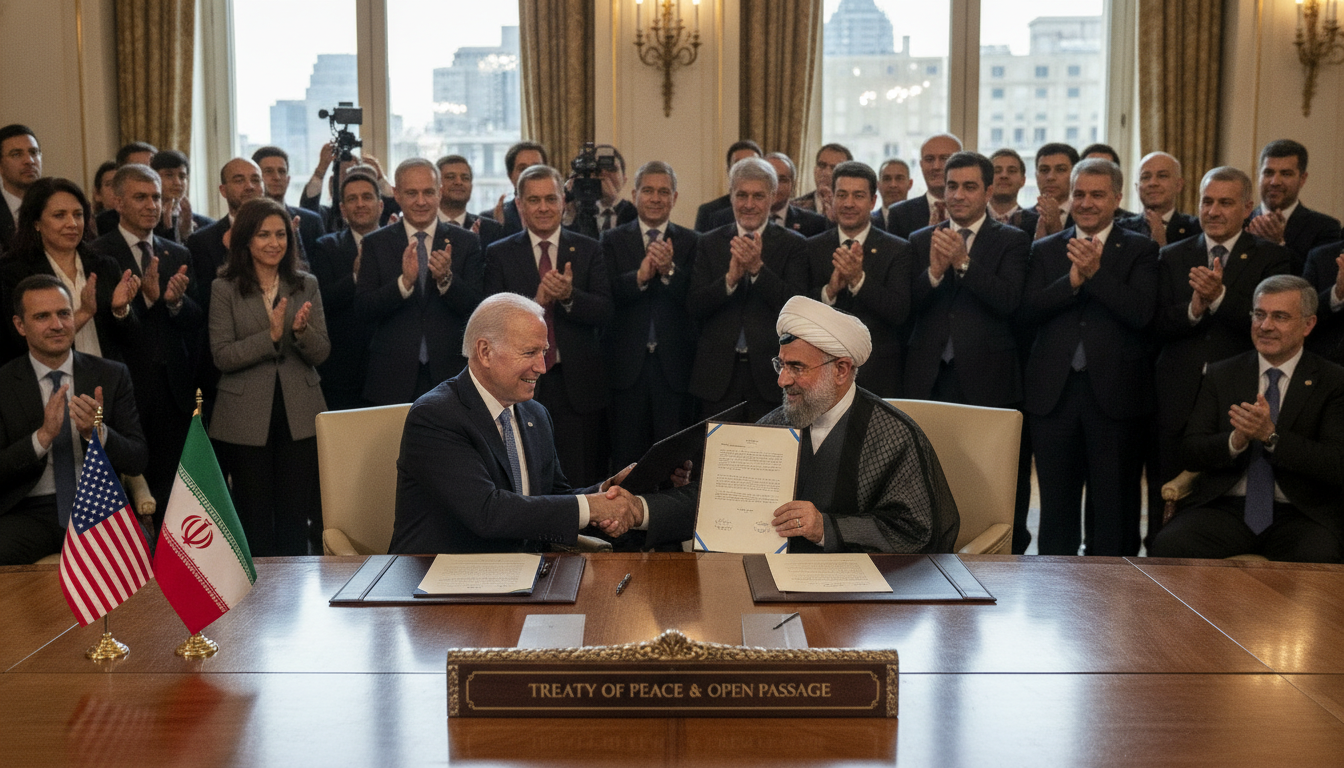
U.S. and Iran have signed a remote memorandum of understanding to end hostilities and reopen the Strait of Hormuz, officials say, with the pact reportedly entering into force.
Two U.S. officials said the United States and Iran have executed a remote memorandum intended to halt active hostilities and restore safe passage through the Strait of Hormuz. The agreement, described by the officials as having entered into effect, is aimed at reopening a vital shipping lane that carries a significant share of the world’s seaborne oil. Details of the memorandum have not been released publicly, and U.S. authorities say the arrangement will be implemented under a staged process.
Remote Memorandum Signed, Officials Say
Two U.S. officials told reporters that the memorandum was signed remotely by interlocutors representing both capitals and was intended as a framework to end fighting and resume normal maritime traffic. The officials said the measure is a memorandum of understanding rather than a full treaty, and that its immediate objective is to stop attacks on commercial shipping and naval vessels. They added that the pact was designed to create conditions for verification and for more formal arrangements to follow.
President Trump Signed at Versailles Dinner, Source Adds
One official said President Donald Trump signed the agreement in person during a dinner with French President Emmanuel Macron at the Palace of Versailles following a G7 summit. The account indicates the signature was added as a presidential endorsement of the remote arrangement, intended to give political weight to the agreement. U.S. officials characterize the signature as a symbolic act that they say helped accelerate implementation and signal high-level commitment.
Reported Aims and Unreleased Provisions
Officials described the memorandum as focusing on three broad goals: cessation of maritime attacks, establishment of mechanisms for safe navigation, and the reopening of designated sea lanes in the Strait of Hormuz. They refrained from disclosing operative language, saying that technical annexes and verification provisions were still being finalized by diplomatic and military channels. Observers cautioned that memorandums can vary widely in binding force, and implementation will depend on follow-through by both sides and on third-party monitoring arrangements.
Potential Impact on Shipping and Energy Markets
The Strait of Hormuz is a strategic chokepoint through which a substantial portion of global oil and liquefied natural gas supplies transit, and any agreement to reopen it would have immediate implications for maritime insurance and shipping schedules. Shipping firms and insurers may respond by reassessing risk premiums if the memorandum leads to sustained reductions in incidents at sea. Market analysts said broader confidence in uninterrupted transit could ease some pressure on energy markets, but they urged caution until verification steps are visible and attacks have demonstrably ceased.
Regional Capitals and International Bodies Expected to Seek Confirmation
Governments across the Gulf, international maritime authorities and major trading partners are expected to request formal confirmation and the text of the memorandum to assess practical implications. Regional states that rely on stable shipping lanes will likely press for clarity on security guarantees and on who will oversee deconfliction at sea. International organizations, including maritime safety agencies and flag-state authorities, are likely to seek technical briefings to adapt navigational guidance and escort protocols where necessary.
Verification, Monitoring and Next Steps
U.S. officials said they are exploring verification tools that could include third-party observers, joint maritime patrols or a dedicated monitoring mechanism to log and investigate incidents. They emphasized that the memorandum’s effectiveness will be judged by observable reductions in hostilities and by the ability of independent monitors to access contested waters. Diplomats are also expected to open follow-up talks to translate the memorandum’s broad commitments into a binding, verifiable agreement with timelines and enforcement measures.
The U.S.-Iran memorandum and the circumstances of its signing add political complexity to regional diplomacy and to relations between the signatory states and their partners. Officials have urged transparency and the publication of full terms to build international confidence, and they say further details will be provided as technical annexes are completed and monitoring arrangements are put in place.
