
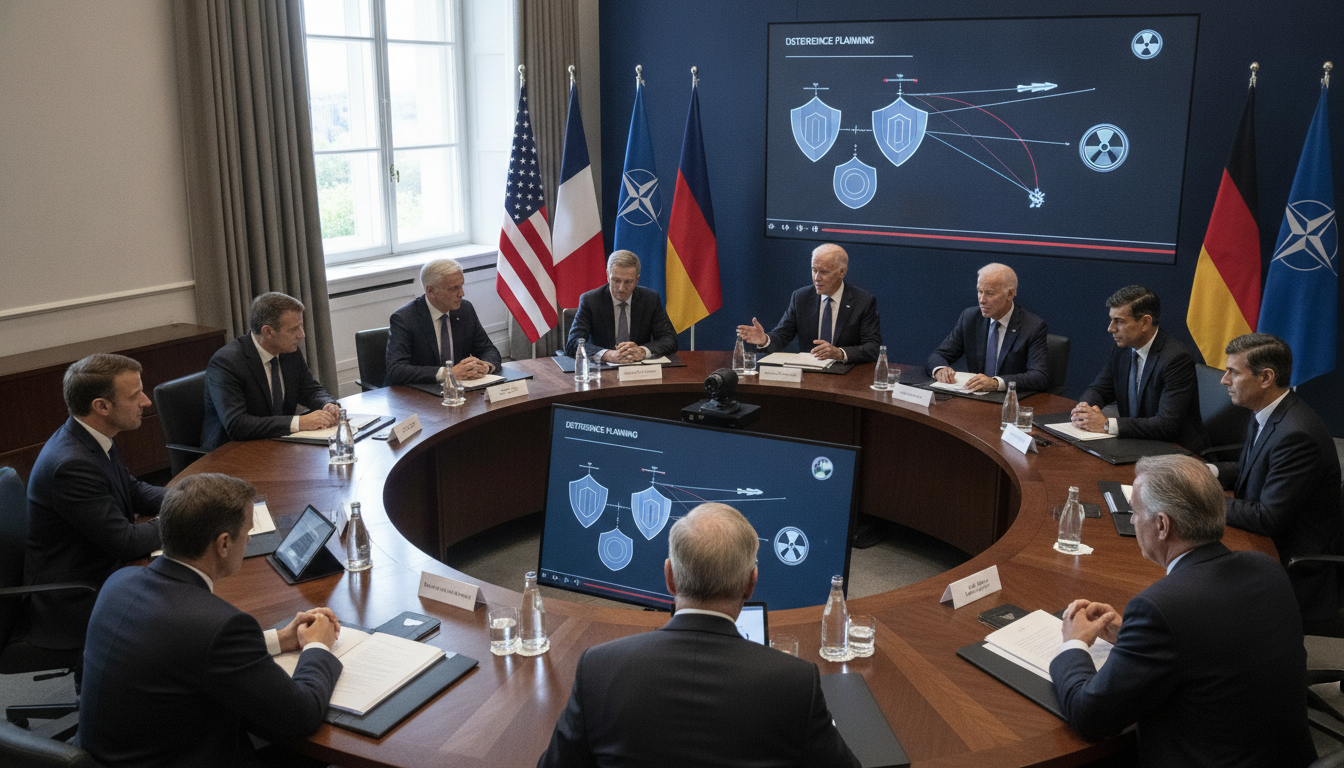
NATO Nuclear Deterrence Strengthened as Ministers Approve Capability Update
NATO nuclear deterrence strengthened as defence ministers approved capability updates and planning reforms, reinforcing allied security and operational readiness.
NATO defence ministers announced a coordinated update to the alliance nuclear deterrence posture following recent meetings in which capability upgrades and planning reforms were formally approved. The decision affirms that NATO nuclear deterrence remains central to allied security and will guide investments in forces and planning mechanisms. Ministers said the moves are designed to adapt deterrence to evolving threats while preserving strategic stability.
Ministers Approve Update to NATO Nuclear Deterrence Capabilities
The formal approval covers a range of measures intended to modernize nuclear planning and command arrangements across the alliance. Defence ministers emphasised that the package focuses on enhancing interoperability, crisis planning, and consultation procedures among member states. The alliance framed the update as a necessary adaptation to a changing security environment rather than a shift toward escalation.
The ministers also tasked senior officials to translate the political decision into concrete operational steps and timelines. That work will include reviews of exercise schedules, intelligence sharing, and contingency planning to ensure the updated deterrence posture can be implemented effectively. Officials said further briefings to capitals will follow as plans are detailed.
Strategic Nuclear Forces Affirmed as Ultimate Guarantee
Ministers reiterated that NATO strategic nuclear forces constitute the ultimate guarantee of allied security and underpin the broader deterrence architecture. Statements from the meeting stressed that these forces remain a central element of deterrence and reassurance for all member states. The alliance will continue to maintain the credibility and safety of strategic capabilities while pursuing risk reduction where possible.
Officials underscored that deterrence is both political and military in nature, requiring clear decision making and synchronized posture across conventional and nuclear domains. The updated measures are meant to strengthen that synchronization and reduce the risk of miscalculation in crises. Transparency and communication with partners were cited as complementary aims.
Nuclear Planning Group Role and Membership
The Nuclear Planning Group was confirmed as the primary consultative forum for the alliance on nuclear policy and planning matters. The group includes most NATO members and serves as the main platform for advice and decision making on nuclear issues. Ministers noted the importance of regular consultation within this forum to maintain cohesion and shared situational awareness.
It was also acknowledged that certain NATO members do not participate in all aspects of nuclear planning, while the group continues to draw on contributions from those that do. The meeting reaffirmed the group as central to implementing the recent capability and planning updates. Defence officials said ongoing engagement in the group will be expanded to ensure timely coordination.
New Planning Measures and Operational Steps
Officials outlined several planning measures that will be prioritized in the coming months to put the political decision into practice. These include updated crisis response plans, enhanced joint exercises that integrate nuclear and conventional scenarios, and a review of command and control procedures. The aim is to close identified gaps in readiness and to ensure plans are resilient under pressure.
The alliance will also examine logistical and technical requirements to support any necessary force posture adjustments. That work covers communications, transport and secure coordination channels among participating states. Ministers emphasized that any operational changes will comply with international obligations and safety standards.
Allied Coordination and Political Consensus
Ministers framed the vote as the product of sustained allied consultation and political consensus on the role of nuclear deterrence. The decision was presented as reflecting a shared view across capitals on how best to safeguard collective defence. Defence leaders said continued dialogue with political authorities will be essential as implementation progresses.
While the update aims to reinforce deterrence, ministers also pledged to pursue measures that reduce risks and prevent escalation where feasible. That includes continued efforts on arms control dialogue and transparency initiatives with external actors. The alliance signalled that its approach will seek balance between credibility and stability.
Regional Security Implications for Europe and the Gulf
Allied officials said the updated deterrence measures are intended to strengthen security not only in Europe but for partner countries with shared interests in regional stability. Ministers noted that a credible deterrence posture contributes to broader deterrence and reassurance for partners in neighbouring regions. The announcement was presented as part of a comprehensive approach to allied defence that supports deterrence, defence and dialogue.
Defence analysts expect the decision to prompt follow up activity across NATO planning bodies and in national defence ministries. That work will clarify the specific implications for deployments, exercises and multinational cooperation. Officials refrained from announcing immediate changes to force deployments while details are developed.
The ministers said they will monitor implementation closely and return to the issue at future meetings to assess progress and adapt plans as required.
