
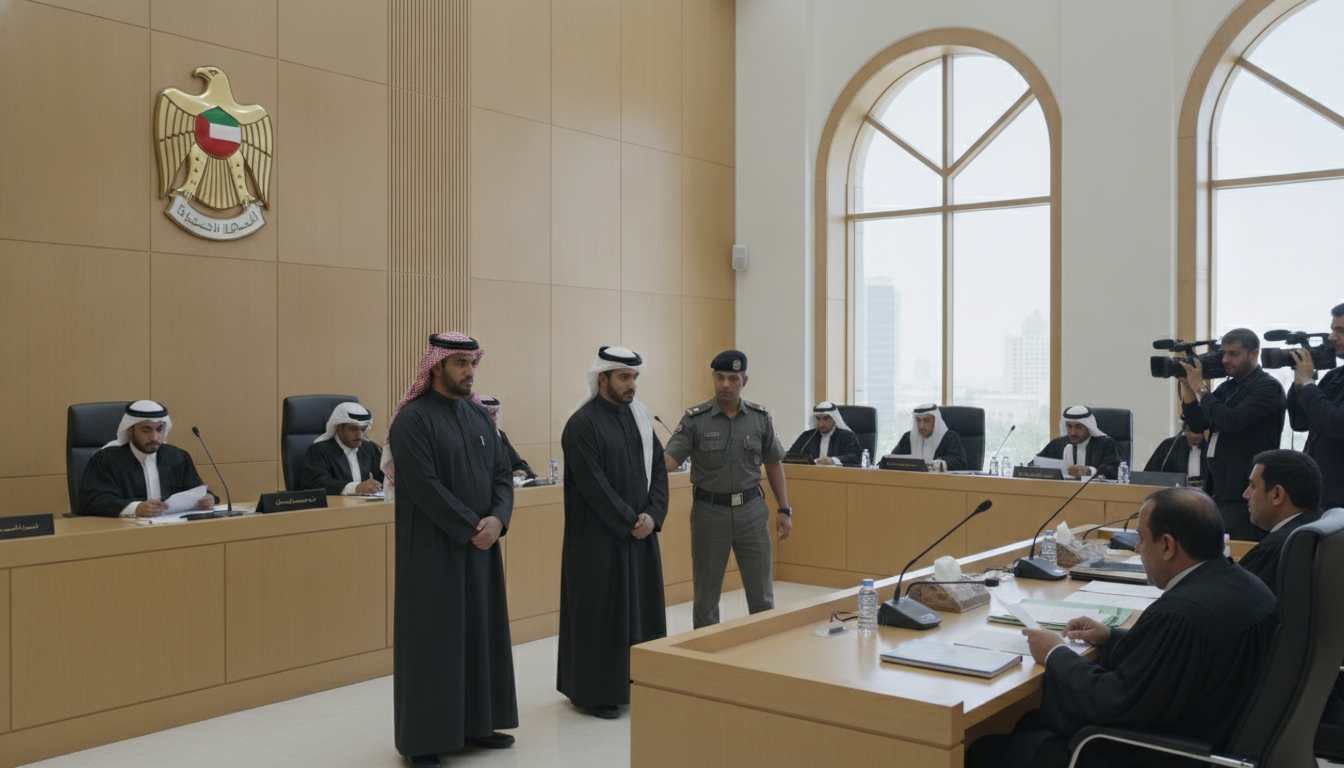
Kuwait appeals court reimposes three-year jail for mocking Kuwait defence forces
Kuwait appeals court re-sentenced two Kuwaitis and a Colombian to three years after a social media clip mocking Kuwait defence forces, overturning an earlier non‑prosecution ruling.
Court overturns prior non‑prosecution and reimposes sentence
The State Security Court of Appeal in Kuwait cancelled a previous decision that had refrained from punishing three defendants and instead ordered three years’ imprisonment. The ruling was announced following reporting by the Kuwaiti newspaper Al‑Qabas and restates the judiciary’s position on the case.
The appeal court found sufficient grounds to reverse the earlier outcome, reinstating criminal penalties tied to actions that the court said harmed public order. The decision returns the matter to the criminal justice track with a definitive custodial sentence.
Content of the social media video
Prosecutors say the defendants published a short video on social platforms that mocked and derided Kuwait’s Defence Forces during a period of Iranian aggression. The clip was widely circulated online, the authorities argued, amplifying its reach and potential impact on public sentiment.
According to the case record cited by local media, the video’s tone and timing were central to the prosecution’s argument that the content exceeded legitimate expression. The appeals court emphasised the role of social media in spreading material to an indeterminate audience.
Lower court’s findings on national interest
The Criminal Court previously determined the defendants’ conduct undermined broader national interests and public security. Judges noted the conduct amounted to harming national interests at a sensitive historical moment and therefore did not fall within protected speech.
That ruling framed the behaviour as more than mere criticism, describing it as an action likely to damage the state’s directives for maintaining security and stability. The appeals court’s reversal of the non‑prosecution decision effectively endorsed the lower court’s core assessment.
Details on defendants and charges
Court documents identify the defendants as two Kuwaiti nationals and one Colombian national, who were prosecuted for actions linked to the viral video. The charges centre on undermining public esteem for state institutions and harming national interests through dissemination of the clip.
The exact criminal provisions cited were not detailed in the initial press accounts, but the judgement highlights use of a public communication medium to propagate material deemed harmful to state security. Sentencing to three years signals the judiciary’s view of the offence’s seriousness.
Legal context and limits on online expression
Legal experts say Kuwait’s courts have increasingly scrutinised online content that they consider damaging to public order or state institutions. Cases that involve ridicule or disparagement of security forces are likely to be weighed against national security statutes and public safety considerations.
Judicial authorities argue that the open and viral nature of social media can elevate otherwise private expressions into acts with wider societal impact. Defence of free expression remains a subject of debate, but courts consistently balance speech rights against statutory protections for national interests.
Next steps and potential appeals
Following the appellate ruling, the defendants may seek further legal recourse within Kuwait’s judicial framework, including petitions to higher courts if available under domestic law. Legal observers will watch whether the case proceeds to a final review or leads to alternative measures such as commutation or pardon.
The decision is likely to influence how similar social media cases are handled going forward, particularly those involving depiction of state institutions during periods of external conflict or tension. Observers say the ruling sends a clear message about judicial boundaries for online conduct.
The appeals court’s reimposition of a three‑year sentence underscores a tightening judicial stance on online conduct that is seen to impinge on national security and public order.
