
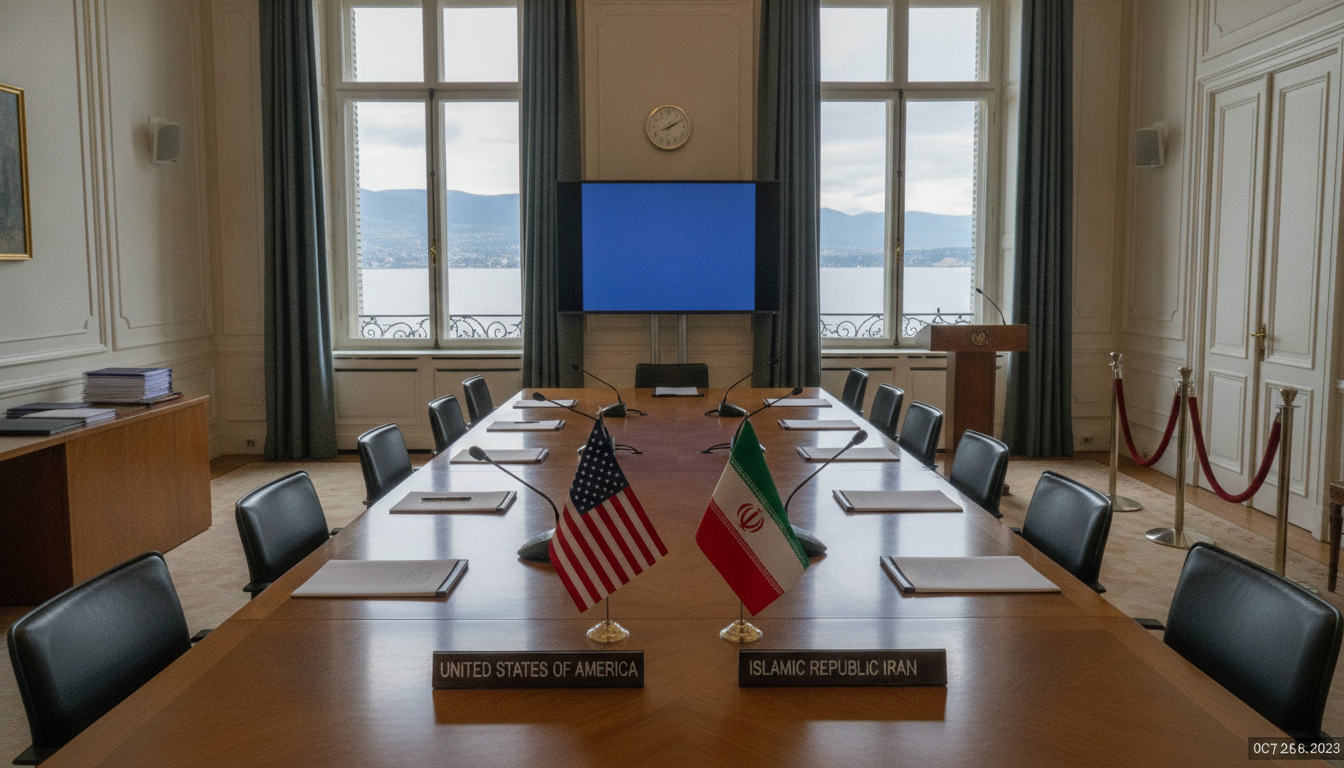
Swiss Ministry Cancels US-Iran Talks at Burgenstock
Swiss Foreign Ministry cancels US-Iran talks at Burgenstock resort on June 19, 2026; White House says VP J.D. Vance postponed the visit due to logistical issues
A planned round of US-Iran talks scheduled for June 19, 2026, at the Burgenstock mountain resort in Switzerland has been cancelled, the Swiss Foreign Ministry announced. The development halted a meeting that U.S. officials had described as intended to begin implementing an agreement between Washington and Tehran to end their hostilities. The cancellation was confirmed after the White House said Vice-President J.D. Vance called off a trip that would have taken him to Switzerland to meet Iranian negotiators.
Swiss Foreign Ministry announcement
The Swiss Foreign Ministry issued a concise statement saying the talks slated for the Burgenstock resort would not go ahead as planned. Swiss officials did not detail the specific reasons for the cancellation within their public announcement. The ministry’s decision effectively removed the immediate platform for negotiation that had been arranged on Swiss soil.
The resort setting and the involvement of Swiss authorities had been intended to provide a neutral venue and facilitation for the initial deliberations. Switzerland has previously served as host and intermediary for sensitive diplomatic exchanges, a role that underscored the significance of the planned encounter.
White House: Vance postpones visit
Earlier on June 19, the White House confirmed that Vice-President J.D. Vance had cancelled a trip to Switzerland that was to include talks with Iranian negotiators. U.S. officials said the visit was postponed and indicated there was no immediate summit between the two delegations as originally scheduled.
The White House statement noted that the U.S. delegation had been prepared to depart but that the trip was disrupted by what it described as “complex logistical circumstances.” No further operational details were provided and the timing for any rescheduling was left unspecified.
U.S. delegation readiness and logistical explanation
According to the White House, American representatives were ready and in position to travel when the decision to delay the visit was made. The use of the term “complex logistical circumstances” suggested impediments related to coordination, security, or transport, but officials stopped short of elaborating. That lack of detail has left observers to speculate on whether the issues were operational or related to parallel diplomatic considerations.
Logistical obstacles have occasionally affected high-level diplomacy, particularly when multiple countries and security arrangements are involved. For stakeholders tracking the implementation of the wider agreement, the postponement introduces fresh uncertainty about the pace of follow-up negotiations.
Implications for implementation of the Washington-Tehran agreement
The meetings had been billed as an initial step toward implementing an agreement between Washington and Tehran aimed at halting hostilities and clarifying mutual commitments. The cancellation delays a formal start to those practical discussions and may slow technical work on timelines, verification measures, or confidence-building steps that diplomats were expected to address.
Observers caution that even short delays can reduce momentum in sensitive negotiations and complicate domestic political calculations on both sides. At the same time, officials often use pauses to recalibrate agendas, refine negotiation teams, or resolve outstanding procedural matters before resuming talks.
Regional and diplomatic reactions to the postponement
Regional capitals and international partners are likely to monitor developments closely after the cancellation, as any delay could affect security perceptions and planning across the region. Diplomats in Europe and the Middle East who have been following the process will be looking for signals about whether the United States and Iran remain committed to the agreed framework and to subsequent rounds of negotiation.
Third-party mediators and neutral hosts such as Switzerland generally seek to maintain momentum by offering alternative dates and logistical support. How quickly such offers translate into a fresh timetable will depend on clarifications from both Washington and Tehran about readiness to reconvene.
The cancellation of the Burgenstock talks on June 19, 2026, underscores the fragility of arranging high-stakes diplomacy under complex operational conditions. With the White House citing logistical complications and the Swiss Foreign Ministry confirming the meeting’s cancellation, attention now turns to whether the two sides will seek a near-term rescheduling or prefer additional preparatory work before returning to the table.
