
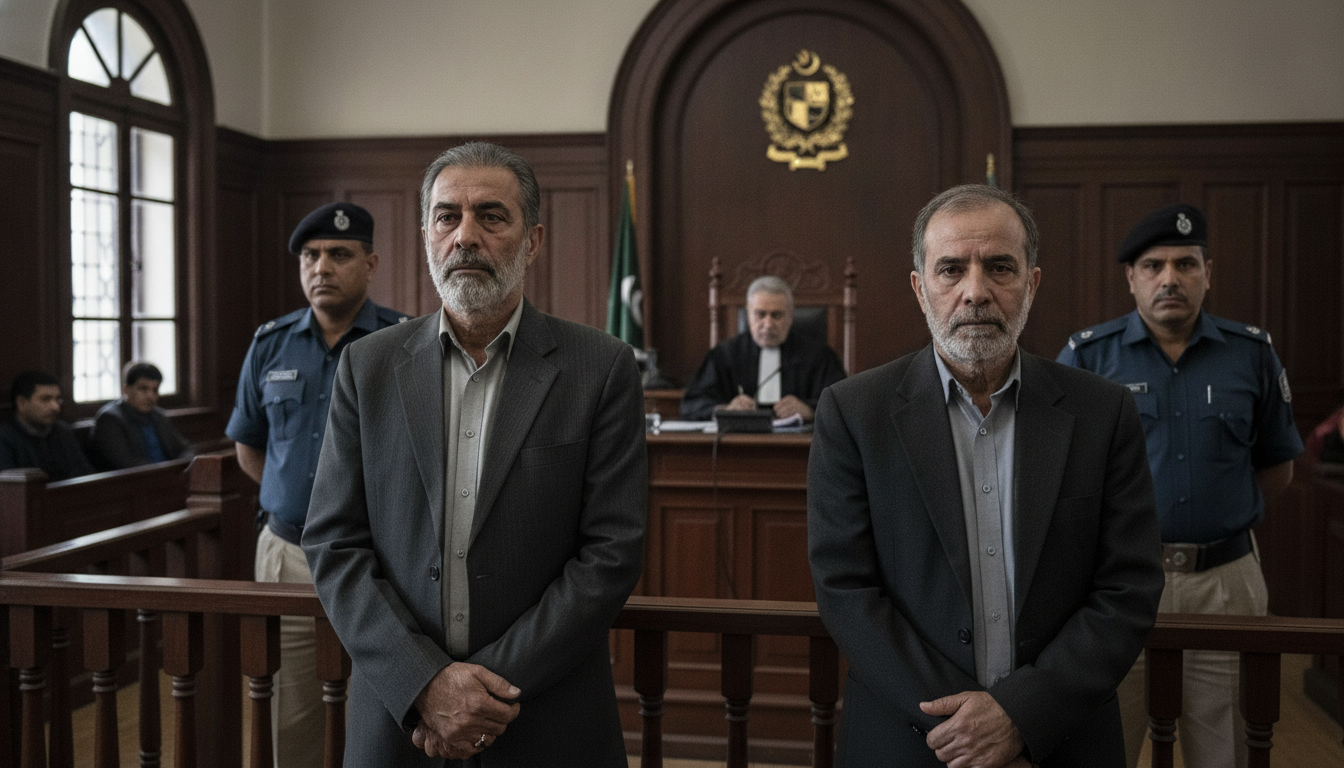
Pakistani Court Sentences Father and Uncle to Life Over Honour Killing of Yonkers Teen Hira Anwar
Pakistani court sentences US father and his Pakistani relative to life for the honour killing of 14-year-old Hira Anwar, lured from Yonkers and shot in Quetta.
A district court in Quetta on Saturday sentenced a naturalised US citizen and his Pakistani brother-in-law to life imprisonment for the killing of 14-year-old Hira Anwar, a Yonkers, New York teenager whose family says her “Western” lifestyle sparked the violence. The court found that Hira was lured from the United States to Pakistan and fatally shot outside her family home in Quetta in January 2025. The verdict, handed down after an 18-month trial, places the case squarely in debates over honour killing and gender-based violence.
Court Convicts Father and Uncle in Quetta Murder
The Quetta district court convicted Anwar-ul-Haq, the teenager’s father and a naturalised US citizen, and his relative Muhammad Tayab of murder committed with shared criminal intent. Judge Shahid Javed determined the killing was premeditated, although prosecutors did not establish a motive strong enough to warrant capital punishment. Both men received life sentences and were ordered to pay fines of roughly $715 each.
The conviction followed testimony from investigators, relatives and forensic experts who reconstructed the events of the night Hira was killed. Defence lawyer Naveed Qambrani said his clients intend to appeal, alleging outside pressure on the trial court. The appeal plans will move the case into higher Pakistani judicial review.
How Authorities Say the Murder Was Carried Out
According to the court record, Mr. ul-Haq brought his daughter from Yonkers to Pakistan under the pretext of a family holiday and then set a trap at the family home. The judge found that, while standing outside the house, the father feigned forgetting a cellphone and left Hira alone in the street. Within moments, the teenager’s maternal uncle arrived on a motorcycle and shot her in the chest, the court concluded.
Police initially reported unidentified gunmen at the scene, but their investigation later identified the killing as an orchestrated act. Prosecutors presented a timeline and witness accounts intended to show coordination between the men, and the court accepted that narrative as establishing criminal collusion.
Forensic Evidence and Court Findings
Forensic teams recovered shell casings at the scene that were later matched to a pistol found at Mr. Tayab’s residence, forming a key link in what the judge described as an unbroken chain of circumstantial evidence. The court said the forensic match, combined with witness testimony and the sequence of events, supported a finding of premeditation. Despite this, the judge noted that prosecutors had not proved a specific motive tying Hira’s lifestyle directly to the killing.
That absence of a conclusively proven motive influenced sentencing, with the court opting for life imprisonment rather than the death penalty. The trial record shows careful consideration of evidentiary standards and statutory sentencing options under Pakistani law.
Sentence Details and Defence Response
Both convicts were sentenced to life imprisonment and fined about $715, a decision the judge said balanced the seriousness of the crime with gaps in the prosecution’s motive evidence. The sentencing concluded an 18-month trial that featured testimony from police, forensic specialists and several family members. Sentencing documents record the court’s finding that the killing was planned, even as it refrained from imposing capital punishment.
Mr. Qambrani, the defence counsel, argued that the trial court had come under external pressure and that the verdict would be contested in a higher court. The family’s intention to appeal means the case will continue to unfold in Pakistan’s appellate system and could prompt renewed scrutiny of the investigative record.
Experts Place Case in Wider Pattern of Honour-Based Violence
The case has drawn attention to the persistent problem of honour killings in Pakistan and similar dynamics within immigrant communities abroad. Researchers and activists note that migration can intensify control over women and girls, as some men perceive a loss of status or social footing in new countries. Pakistani scholar Afiya S. Zia has argued that anxieties over cultural identity and perceived shame can fuel extreme reactions in some families.
Human rights groups say this verdict could serve as a precedent in holding relatives accountable for gender-based violence, though they stress that enforcement and prevention remain major challenges. The case has prompted calls for stronger protections and community outreach to prevent similar tragedies.
Reactions from Community and International Observers
In Yonkers, teachers remembered Hira as an outgoing eighth-grade student who shared videos on social media and sought greater independence. Her online presence and public expression were cited in court as factors that allegedly antagonised relatives who viewed her behaviour as shameful. The fatal journey from Yonkers to Quetta has revived debates in immigrant communities about cultural conflict, parental authority and youth autonomy.
International observers have flagged the case as emblematic of how transnational family ties can intersect with local practices of gender-based violence. Legal advocates urge continued attention to cross-border protections and coordinated responses between consular officials, child protection agencies and local law enforcement.
The sentencing of Anwar-ul-Haq and Muhammad Tayab marks a legal reckoning in a case that began with a father’s decision to bring his daughter to Pakistan and ended with her death; the impending appeal will determine whether those sentences are sustained and may shape discourse on honour-related violence across borders.
