
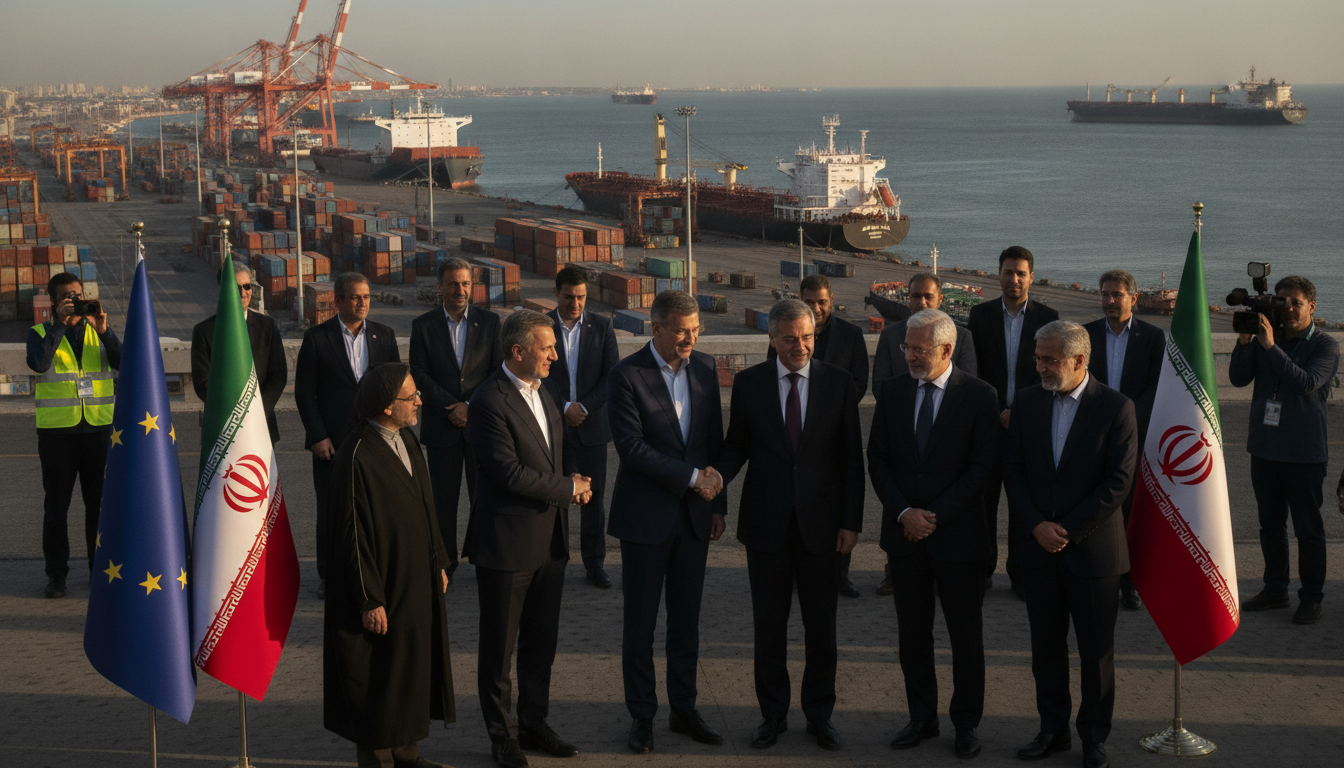
Iran sanctions relief could unlock Iran’s economic revival, reshaping Gulf trade and oil flows
U.S.-Iran agreement could unlock Iran sanctions relief, free frozen assets and restart oil exports, reshaping Iran’s economy and Gulf trade in coming months.
Iran sanctions relief emerged at the center of a high-stakes diplomatic framework that, if implemented, would end punitive measures on Tehran’s oil and financial sectors and reopen ties with global markets. The provisional deal signed between U.S. and Iranian negotiators promises the unfreezing of billions in assets, the lifting of sanctions on crude exports and a program of confidence-building measures over the coming weeks. Observers say the arrangement could shift regional trade patterns and provide immediate economic relief for ordinary Iranians, though significant political and structural hurdles remain.
Agreement Offers Path to End Sanctions
The agreement establishes a staged process intended to remove long-standing restrictions that have isolated Iran’s economy for years. U.S. officials and Tehran have outlined a timetable of steps designed to restore normal banking relationships and permit oil shipments that were blocked or heavily discounted under sanctions.
Analysts caution the path is fragile: diplomatic setbacks, external attacks or political missteps in Tehran could delay implementation. Nonetheless, proponents argue that rolling back sanctions would quickly expand Iran’s fiscal space and encourage private sector activity.
Frozen Assets and Reconstruction Fund
A core element of the framework is the release of frozen Iranian funds held in foreign jurisdictions, which officials say would be directed toward stabilizing the domestic economy. The agreement also contemplates a multilateral reconstruction fund worth roughly $300 billion, backed by international and regional partners, to rebuild infrastructure damaged during recent hostilities.
Experts note practical obstacles to deploying such capital, including creditor claims, escrow arrangements and the need for robust transparency mechanisms. Still, the prospect of large-scale capital inflows has raised expectations among investors and policymakers about near-term liquidity improvements.
Oil Exports, Strait of Hormuz and New Revenue Streams
Restoring unrestricted oil exports is central to Tehran’s recovery strategy and appears to be a priority in the deal. Official negotiations foresee Iran returning to global crude markets at market prices rather than the heavy discounts forced by sanctions, which would boost government revenues and foreign-exchange reserves.
The agreement also addresses maritime security near the Strait of Hormuz, where Iran at times threatened to levy transit fees on commercial shipping during periods of heightened tension. Any cooperative security arrangements that guarantee safe passage would reduce shipping risk premiums and lower costs for global energy markets.
Sixty-Day Confidence-Building Measures
Under the framework, a sequence of confidence-building measures is scheduled to begin immediately and stretch over a roughly 60-day negotiation window intended to convert the initial pact into a final accord. These measures include lifting a U.S. blockade on seaborne trade, allowing phased Iranian exports and beginning the liberation of selected frozen assets.
Officials emphasize that these early steps are aimed at delivering tangible economic relief to households and businesses to build momentum for a comprehensive settlement. Observers say the timeframe is realistic only if both sides avoid provocations and adhere to agreed verification procedures.
Domestic Obstacles: Governance, Inflation and Infrastructure
While sanctions relief would inject resources into the economy, long-standing domestic challenges could temper the impact of new revenue. Years of mismanagement, corruption and political repression have contributed to high inflation, elevated unemployment and weak public confidence in state institutions.
Reconstruction needs are substantial: energy facilities, transport links and industrial plants suffered damage in recent strikes and underinvestment. Analysts stress that the efficient use of incoming funds, stronger fiscal discipline and structural reforms will be essential for sustained growth beyond a short-term cash infusion.
Regional Implications for UAE and Gulf Trade
Restoration of normal economic relations between Iran and global markets would have immediate implications for Gulf trade hubs, particularly the United Arab Emirates, which historically served as a conduit for Iranian commerce. Renewed banking links, logistics flows and private-sector connections could revive trade corridors that contracted under sanctions.
UAE businesses and financial institutions stand to gain from a return to routine transactions, yet some commercial revival will depend on regulatory clarity and risk assessments by foreign partners. Gulf governments will also weigh how changing security guarantees affect their own economic and strategic calculations.
The prospect of Iran sanctions relief has generated guarded optimism among economists and regional officials, who see potential for stabilization if the technical and political conditions are satisfied. Implementing the agreement will demand careful sequencing, transparent governance and sustained international engagement to turn diplomatic breakthroughs into durable economic recovery.
