
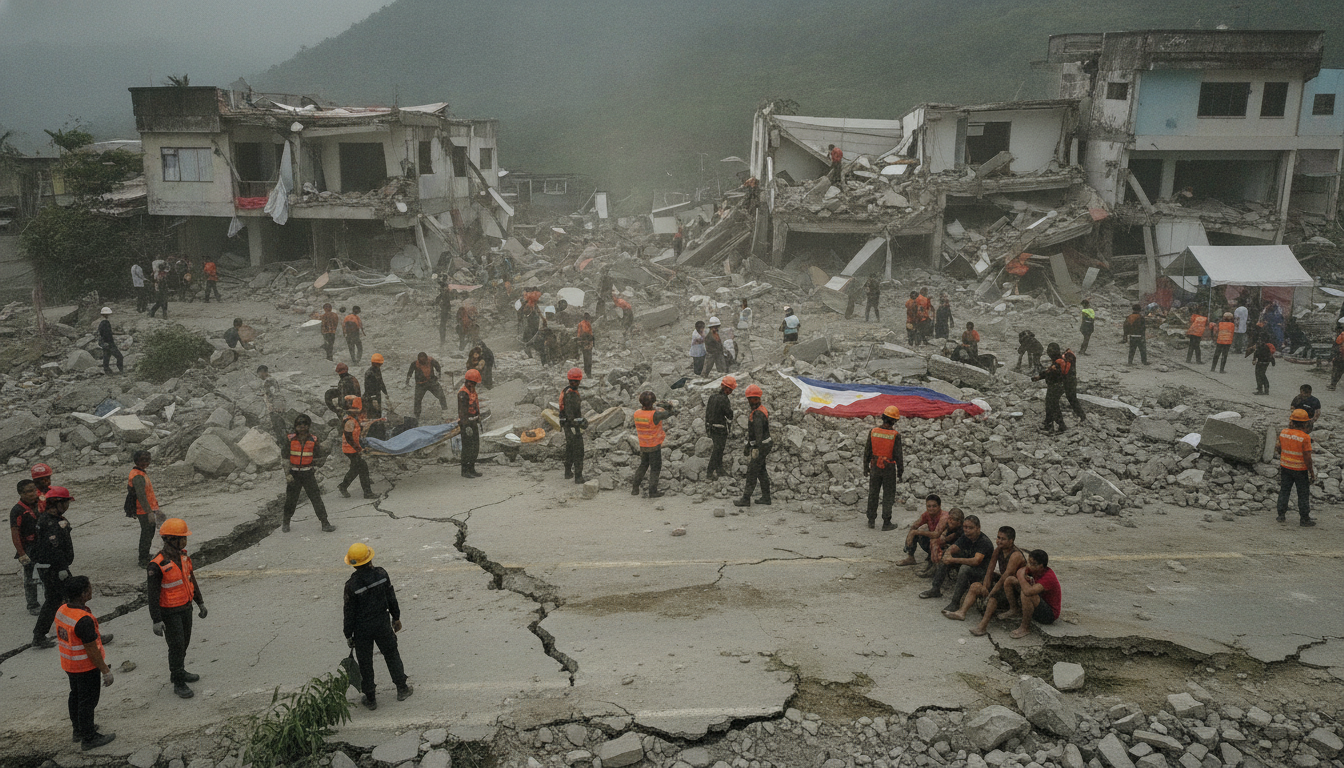
Sarangani earthquake: At least 78 killed, 30 missing after 7.8-magnitude tremor
Sarangani earthquake: At least 78 killed and 30 missing after a 7.8-magnitude quake off southern Philippines on June 8, affecting 1.5 million and damaging thousands of homes.
The Sarangani earthquake that struck off the southern Philippines on June 8 has left a growing trail of devastation, with at least 78 confirmed dead and 30 people still unaccounted for. The 7.8-magnitude quake triggered widespread destruction across several coastal and inland communities, officials said, and has affected roughly 1.5 million people. Emergency shelters are housing thousands of displaced residents as authorities continue search-and-rescue and damage assessments.
Death Toll and Missing
Local disaster authorities report 78 fatalities from the quake, with the majority of deaths concentrated in hard-hit municipalities across Sarangani province and neighboring areas. Another 30 people remain listed as missing, and those numbers could change as teams reach isolated villages and inspect collapsed structures.
Search-and-rescue crews are focusing on areas where structures pancaked and where reports of entrapment persist. Officials caution that aftershocks and unstable debris continue to hamper operations and may delay recovery in the most damaged zones.
Humanitarian Impact and Displacement
The quake affected an estimated 1.5 million people, according to the National Disaster Risk Reduction and Management Council. Of those, about 22,000 are currently living in temporary evacuation centers set up in schools, municipal buildings, and community halls.
Relief coordinators have prioritized shelter, clean water, and basic sanitation as immediate needs, while health teams monitor for injury clusters and potential disease outbreaks in crowded shelters. Local authorities say relief stocks are being distributed but that supplies will need to be replenished quickly as the humanitarian response scales up.
Housing and Infrastructure Damage
Damage assessments indicate heavy losses in the housing sector, with roughly 74,700 dwellings reported damaged and about 13,700 homes destroyed outright. Entire neighborhoods in several towns showed signs of structural collapse, leaving many families without livable shelters.
The quake also damaged 774 public and private infrastructure facilities, including roads, bridges, schools, and health clinics. Disruptions to transport and communications have slowed relief deliveries to some remote barangays, complicating early recovery efforts.
Economic Losses and Agricultural Impact
Initial estimates place combined losses to infrastructure and agriculture at more than 1.32 billion Philippine pesos, underscoring the economic toll on the region. Crop damage and losses to livestock have been reported in municipalities that rely heavily on farming, threatening local food supply and household incomes.
Small businesses and fisheries have also suffered, with damaged markets and boats reducing economic activity at a time when communities need cash to recover. Authorities warn that the full economic impact will only become clear once detailed sectoral assessments are completed in the coming weeks.
Government Response and Relief Operations
The Philippine National Disaster Risk Reduction and Management Council has coordinated an inter-agency response, dispatching search-and-rescue teams, emergency medical units, and relief convoys to the most affected areas. Local governments have declared states of calamity in multiple municipalities to expedite resource allocation and procurement.
Military engineers and civil defense personnel are assisting with road clearance and temporary shelter construction, while humanitarian partners are mobilizing to provide food, water, and non-food items. Officials say the priority remains rescuing those trapped, stabilizing survivors, and restoring critical services.
Recovery Outlook and Reconstruction Needs
Authorities have said damage assessments will guide reconstruction planning, and they anticipate a lengthy recovery process that will require substantial funding and technical support. Rebuilding safe, earthquake-resilient housing and repairing damaged infrastructure are expected to be major components of the recovery phase.
Long-term needs will likely include livelihood restoration, psychosocial support for affected families, and strengthened disaster risk reduction measures to reduce vulnerability to future quakes. Planners note that coordinating national, regional, and local resources will be essential to an effective and timely rebuild strategy.
Relief teams continue to work under difficult conditions as they expand search efforts and deliver assistance to isolated communities, while authorities urge residents to follow safety guidance and report missing persons. The full extent of the damage and the final casualty count may not be known until teams complete their ground assessments and reach all affected barangays.
