
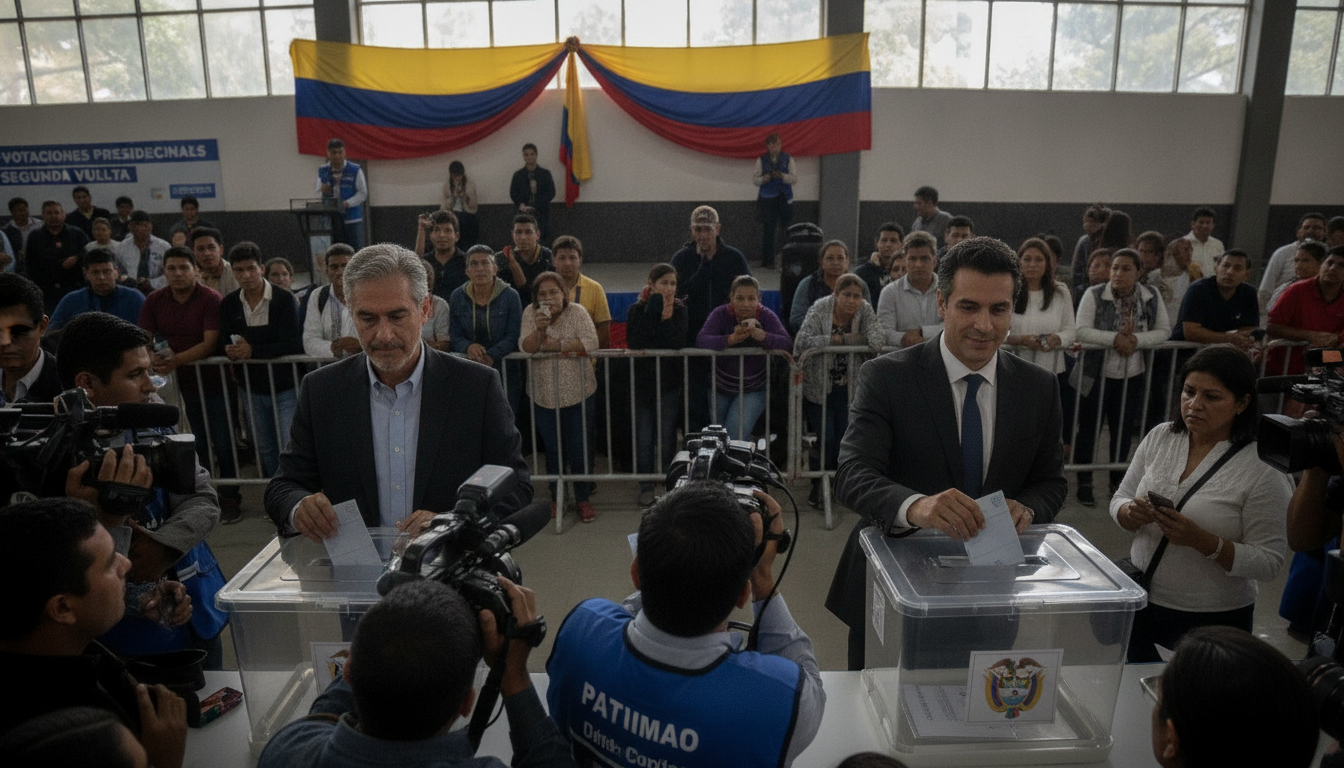
Colombia presidential run-off pits leftist Ivan Cepeda against far‑right lawyer Abelardo de la Espriella
Colombia presidential run-off: Over 41 million voters choose between leftist Ivan Cepeda and far-right Abelardo de la Espriella amid security concerns.
Colombians are voting in a high-stakes Colombia presidential run-off that will determine the country’s next leader after a fractured first round on May 31. The contest narrows to lawmaker Ivan Cepeda, the candidate of the left, and criminal defence lawyer Abelardo de la Espriella, a newcomer on the far right, with more than 41 million citizens eligible to cast ballots. The campaign has been dominated by sharply divergent proposals on public security, the handling of armed groups and the future of President Gustavo Petro’s policy agenda.
Candidates present sharply different visions
Cepeda, a veteran legislator, positions himself as the political heir to progressive reforms initiated under the current administration and pledges to continue dialogue-based approaches with armed groups. He frames his campaign around institutional solutions and social programs intended to address the root causes of violence and poverty.
De la Espriella, nicknamed “The Tiger,” has built his appeal on a promise of forceful action against crime, proposing measures that include building large-scale detention facilities and replicating tough security tactics used elsewhere in the region. His law-and-order message has resonated with voters frustrated by rising homicides and extortion, and he ran ahead of Cepeda in the first round.
Security plans and crime crackdown proposals
De la Espriella’s platform centres on a rapid, hardline crackdown on criminal networks, with proposals to construct multiple “mega-prisons” and intensify police and military operations. Supporters cite reductions in homicide rates in other countries that deployed similar measures, while critics warn of potential human rights violations and strained judicial safeguards.
Cepeda argues that security must be paired with social investment and reintegration initiatives to prevent cycles of violence from recurring. His proposals emphasize strengthening community policing, expanding social programs in violence-affected regions, and investing in public health and education as preventative tools.
Peace accords and recent armed group developments
The election arrives a decade after Colombia’s landmark FARC peace agreement, a pact that once promised to end the country’s long civil conflict but has not prevented the resurgence of violence. Since the accord, many armed actors shifted from ideological goals to criminal enterprises tied to drug trafficking, contributing to territorial clashes and continuing instability.
In a modest sign of progress, authorities recently reported the surrender and resettlement of a small armed faction of roughly 100 members, marking a slow step toward reintegration under Petro-era initiatives. Both campaigns now debate whether to build on those gains through dialogue or to adopt tougher measures to dismantle armed groups more aggressively.
Crime trends and social impact
Homicides surged last year to levels not seen in years, with official tallies recording 14,780 killings in 2025, a figure that voters repeatedly cite as a central concern. Extortion cases have also risen sharply, with 13,417 incidents reported last year — more than double the number recorded a decade earlier — fueling anxiety among business owners and ordinary citizens alike.
The human cost of insecurity is shaping voter priorities in urban centres and rural areas differently, with city dwellers focused on violent crime and kidnappings while rural communities are more affected by territorial disputes and the presence of illicit armed groups. Both candidates claim to have plans tailored to these divergent local realities.
Economic, health and anti‑corruption differences
Beyond security, the run-off will decide competing approaches to a strained public health system, rising public debt and endemic corruption. Cepeda seeks to safeguard and expand social programs introduced by the current administration, arguing that sustained investment will reduce inequality and long-term costs to the state.
De la Espriella emphasizes fiscal discipline and promises to root out corruption through tougher prosecutions and managerial reforms, asserting that a stricter stance on crime must be accompanied by a leaner and more accountable public sector. Analysts note that both candidates will face the practical limits of implementing ambitious reforms amid tight budgets and complex institutional challenges.
Voter sentiment, polarization and turnout concerns
Public opinion is heavily polarized, with many Colombians expressing fatigue over decades of political conflict and concern that the election will deepen social divides. Some voters have called for accepting the outcome peacefully and seeking consensus, while others have warned that a narrow margin could trigger unrest.
Turnout and the behaviour of undecided voters will be decisive after the two leading candidates captured roughly 41 percent and 44 percent in the first round respectively. Campaigns have intensified in the final days, seeking to mobilize supporters in urban hubs and remote provinces where the balance could tip the result.
The run-off will not only determine who occupies Colombia’s highest office but will also set the country’s course on security, reconciliation and economic policy amid renewed waves of violence. As ballots are counted, international observers and domestic actors alike will watch for signs that the winner can both deliver immediate security improvements and build durable political consensus to address Colombia’s deep-rooted challenges.
