
Starbucks Korea Closes More Than 2,000 Stores for Mandatory Training After ‘Tank Day’ Backlash
Starbucks Korea closed more than 2,000 stores on Monday for mandatory staff training after Shinsegae’s “Tank Day” promotion drew widespread criticism for evoking the Gwangju massacre.
Nationwide closures and mandatory staff training
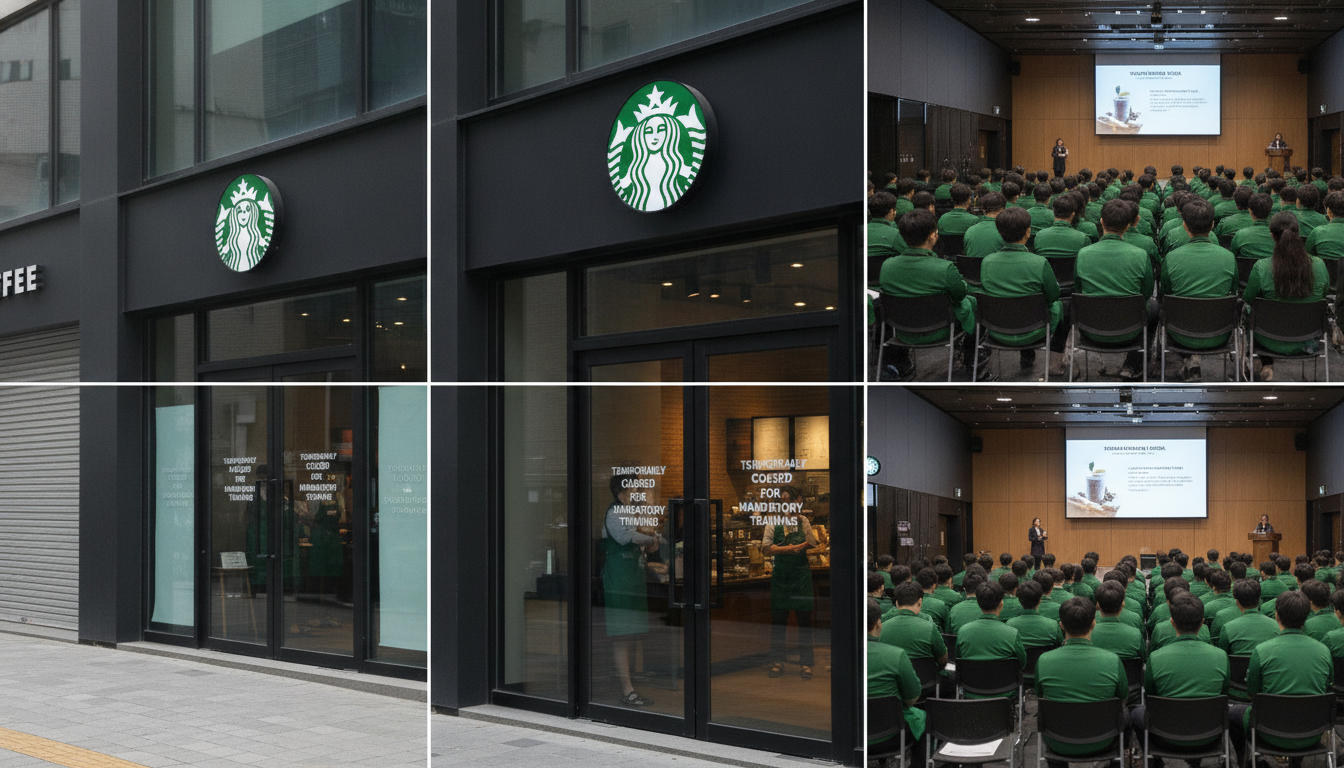
Starbucks Korea ordered an unprecedented, company-wide closure of its outlets on Monday afternoon to conduct compulsory education sessions for employees. More than two thousand cafes were shuttered early in the day while management held sessions intended to address the fallout from a controversial marketing campaign. The move affected service hours across the country and represented one of the largest coordinated operational pauses in the brand’s South Korean history.
Company officials described the sessions as mandatory and directed at all levels of staff, from store baristas to local managers. The closures were framed as part of an internal effort to reinforce sensitivity and cultural awareness in local operations. Customers encountered notice postings at affected locations and the firm said it would resume normal service after the training concluded.
Details of the ‘Tank Day’ promotion
The controversy stems from a promotional campaign last month called “Tank Day,” which offered discounts on a stainless-steel cup product branded as “Tank.” The marketing push used imagery and language that critics said echoed the symbolism of military tanks. That connection provoked intense public scrutiny because it recalled a highly sensitive episode in modern Korean history.
Shinsegae, the South Korean company that holds the regional licence to operate Starbucks outlets, devised and executed the campaign. The promotion’s merchandise and messaging quickly generated complaints from customers and civil society groups who argued the campaign trivialised painful memories associated with past state violence. The backlash escalated rapidly on social media, amplifying calls for accountability.
Public and political condemnation
Public reaction was swift and severe, with consumers and commentators condemning the promotional choice across multiple platforms. Political figures, including President Lee Jae-myung, publicly criticised the campaign, reflecting the depth of national concern over the perceived insensitivity. The criticism spanned mainstream media, opposition parties and civic organisations, increasing pressure on both Shinsegae and Starbucks Korea to respond.
Consumer groups called for formal apologies and corrective action, while some activists urged broader corporate reflection on historical sensitivities. Local commentators noted that brand missteps that touch on national trauma often trigger sustained reputational damage in South Korea, where collective memory of the Gwangju events remains a potent force in public discourse.
Shinsegae apology and leadership changes at Starbucks Korea
In response to the backlash, Shinsegae issued a public apology acknowledging the hurt caused by the campaign and its failure to foresee the negative connotations. The company took immediate personnel action, announcing the dismissal of Starbucks Korea’s CEO as part of a management shake-up intended to signal accountability. Shinsegae’s statement emphasised a commitment to rectifying the error and preventing similar incidents in future promotions.
Corporate spokespeople said the personnel change was aimed at restoring public trust and accelerating internal reforms. Industry analysts cautioned that leadership changes alone may not be sufficient and that sustained, concrete steps would be necessary to rebuild credibility among consumers and civic stakeholders.
Internal review findings and police inquiry
An internal investigation conducted after the campaign concluded reportedly found no deliberate intent to denigrate victims of the pro-democracy movement, according to company briefings. Nevertheless, the firm acknowledged that the execution of the marketing campaign showed poor judgement and inadequate cultural vetting. The internal review prompted the mandatory training sessions and the decision to close stores for staff education.
Seoul police have opened a separate probe into the background of the campaign to determine if any legal violations occurred. Authorities are examining whether the promotion crossed legal lines related to public order or defamation, and the investigation is ongoing. The dual tracks of corporate review and police inquiry indicate both legal and reputational stakes for the companies involved.
Brand impact and next steps for Starbucks Korea
The incident highlights the delicate balance international brands must strike when operating in markets with distinct historical sensitivities. For Starbucks Korea, the immediate priorities are addressing employee awareness, repairing customer relationships, and demonstrating meaningful institutional change. Analysts expect the company to broaden its cultural and historical sensitivity training and to involve external advisers when planning future high-profile campaigns.
Shinsegae has indicated plans to revise internal approval processes for marketing and product launches, while Starbucks Korea faces the challenge of reassuring customers without appearing to make excuses. The episode is likely to prompt closer oversight of licence-holder marketing activities across other international brands doing business in South Korea.
The full impact on sales and long-term brand perception remains uncertain, with recovery dependent on transparent remedial steps and sustained engagement with affected communities. The police investigation and any further legal findings will also shape the narrative and potential liabilities for the companies involved.
Public attention now turns to the outcomes of the ongoing inquiries and the concrete measures Starbucks Korea and Shinsegae will implement to prevent similar missteps. The company’s next statements and policy changes will be closely watched by consumers, regulators and investors as they assess whether the response is commensurate with the concerns raised.
