
U.S.-Iran peace talks move to technical phase with 60-day road map
U.S.-Iran peace talks proceed after first round as mediators set a 60-day road map with an oversight panel, Hormuz hotline and Lebanon de-confliction cell to protect progress.
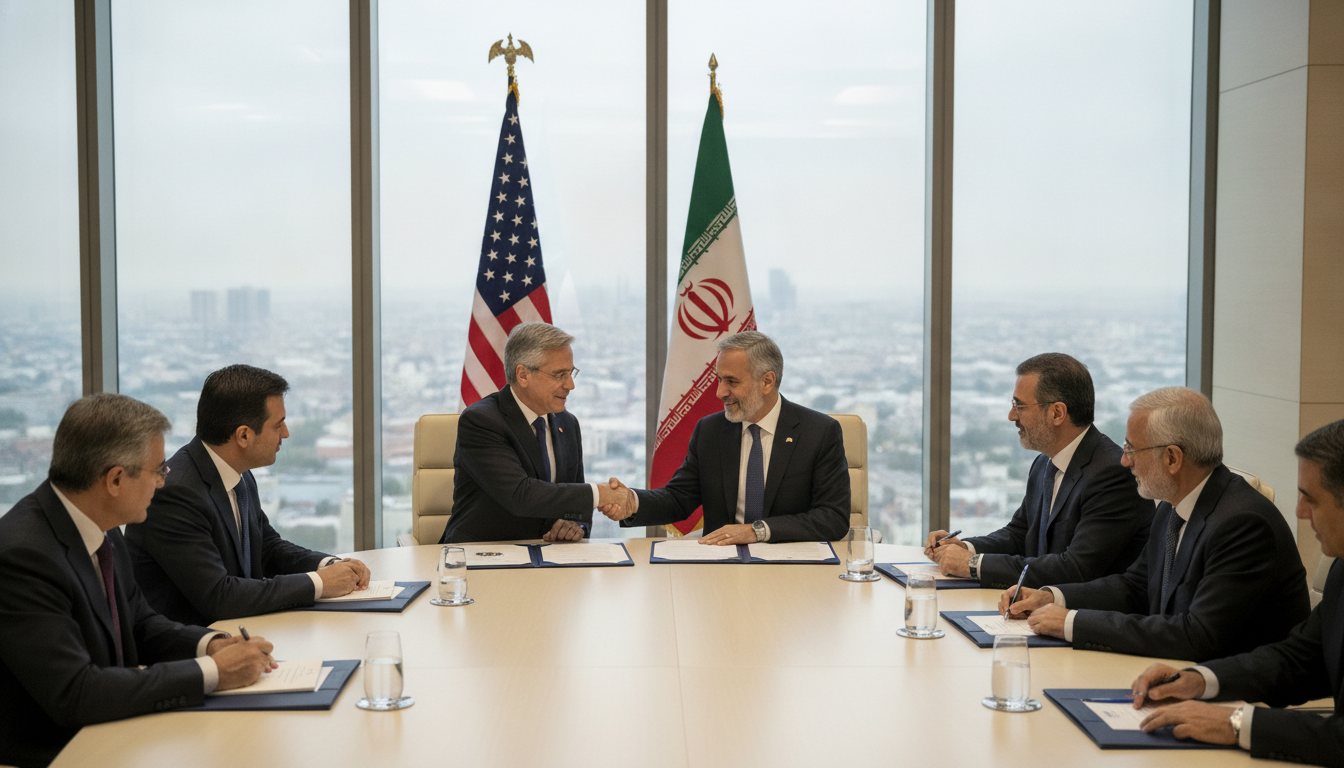
The first round of U.S.-Iran peace talks concluded on Monday with mediators saying negotiators will try to convert an initial framework into a durable agreement within 60 days. Pakistani and Qatari intermediaries described the session as productive and said both sides accepted a sequence of technical steps aimed at translating broad commitments into enforceable measures. The announcement laid out mechanisms intended to insulate the talks from flare-ups in Lebanon and disputes over shipping in the Strait of Hormuz.
Negotiators Agree 60-Day Road Map
The mediators presented a timetable designed to guide negotiators through detailed technical work and to deliver a final text within two months. That schedule envisages regular reporting to a newly created oversight body and a series of working groups to tackle discrete issues such as sanctions and nuclear-related measures. Officials framed the deadline as a way to sustain momentum and reduce the risk that progress stalls into protracted diplomacy.
Both U.S. and Iranian chief negotiators are expected to follow the timetable closely, with the oversight panel empowered to monitor milestones and timelines. Mediators emphasized that a firm schedule would help solidify fragile trust and provide external verification points as the talks move from principles to instruments.
Oversight Committee to Monitor Commitments
Mediators said the oversight committee will act as a supervisory forum to ensure both sides meet scheduled obligations and to resolve procedural disputes. The panel will receive regular briefings from the lead negotiators and is tasked with adjudicating differences that arise during technical discussions. Its creation speaks to deep mutual suspicion, especially from Tehran, which has insisted on concrete verification mechanisms.
Analysts noted that such a committee could be decisive in preventing misunderstandings from derailing the process. Ali Vaez, who directs the Iran project at the International Crisis Group, has previously argued that institutional checks are essential for Iran to feel secure about U.S. compliance, and mediators view the committee as a necessary confidence-building device.
New Communication Line for Strait of Hormuz
A direct communication channel for naval authorities was agreed to reduce the chance that incidents at sea escalate into broader confrontation. The line is intended to manage commercial traffic transits and to provide immediate contact between the two sides’ maritime commands if a vessel or convoy encounters a dispute. Given the strait’s strategic importance and past confrontations, mediatordrafted protocols aim to preserve safe passage while larger security issues are negotiated.
Mediators acknowledged practical limits: until mines and other hazards are cleared from the mid-channel, some tankers may need to transit close to coastal waters and rely on escorts or agreed routing. Observers warned that without clear rules and regular use, the hotline’s value could be limited; proponents say it could nevertheless prevent isolated incidents from spiralling into wider maritime conflict.
De-confliction Cell to Manage Lebanon Tensions
To reduce the impact of violence in Lebanon on the wider negotiations, mediators proposed a de-confliction cell that will include representatives from Iran, the United States and Lebanon. The cell is intended to monitor cease-fire compliance, investigate reported violations and provide alternative channels for information and dispute resolution outside the main negotiation track. Its stated purpose is to remove Lebanon-related clashes as a trigger for stopping or spoiling the U.S.-Iran talks.
Experts cautioned the mechanism will have structural limits because it does not directly include Israel or Hezbollah, the two principal actors on the ground in Lebanon. Aniseh Bassiri Tabrizi, an Abu Dhabi-based associate fellow at Chatham House, said the cell could still operate as a buffer by offering competing accounts of incidents and defusing immediate tensions, but final stability will depend on broader de-escalation among the local belligerents.
Technical Working Groups and Implementation Plan
Negotiators will now shift focus to technical working groups tasked with drafting the measures necessary to implement the framework agreement. Topics to be handled in parallel include sanctions relief sequencing, nuclear verification modalities and monitoring and dispute-resolution procedures. Mediators said a monitoring and dispute-resolution group will be central to ensuring commitments are reversible only under clearly defined conditions.
The structure aims to produce implementable language rather than open-ended promises, with negotiators expected to present detailed text back to the oversight committee. Officials hope these working groups can translate political will into legal and operational steps that are verifiable and enforceable.
Persistent Flashpoints Could Still Derail Talks
Despite the new safeguards, mediators warned that active hostilities in Lebanon or renewed disruption of commercial shipping could threaten the negotiation timetable. Over the weekend, mixed signals about reopening the Strait of Hormuz underscored how rapidly operational choices at sea can affect diplomatic traction. Analysts say the talks remain vulnerable to actions by third parties that are not signatories to the U.S.-Iran framework.
Mediators acknowledged these vulnerabilities and stressed that the road map includes contingency measures to pause or adapt the process if external events jeopardize safety or trust. The success of the 60-day plan will hinge both on sustained political will in Washington and Tehran and on the willingness of regional actors to avoid deliberately spoiling the talks.
The next phase will see technical teams convene this week under the supervision of the oversight panel, with mediators calling for steady progress and daily consultations to keep the timetable on track.
