
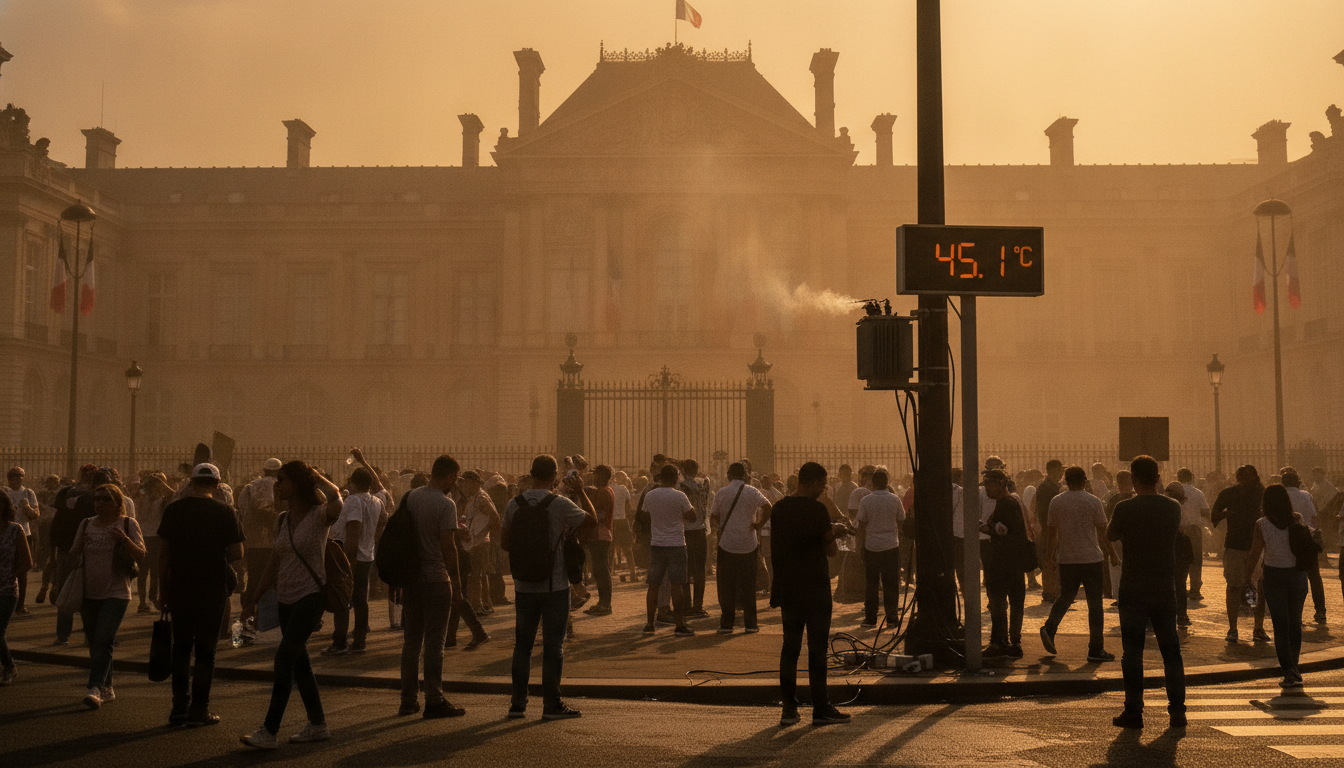
France Heat Wave Shatters Records, Forces Power Limits and Tourist Closures
France heat wave surges to record highs on June 24, 2026, straining power grids, closing attractions and prompting emergency measures across the country.
France recorded its hottest day on June 24, 2026, as an intense France heat wave pushed temperatures to unprecedented levels, disrupted electricity supplies and forced public sites to cut hours. Authorities reported widespread strain on the national grid and ordered rolling outages in some regions to protect critical infrastructure. The extreme heat also led to early closures of major tourist attractions and a surge in emergency calls as residents and visitors sought relief.
Record Temperatures Recorded
Meteorological services confirmed multiple temperature records were broken across metropolitan France on June 24, 2026, with inland areas experiencing the most severe readings. Officials said several weather stations logged highs well above historical peaks for late June, contributing to concerns about heat-related health risks. The rapid rise in temperatures came after several consecutive days of above-average heat, intensifying the stress on communities and services.
Power and Infrastructure Strain
Electricity operators reported heavy demand as air conditioning use surged and cooling centers opened to cope with the extreme heat. Grid managers implemented targeted power-saving measures and short controlled outages in localized areas to prevent broader blackouts. Transport infrastructure also felt the impact, with rail services adjusting schedules due to track overheating and maintenance teams inspecting overhead lines and signaling equipment.
Tourism and Attractions Disrupted
Iconic sites and museums shortened visiting hours or cancelled late-day tours as temperatures climbed, disrupting summer plans for both domestic and international visitors. Several operators cited safety concerns for staff and guests, saying that certain elevated viewpoints and confined indoor exhibits could not be safely managed in the peak heat. Tourists interviewed at closed venues described frustration at cancelled visits, while travel operators scrambled to rebook affected customers and provide information about refunds and rescheduling.
Public Health Measures and Emergency Response
Health authorities activated heatwave response plans, urging people to check on vulnerable neighbors and to stay hydrated and cool during the hottest hours. Hospitals and emergency services reported an uptick in calls for heat-related illnesses, prompting mobile medical teams and temporary hydration points in some urban districts. Public advisories emphasized limiting outdoor activity during midday and early evening, especially for the elderly, children and those with pre-existing conditions.
Regional Impact and Transport Adjustments
Local governments imposed practical measures to reduce exposure and protect essential services, including temporary restrictions on non-essential outdoor work during peak heat. Municipalities opened additional cooling centers and extended hours at pools to provide relief for residents without air conditioning. Road and rail operators warned of speed reductions and adjusted timetables where infrastructure could be compromised by high temperatures, leading to delays and altered travel plans across affected regions.
Scientific Context and Climate Link
Climate scientists pointed to a pattern of more frequent and intense heat events in recent years, linking the severity of the episode to broader trends in global warming and changing atmospheric patterns. Researchers stressed that while individual heatwaves have multiple drivers, the upward trend in extreme temperature records is consistent with longer-term climate observations. They urged policymakers to accelerate adaptation measures, including urban cooling strategies, resilient infrastructure investments and public-health preparedness.
Emergency services continued to monitor conditions as temperatures were expected to remain elevated in the short term, with authorities reminding the public to follow official guidance. The combination of record heat, stretched power systems and disruption to daily life underlined the growing challenge posed by extreme weather events in an increasingly warming climate.
