
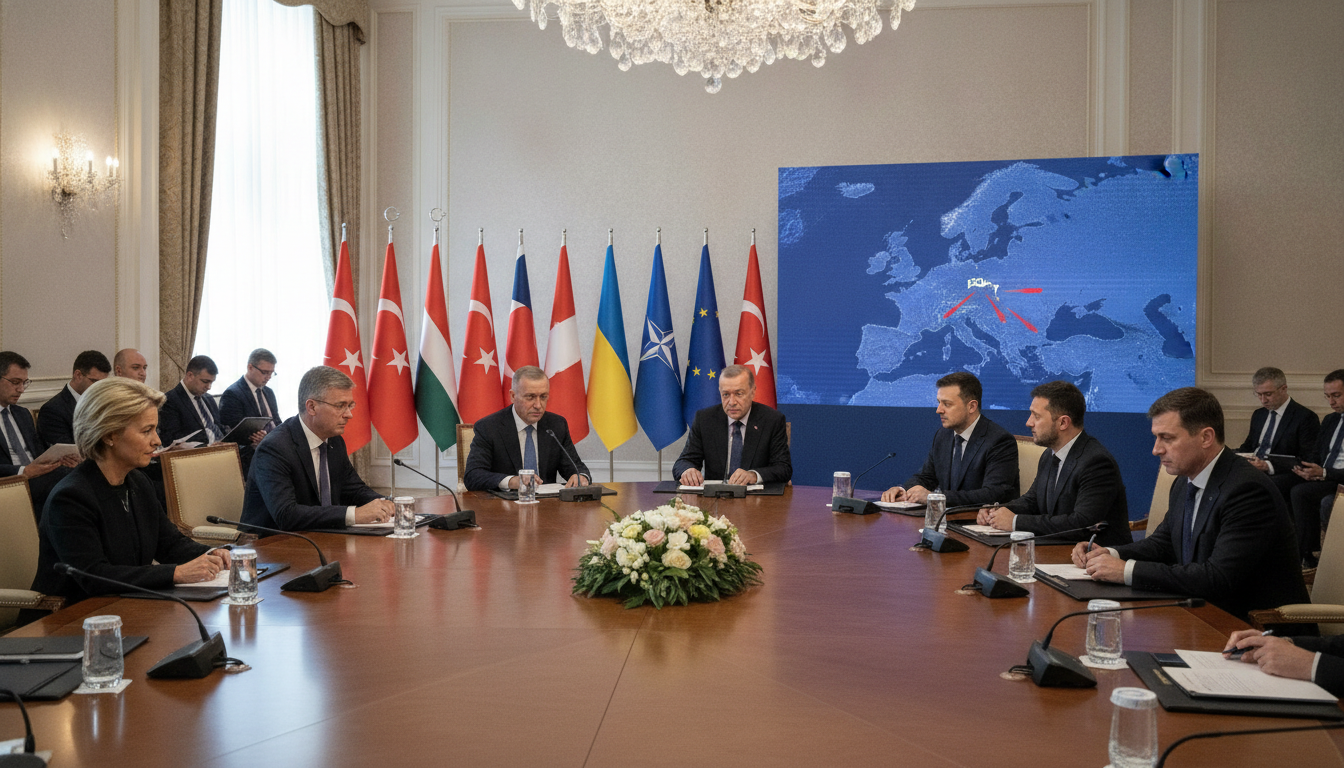
NATO Ankara summit set for July 7–8 to highlight defence spending, industry and Ukraine
NATO Ankara summit will convene on July 7–8, 2026, as allies aim to showcase increased defence spending, industrial resilience and sustained support for Ukraine amid transatlantic tensions.
The NATO Ankara summit opens on July 7–8, 2026, with alliance leaders expected to emphasize recent gains in European defence spending and industrial capacity. The meeting will also centre on mechanisms to sustain military aid to Ukraine while navigating heightened transatlantic political strains.
Transatlantic tensions cloud the meeting
Diplomatic frictions across the Atlantic have complicated preparations for the NATO Ankara summit and could shape the public messaging in Turkey. Recent regional disputes and sharp exchanges between Washington and several European capitals risk diverting attention from the alliance’s policy priorities.
Allies arrive in Ankara facing pressure to show tangible solidarity while managing bilateral grievances that range from strategic disagreements to high-profile public spats. Organisers say the summit must balance demonstrating progress with containing headline-grabbing disputes.
European spending surge toward a 5% target
One of the summit’s central themes is defence spending, with NATO allies reiterating a collective push toward a new benchmark of 5% of GDP by 2035. Officials point to data showing a marked rise in European defence budgets and describe the trend as unprecedented over the past decade.
NATO and independent indices indicate that Europe and Canada have increased defence outlays significantly, with an aggregate additional commitment of roughly $1.2 trillion for the period between 2016 and 2026. Alliance figures also highlight a roughly 20% increase in defence investment in 2025, a milestone leaders will cite in Ankara.
Defence industry and procurement on centre stage
The summit will host the largest-ever defence industry forum within a NATO meeting, underlining a priority to convert higher budgets into capability. Delegates will scrutinize how increased spending is flowing into national industry, cross-border procurement and technology partnerships.
Some allies are investing heavily in domestic suppliers, while others are pursuing multinational supply chains or sourcing advanced systems from producers in the United States, South Korea and Japan. Emerging firms, including drone manufacturers in smaller NATO states, are being spotlighted as examples of where member demand is driving innovation.
Ukraine support and the ‘priority needs’ mechanism
Ukraine returns to the summit agenda as a core security issue, with NATO expected to reaffirm and expand a mechanism that allows allies to purchase U.S.-made equipment for Kyiv. The so-called priority-needs framework will be promoted as a practical channel to get critical systems to Ukrainian forces.
Alliance officials say cumulative donations and procurement pledges have topped several billion dollars in the past year, with roughly $5.5 billion committed through allied efforts in the most recent twelve-month period. In Ankara, leaders are expected to discuss a more durable funding architecture to cover training, air-defence systems and replenishment of stocks.
Host role: Turkey and southern neighbourhood concerns
As host, Türkiye brings a distinct regional lens to the NATO Ankara summit, pressing the alliance to deepen engagement with its southern neighbourhood. The issue gained formal recognition after a NATO action plan for the south was adopted at a previous summit, but concrete measures have lagged.
Ankara’s proximity to instability and migration pressures gives it leverage to push for a more coherent allied approach. Diplomats say the summit provides an opportunity to translate earlier pledges into sustained cooperation on security, counterterrorism and capacity-building with partners in North Africa and the eastern Mediterranean.
Political challenge for NATO leadership
Senior officials acknowledge that headline numbers on spending and donations will need political framing to sustain alliance unity. NATO Secretary-General Mark Rutte and other senior figures face the task of turning quantitative gains into a persuasive narrative for capitals that remain divided on priorities.
Analysts caution that while the metrics show progress, they may fall short of calming a U.S. administration frustrated by perceived European shortcomings or of resolving deeper strategic disagreements. The summit’s success will hinge on whether leaders can present a credible plan for capability delivery and burden-sharing that satisfies skeptics.
The NATO Ankara summit on July 7–8, 2026, is expected to produce announcements on major defence contracts, a proposed financing framework for Ukraine assistance and fresh commitments to industrial cooperation. Allies will leave Ankara with evidence of progress, but also with a clear mandate to translate spending and procurement gains into long-term cohesion and operational capability.
