
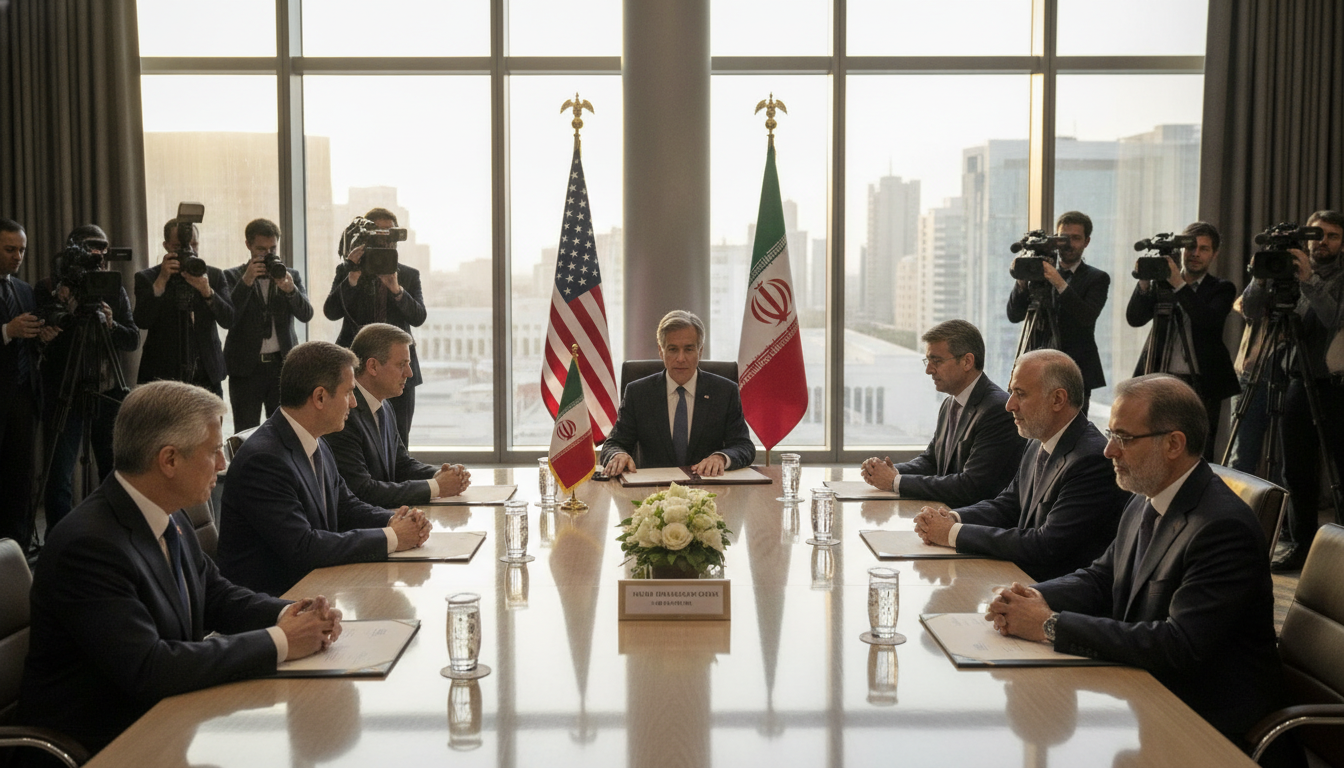
US and Iran Agree to Halt Military Attacks Ahead of Doha Talks
US and Iran halt attacks, a temporary diplomatic deal brokered by Washington sources, ahead of Tuesday’s June 30, 2026, talks in Doha aimed at defusing tensions over Strait of Hormuz security.
Diplomatic Deal Reached to Halt Military Attacks
A senior US official told Axios that Washington and Tehran have agreed to stop mutual military attacks, using language described as a pause in “kinetic activities.”
The understanding was presented as an urgent step to prevent further escalation while both sides prepare to meet in Doha on Tuesday, June 30, 2026.
Three sources familiar with the discussions confirmed the decision, which US officials characterized as a limited, tactical cessation rather than a comprehensive peace agreement.
Officials said the move is intended to create space for negotiations and to reduce immediate risks to commercial shipping and regional forces.
Doha Talks to Focus on Strait of Hormuz Security
Delegates from both capitals are scheduled to convene in Doha for talks narrowly focused on security arrangements in the Strait of Hormuz.
The Doha meeting replaces a previously planned session in Switzerland and shifts the agenda away from broader nuclear issues toward stabilizing maritime routes.
US technical lead Nick Stewart is expected to head the American delegation, according to sources familiar with the planning.
Diplomats said the Qatar-hosted talks will concentrate on mechanisms to prevent accidental clashes and ensure safe passage for commercial vessels.
Fragile 11‑Day Truce and Renewed Strikes
The diplomatic pause seeks to rescue an 11‑day truce that had begun to fray after renewed strikes from both sides.
That earlier halt had already been precarious, and recent retaliatory actions highlighted how quickly battlefield tensions can undo negotiated pauses.
Escalatory rhetoric in recent days further complicated the environment, increasing pressure on negotiators to secure concrete operational safeguards.
Regional officials warned that without clear coordination, miscalculation at sea could rapidly expand into wider confrontation.
Dispute Over Hotlines and Coordination Mechanisms
A central source of contention has been operational coordination — notably the delay in activating a proposed “hotline” between US forces and Iran’s Islamic Revolutionary Guard Corps.
US and Iranian teams agreed in principle during last week’s talks in Switzerland to establish a direct communication channel to manage maritime traffic and avert dangerous encounters.
However, the hotline had not been brought into service by the weekend, creating a coordination vacuum that Tehran said justified insistence on prior clearances for ship movements.
US officials countered that diplomatic and technical steps were underway but that operationalizing the link required additional testing and mutual confidence-building.
Swiss Negotiations and the Shift to Qatar
Last week’s exchanges in Switzerland, led on the American side by the vice president’s envoy, produced the framework for a hotline and other deconfliction measures.
Those talks revealed both progress and persistent divergences over how to translate broad memoranda into enforceable procedures at sea.
Sources said the acceleration of violent incidents made Switzerland impractical as the venue for a narrowly focused maritime security session, prompting the relocation to Doha.
Qatar’s role as a neutral host and its logistical proximity to the Gulf were cited as factors in the decision to reconvene there on June 30, 2026.
Implications for Shipping and Regional Stability
Maritime insurers and commercial carriers have been closely watching diplomatic developments, given the strategic importance of the Strait of Hormuz for global oil and goods shipments.
A credible, functioning coordination mechanism would reduce the risk premium on Gulf transit and lower the prospect of supply shocks.
Analysts caution that a temporary halt to attacks does not resolve underlying strategic disputes, and sustaining any operational pause will require verification measures and continued diplomacy.
International partners are likely to press for clear, timebound commitments and monitoring arrangements to guard against a return to hostilities.
The agreement to halt military attacks represents a narrow but meaningful step toward preventing immediate confrontation, yet its durability will depend on the speed with which the Doha talks translate political language into concrete, operational safeguards at sea.
