
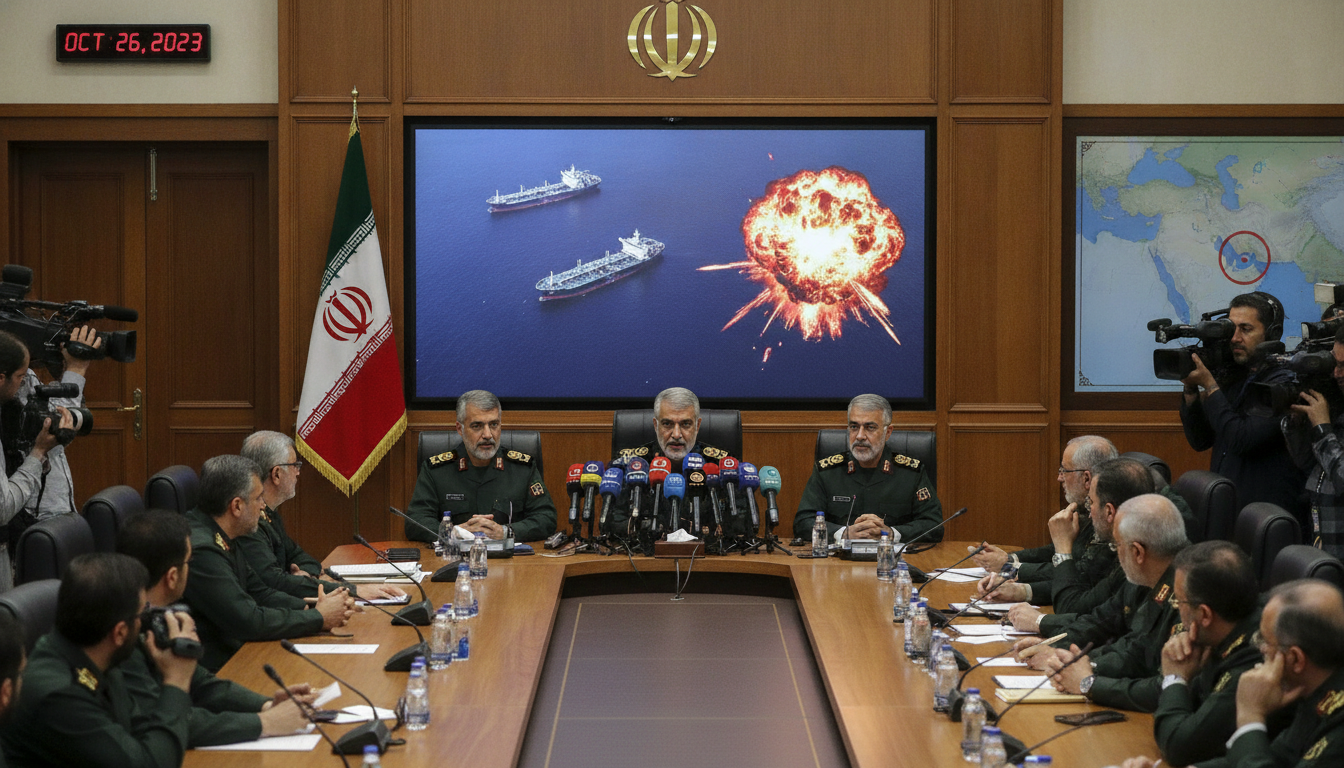
U.S. airstrikes in Iran escalate after attacks on commercial ships in Strait of Hormuz
U.S. airstrikes in Iran struck air defenses and missile sites as Tehran vowed a “crushing response,” while sanctions on Iranian oil were reinstated and negotiations paused.
The United States carried out airstrikes in Iran on Wednesday, hitting air defense systems, command-and-control nodes and coastal missile capabilities after Washington said Iranian forces attacked three commercial vessels transiting the Strait of Hormuz. U.S. Central Command also reported strikes on dozens of Revolutionary Guard small boats intended to reduce Tehran’s ability to threaten international shipping.
U.S. military reports wide range of targets struck
The Pentagon said its strikes struck more than 80 targets across southern Iran, focusing on air defenses, anti-ship missile batteries and networks used to direct attacks on maritime traffic. U.S. Central Command characterized the operation as necessary to protect commercial shipping and to degrade capabilities it said Tehran used in recent attacks on vessels in regional waters.
Officials added that more than 60 small boats belonging to the Islamic Revolutionary Guard Corps were struck in and around the strait to limit Iran’s use of swarm tactics against merchant ships. Washington framed the strikes as defensive measures aimed at keeping the international trade corridor open.
Iran brands strikes an ‘overt act of aggression’ and vows retaliation
Iran’s Khatam al-Anbiya Central Headquarters condemned the U.S. strikes as an “overt act of aggression,” warning that the country would deliver a “crushing response.” State media published the statement, which reiterated Tehran’s assertion that it controls maritime routes in and near its territorial waters.
Iranian lawmakers and senior negotiators also criticized the strikes, with the speaker of parliament accusing the United States of violating a memorandum of understanding that had eased tensions. The rhetoric underscored the risk of further escalation between Tehran and Washington after a week of rapid developments.
Attacks on commercial vessels triggered the confrontation
The U.S. response followed reported assaults on three commercial ships transiting international waters near the Strait of Hormuz, including a Saudi oil tanker and a liquefied natural gas carrier flagged to Qatar in waters off Oman. Washington has linked the incidents to Iranian capabilities, though Tehran has not formally claimed responsibility for the attacks.
Those maritime incidents heightened concerns among energy-importing states and shipping firms about security in a corridor that carries a large share of the region’s oil and gas exports. The attacks threatened to derail recent efforts to reopen secure passage through the strait and to restore normal energy flows.
Sanctions reinstated and diplomatic talks put on hold
In parallel with the military action, U.S. authorities revoked a waiver that had allowed limited Iranian oil sales, a concession that had been part of a tentative cease-fire arrangement reached last month. The move reimposed restrictions on Iranian crude exports and signaled Washington’s intention to exert maximum pressure in response to the maritime strikes.
Diplomatic contacts between the two countries were suspended as Iran entered days of national mourning after the death of its supreme leader, whose funeral rites officials said would delay negotiations. Iranian negotiators indicated talks would not resume until formal ceremonies conclude, complicating efforts to de-escalate the situation.
Regional trade and energy markets feel immediate strain
The strikes and renewed sanctions injected fresh volatility into regional energy markets and shipping operations, prompting some commercial operators to reroute or delay passages through the Strait of Hormuz. Analysts warned of higher insurance premiums and logistical slowdowns if the security climate remains uncertain.
Local governments and Gulf ports face pressure to coordinate alternative measures to protect maritime traffic, and international firms are monitoring developments closely. Any prolonged disruption in the strait could have ripple effects on global fuel supplies and regional economies.
The unfolding confrontation leaves the Gulf region at heightened risk of further incidents even as diplomats and commercial actors seek an orderly return to stable shipping conditions.
